
PETER MASON applauds the revival, 39 years later with the same team and cast, of Manfred Karge’s version of Brecht’s 100-year-old play, Mann Ist Mann

Grenada’s other rebellion
GUILLERMO THOMAS is fascinated by a little known rebellion in the English colony of Granada, led by a mixed-race French officer and inspired by the French Revolution
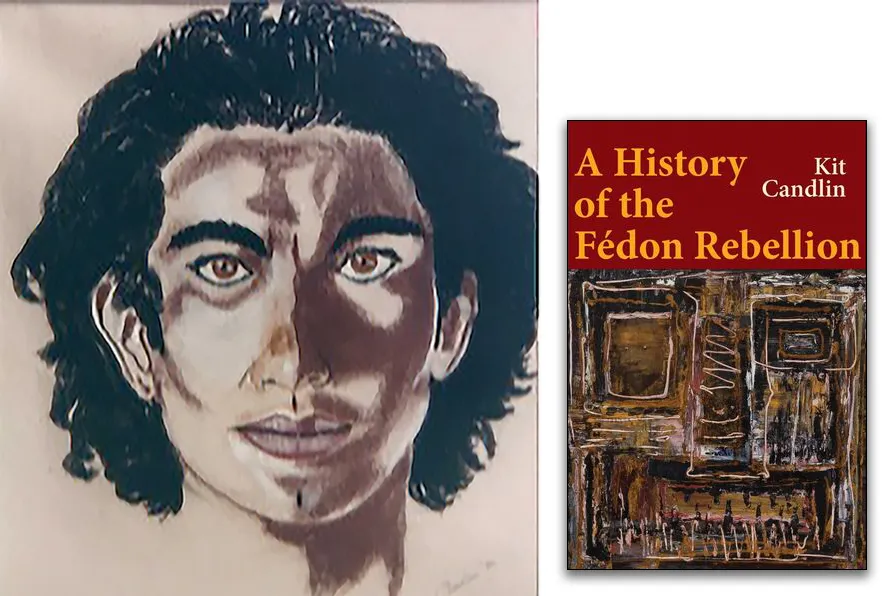
 Portrait of Julien Fedon, a mixed race French-Caribbean landowner, military commander for the French Republicans, and folk hero in Granada. 18th century, unknown author. [Pic: Public Domain/CC]

New releases from Biita Houdei, The Mary Wallopers, and The Tubs
New releases from Biita Houdei, The Mary Wallopers, and The Tubs
MAYER WAKEFIELD applauds a fearless attempt to bring to the stage the 1984 toxic gas disaster in Bhopal, India
ALEX HALL applauds the account of a dogged, traumatic and punishing campaign for justice that has lasted from 1998 to the present day
NICK WRIGHT laments the political bias of an epic attempt to tell the history of the liberation of France from the Nazis, that excludes both the decisive contribution of the Soviet Red Army, and of the French communist party itself





A History of the Fedon Rebellion: Encounters with Empire
Kit Candlin, Polity, £25
FOR most readers, Grenada and revolution are most closely associated with Maurice Bishop’s New Jewel Movement that took power in 1979 and ended in tragedy and US-backed defeat four-and-a-half years later. That another revolt took place on the small Caribbean island just under 200 years earlier is far less well known but arguably no less significant historically.
Its leader Julien Fedon didn’t succeed in seizing power, but unlike Bishop escaped with his life, disappearing without trace. The other protagonists in the struggle for freedom were not so lucky – an estimated 8,000 slaves died at the hands of the British when the revolt was finally crushed. A vengeful response whose brutality created shockwaves back in Britain and contributed to the abolition of slavery half a century later.
After leading the first initial co-ordinated attack on the colonial authorities Fedon quickly lost control. Inspired by the Haitian and French revolutions, hoped-for support from Paris was ultimately found wanting. The slaves both fighting with Fedon and enlisted by the British to fight against him — and many who just sought to make use of the freedom in their own way — were the decisive force in these dramatic events, the author shows.
The reason the rebellion failed are manifold: Fedon and his leadership were “profoundly naive and inexperienced,” the author argues. They lacked arms, powder, flint and other supplies. Food ran out quickly. He built a fortress in the mountains instead of going early on the offensive, taking the capital, and then proceeding at pace to take control of the island. After his initial attack, he still had no army and had only hours to persuade the enslaved to join in. Indeed it wasn’t clear to the slaves that the revolutionaries were planning emancipation.
And the timing was bad. Paris’s man in the Caribbean Victor Hugues has other priorities including battles in St Vincent just north-east of Grenada and so couldn’t help if had wanted to. Which he didn’t. Hugues, despite personal opposition to abolition, played a major role in implementing the Law of February 4 1794 which abolished slavery in French colonies.
But already by 1795 things had changed dramatically in the Metropole. Robespierre had been overthrown in the Thermidorian Reaction and France was ruled by the Directory, a conservative, property-owning elite. “Fedon and the rebel leaders put their faith in two things that did not happen: the British did not surrender and the French did not come,” the author writes.
Imperial Britain learned and adapted in the wake of both this rebellion, and the Haitian Revolution. One of the lessons of Grenada revolt was the division between the whites, in this case French and British, as the former – alongside the free coloured — were marginalised by their British rulers. One response was to try to avoid “arbitrary, capricious” local government through the introduction of the authoritarian Crown Colony government, a constitutional model that would shape the governance of the Caribbean for a century. “A more codified, uniform system of management across the loose collection of colonies,” it imposed a uniformity that made empire more vulnerable to general anti-colonial attack in the 20th century.
Slave revolts, especially the Haitian Revolution and the Grenada uprising, also played a decisive role in shaping abolition and the “Second Slavery,” new systems of labour management known collectively as the “second slavery” that were even more ruthless and murderous than the one that went before. Imperial elites were convinced slavery had to be either strictly controlled or carefully dismantled in order to prevent revolutionary collapse while preserving plantation capitalism.
Drawing on newly uncovered archival material, this is the first full-length history of the most destructive uprising in the annals of British slavery. It is a compelling read.
