A World Cup full of memorable moments was also marked by exclusion, exploitation and unprecedented political meddling, writes JAMES NALTON


 Latest editorial

From Geopolitics to Social Division. The 2026 Wisden
JON GEMMELL reviews cricket’s almanac — with India and Pakistan taking centre stage
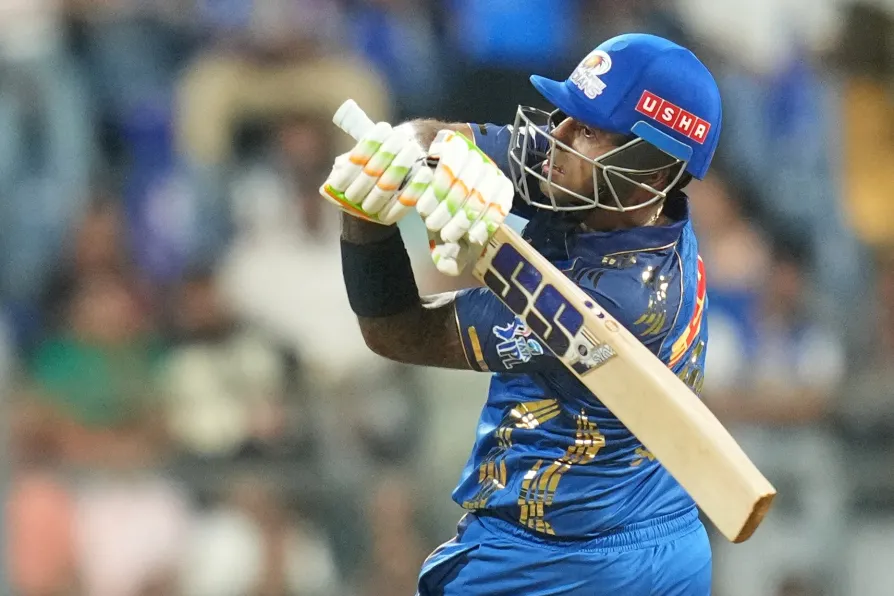 Mumbai Indians' Suryakumar Yadav plays a shot during the Indian Premier League cricket match between Mumbai Indians and Lucknow Super Giants in Mumbai, India, May 4, 2026
From Barry McGuigan and Carl Frampton to Tyrone McKenna and Lewis Crocker, the city’s fighters carry a complex history into the ring, writes JOHN WIGHT





THIS year’s almanac should be a celebration of the East Midlands, notably Nottingham and Leicester who were both victorious in their respective championship divisions. Instead, early salvos are reserved for south Asia, notably the mounting tension between India and Pakistan.
The two nuclear powers engaged in open warfare for four days in May last year. Hostilities then spilled onto the cricket field, with captains refusing to shake hands. The strained relationship became even more apparent when Indian captain Suryakumar Yadav dedicated one of his side’s victories over Pakistan at the Asia Cup to the armed forces.
On beating Pakistan in the final, Prime Minister Modi proclaimed: “Operation Sindoor on the games field. Outcome is the same — India wins.” Operation Sindoor was the codename given to India’s launching of missiles on Pakistan. “Now it is being equated with a game of T20,” bemused the Wisden editor.
Pakistan’s Cricket Board (PCB) chairman Mohsin Naqvi asserted that “politics and sport can’t go together.” This from the country’s interior minister!
Wisden editor Lawrence Booth has never shirked from calling out the Indian Cricket Board (BCCI) as the “sporting adjunct” of the ruling BJP. India’s coach Gautam Gambhir came to the role via a political career with the far-right movement. He notoriously once gave his support to charging medical students under anti-terror laws for supporting Pakistan at the T20 World Cup in 2021.
Sushant Singh, lecturer in South Asian Studies at Yale, went so far as to argue that “the Indian cricket team no longer represents India; it functions as the BJP’s sporting arm.”
Osman Samiuddin writes about the prisoner Imran Khan. He notes how the army helped Imran to the premiership and then helped to remove him four years later. He was a victim of the game that all Pakistan politicians succumb to. “He was not better or worse than the others: he was like them, which is the one thing he never was as a cricketer.”
Imran’s punishment included being ostracised from not just public life, but from the nation’s culture as well. In 2023, the PCB released a video commemorating the side’s most memorable moments — Imran didn’t feature. As two-thirds of Pakistan’s population are under 30, there will soon be few who recall one of the nation’s greatest performers.
There is the inevitable postmortem on an Ashes series in which England faced the oldest Australian side since 1928-29. An article on the 150th anniversary of the first Test tour to Australia suggests a recurring theme with The Australasian newspaper complaining that the England team was “by a long way the weakest side that has ever played in the colonies.”
Emma John seeks a reason why England (both men and women) do so poorly in Australia by contrasting “England’s ruthless privatisation of cricket” with the “displays of affection” found in Australia, where cricket remains the dominant summer pastime and a constant subject of conversation.
This may be a consequence of a wider range of people who follow and play the sport. The fear in Britain is that cricket is becoming increasingly more exclusive. James Coyne notes that of the players chosen for the final Test at The Oval in 1976, only Tony Greig went to a fee-paying school. This is compared with the recent Melbourne Test when only Ben Stokes and Josh Tongue were state educated.
There are many problems with cricket provision in state education, not least the sale of 10,000 school fields under the ideological rampage of the 1980s and 1990s.
Another factor in the disconnect between class and sport is the decline in work-based sides. In 1921, 1.25 million people worked in the mining industry. Pit teams had an obvious influence on the likes of Leicestershire, Derby, Notts, Yorkshire and Durham. Tanya Aldred makes the case for about 30 miners having played county cricket, with Derbyshire’s 1936 championship winning side particularly affected — with eight players from mining backgrounds.
Labour MP Ian Lavery notes the effect of the loss of the pits on the community and the loss of “sporting cohesion” — another factor in the redistribution of talent among the classes.
A fascinating article on Roy Gilchrist pits social class alongside racial prejudice for an individual whose outlook was fashioned by being the youngest of 21 siblings and illiterate. He was not one to doff his cap, and “a life derailed by personal demons” was shaped by his run-ins with those in authority.
A piece about cricket and drama notes something “existential about cricket in the way that a round of golf or a short team game isn’t. It’s also individual and at the same time a team effort.” Much like the stage.
Cricket’s modern existential crisis casts the Hundred in the role of the villain. Annie Chave reminds us that the tournament occupies August to the exclusion of other formats, meaning schoolchildren are denied the chance to watch live red ball cricket. For Vikram Banerjee the Hundred’s managing director, however, this may be part of the plan: he wants the latest format to have “redefined cricket in the UK.”
A consequence of adding another format to an already congested schedule is the loss of those overseas players once synonymous with particular counties: Procter and Walsh at Gloucestershire, Richards and Garner at Somerset etc. There was a time when the county championship attracted the finest players in the world and their loyalty helped to forge strong identities.
Demand for overseas players remains strong, with 74 being employed in the championship last year. However, two-thirds of them played in four or fewer matches and, with the lure of franchise cricket, can’t commit for the whole season.
As Eric Midwinter observes: “It’s hard to sustain red-ball cricket in a white-ball society.”
A perusal of the 80 pages of obituaries reminds us of the impact that apartheid had on cricket in the past, and the repugnant racism faced by the likes of Bernard Julien and Syd Lawrence. Cricket has made some progress.
I was pleased that Midwinter, along with Rob Steen are remembered. These are both among the finest chroniclers of the sport and will be immortalised through their writing — as, inevitably, will Wisden itself.
And there is no finer tribute than that.
