DOUG NICHOLLS says the parasitic finance markets must be challenged or another British government could be toppled


 Latest editorial

From Faslane to Palestine: the growing reach of Scotland’s peace movement
Campaigns against nuclear weapons on the Clyde, financial backing for arms firms and rising militarism are converging with solidarity for Palestine, as Scotland’s peace movement builds momentum ahead of the 2026 Holyrood election, says ARTHUR WEST
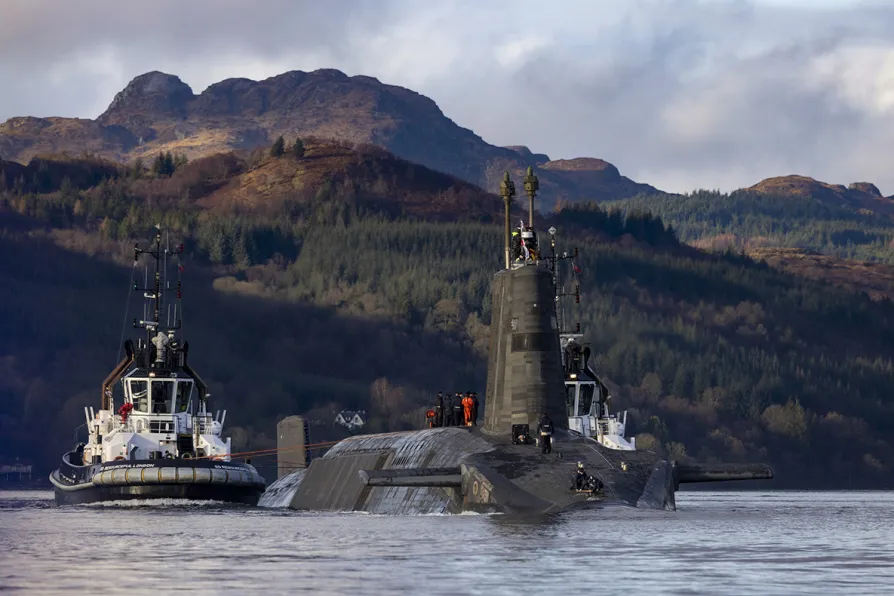 Undated handout photo provided by the Ministry of Defence of vanguard class nuclear submarine HMS Vengeance in Gare Loch, after departing HM Naval Base Clyde in Faslane, Scotland, to go on sea trials, February 24, 2025

The late country singer’s Imagination Library has put hundreds of millions of books into children’s hands. We should build on that legacy by defending the libraries at the heart of our communities, says BRENDA AITCHISON
Deprivation is a fundamental factor in criminal behaviour that must be addressed but, KENNY MacASKILL argues, there needs to a major rethink in sentencing to tackle overcrowding
MML director MEIRIAN JUMP outlines the recently refreshed library’s busy autumn schedule that ranges from book sales, archival exploration, community work with online education and the ever popular site tours
Some thinkers and authors on the right are openly discussing the possibility that the historically successful party of the British ruling class may be exhausted
Class struggle is the motor of history but the direction and detail of change at any time and place is the outcome of many factors, suggests the Marx Memorial Library and Workers’ School
TONY BURKE surveys the shifting political landscape and the challenges Labour needs to address if it is to prevail in the 2028 federal elections





THE parts of the Scottish peace movement highlighted in today’s column work to raise awareness about the negative aspects of weapons of mass destruction.
The organisations referred to also pose alternative ways to resolve tensions between countries which do not involve war and bloodshed.
Three examples of important work being carried out within the Scottish peace movement are:
1. Don’t Bank on the Bomb Scotland is a network of organisations campaigning for financial institutions and public bodies to divest from companies that are involved in nuclear weapons production and development.
The network also exposes the massive amounts of money involved in supporting weapons of mass destruction. Recently the network organised a day of action which involved street stalls and leafleting in Glasgow and Edinburgh.
The Glasgow-based activities also involved the delivery of letters to Barclays and Royal Bank of Scotland branches — containing the stark message that they should stop funding the end of the world by assisting the production and development of nuclear weapons.
2. Reclaim Our Clyde is a peace movement network which works to raise awareness about the presence and impact of nuclear weapons in relation to communities near the River Clyde.
The network continually raises the question of how communities and towns in the vicinity of the River Clyde could benefit from the massive funds currently being devoted to maintaining nuclear weapons at the Faslane and Coulport nuclear bases.
The basic purpose of the network is to campaign for the River Clyde and the communities linked to it to flourish in the future — free from the spectre of nuclear bombs being hosted around 30 miles from Scotland’s largest city.
The network is currently involved in organising a number of information days and street stalls across towns in Ayrshire, Renfrewshire and Dunbartonshire which the River Clyde flows through.
3. The Scottish Trade Union Peace Network is affiliated to both Scottish CND and Stop the War Scotland. The network works to raise awareness about the dangers of nuclear weapons and increased militarism.
The organisation has also given priority to highlighting the increasing pro-militarisation policies which are emerging from the European Union.
On a number of occasions the Trade Union Peace Network has highlighted the work of EU officials in paving the way for increases in arms spending and the development of the EU’s military capacity.
The network runs stalls at trade union events and promotes motions on peace and security for trade union bodies such as trades councils to take to trade union policy conferences such as STUC Congress.
Another important feature of the network’s work is the production of a regular bulletin on peace and security issues which is circulated across the Scottish trade union movement.
However despite the sterling work of the Scottish peace movement and its partners, it remains the case that 260 nuclear warheads are based at Faslane and Coulport on the River Clyde.
These locations are only 22 miles from Clydebank and 30 miles from Glasgow.
There is now a substantial body of research which indicates that if there was a nuclear weapons exchange involving these weapons, radiation could be blown across an area from Helensburgh to Clydebank, Glasgow, Paisley, Stirling and Dundee.
Given the threats posed by nuclear weapons and reckless military spending it seems urgent that the peace movement in Scotland and elsewhere builds on the positive campaigning and awareness-raising work which is currently being carried out.
It was encouraging during 2025 to see leading peace movement organisation Scottish CND put on a conference in early November looking at the dangers and hazards of nuclear weapons.
The recent Scottish CND AGM also resolved to make nuclear weapons and increasing military spending an issue in the 2026 Scottish Parliament election.
The AGM also heard from a number of very interesting speakers, including renowned investigative journalist Rob Edwards and Laura Pidcock from the impressive Declassified UK media outlet. The AGM also hosted a Morning Star stall in recognition of the paper’s work in regularly highlighting disarmament and peace issues.
The AGM also discussed the Scottish Parliament election of 2026 and considered strategies which Scottish CND could deploy to ensure that nuclear weapons and anti-war issues are highlighted during the election campaign period.
Plans in the pipeline include a national demonstration at the Faslane weapons nuclear weapons base in March and a hustings meeting in the weeks before the election.
Inevitably the work of the Scottish peace movement has crossed over with the efforts across Scotland in support of the Palestinian people’s struggle for peace and justice.
It has never been more important to support the struggle for peace and justice of the Palestinian people and the work of organisations such as the trade union-based Scottish Friends of Palestine.
Scottish Friends of Palestine was established in 1982 in response to the Israeli invasion of Lebanon and subsequent attacks on Palestinian refugee camps.
One of the founder members was the late Bill Speirs, former general secretary of the STUC.
Scottish Friends of Palestine supports the wider Palestinian solidarity movement in Scotland.
The group organises a regular street stall in Glasgow and one of the group members produces a regular bulletin of events taking place up and down Scotland in relation to Palestine solidarity activity.
The group has also produced two editions of the book, Twenty Questions on Palestine, which is an invaluable resource for organisations and individuals who wish to campaign and advocate in support of the Palestinian people.
Members of the group also support the Glasgow/Bethlehem Twinning Project which aims to strengthen educational and cultural links between the two places.
Scottish Friends of Palestine also supports the work of the Glasgow Gaza Emergency Committee and its Edinburgh equivalent. Both networks are due credit for pulling together numerous demonstrations in support of the Palestinian people over the last two years.
The struggle for a more peaceful world and for justice and peace for the Palestinian people is very much an uphill struggle at the present time.
That is why the words of Nelson Mandela have never been more appropriate when he said: “It always seems impossible until it’s done.”
Arthur West is former chair of Scottish CND and current secretary of Ayrshire CND.

Similar stories
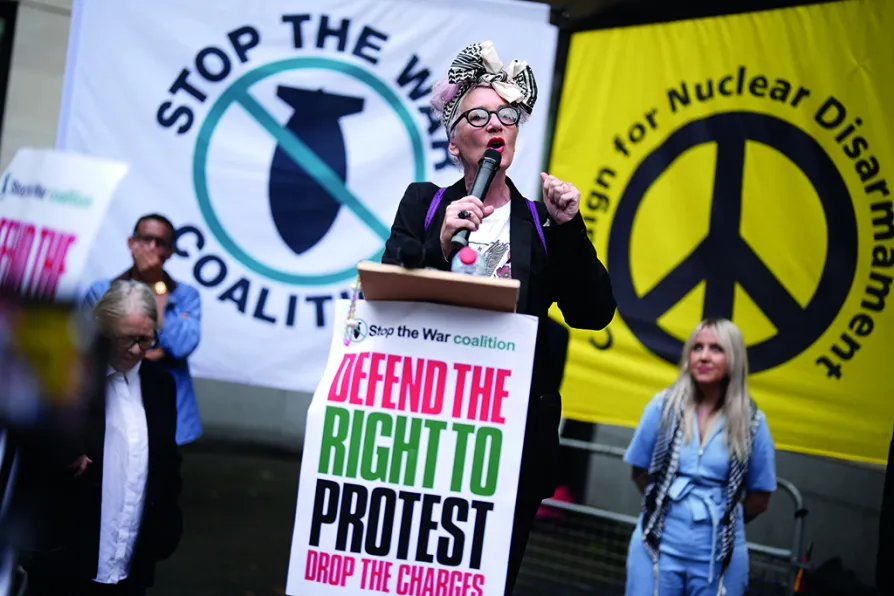
On Hiroshima Day, Campaign for Nuclear Disarmament general secretary SOPHIE BOLT explains why the danger of nuclear conflict is growing daily
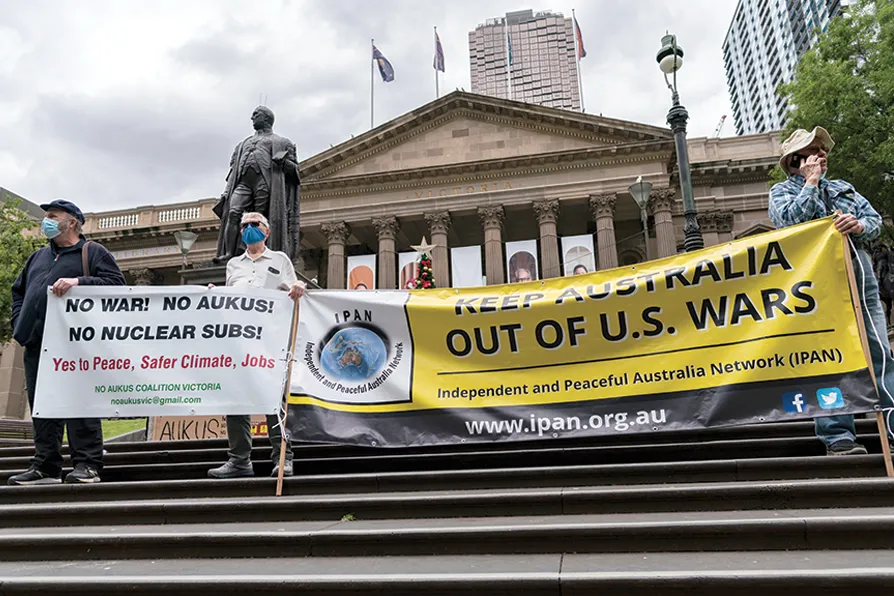
MIKE MARTIN surveys the regional opposition to US attempts to force the region into a military confrontation with China

ARTHUR WEST surveys the achievements of the Scottish campaign against South African apartheid and how we can draw on them to fight a rising far right
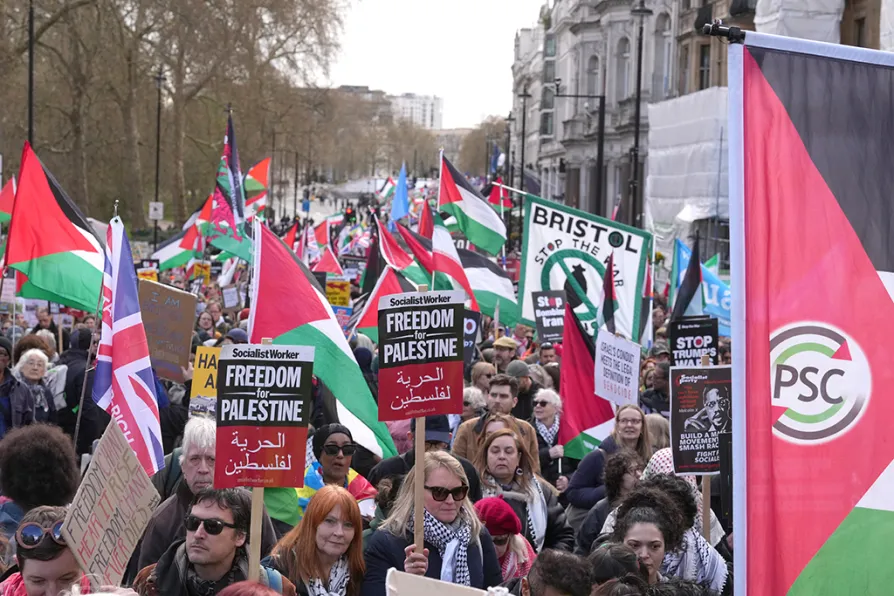
The struggle for Palestinian freedom has become a defining issue for everyone committed to justice, democracy and peace, says PETER LEARY ahead of the Stop the War International Conference on Saturday