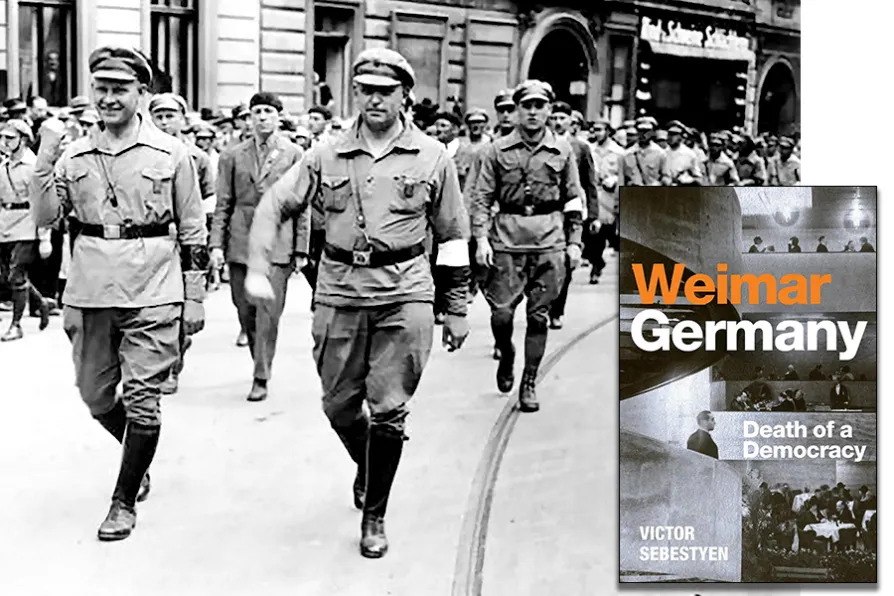
GORDON PARSONS recommends an entertaining account of the years between Germany’s defeat in WWI and Hitler’s seizure of power



Faltering steps towards understanding Islam
DAN GLAZEBROOK eavesdrops on the bourgeois intelligentsia and the stories it tells itself at this moment of crisis

MIGUEL YOSHIDA explains the evolution and influence of the Cuban Casa De Las Americas in joining culture to the revolutionary struggle
ANDY HEDGECOCK is charmed by a skilful adaptation of Tove Jansson’s lyrical portrait of three generations of a family, overcoming grief
ALEX HALL treads warily through a messy, dialectical struggle fought in the mundane machinery of driving licences, criminal law, and birth registries
MICHAL BONCZA, FIONA O’CONNOR, JAMES WALSH and ANGUS REID review Atlas of Disappearance, Love Me Tender, Bouchra, and This Tempting Madness
Flitting between myth and the modern world, Medusa is determined to steer clear of human affairs. When her resolve crumbles, the result is petrifying in every sense





THE Oxford Literary Festival provides a neat snapshot of the bourgeois intellectual zeitgeist: an overview of the stories the intelligentsia wants to tell itself during the current phase of its epochal crisis.
One of the positive developments at this year’s festival is an apparent growing understanding of the interconnectedness between Islam and the West.
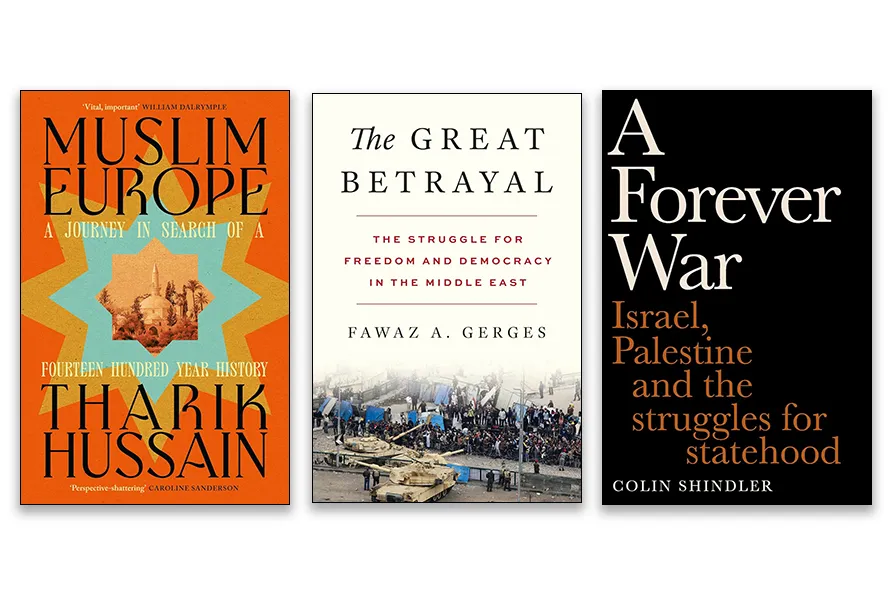
Tharik Hussain’s Muslim Europe: A Journey in Search of a 1400 year History (Viking, £25) reminds us that there have been European Muslims ever since the Prophet’s aunt and her companions arrived in Cyprus in the mid 7th century. From there, he retraces the path of those early Muslim conquests, through Sicily, Malta, Portugal and Spain, massively influencing the history of the continent along the way.
By the time the Normans conquered Sicily, the island had been governed by Muslims for almost three centuries, and the huge translation projects they initiated in Palermo, he notes, helped to seed the European Renaissance. From the time of their arrival, the Normans “basically went native,” learning Arabic, retaining Muslim staff and adopting much of the Muslim culture and architecture; English Norman architecture — and its European Romanesque equivalent — was largely modelled on the constructions they found in the Muslim world.
Indeed, the uncanny resemblance between English common law and Islamic jurisprudence — particularly its lafif system, in which 12 members of the community are required to swear an oath to tell the truth and reach a unanimous verdict — is unlikely to be a coincidence.
The flourishing of Jewish culture in Muslim Spain, where local Jews had aided the Muslims as liberators from Christian oppression, is an important piece of history challenging the pernicious narrative that pits Muslims and Jews as eternal enemies — and invents a supposedly “Judaeo-Christian Europe” to posit Muslims as “outsiders.”
But Islam has been impacted by the West too. In The Great Betrayal: The Struggle for Freedom and Democracy in the Middle East, (Princeton University Press, £30) Fawaz Gerges pays particular attention to Eisenhower and Churchill’s joint operation against the democratically elected government of Mohammad Mosaddegh in Iran in 1953, “one of the most foundational moments in the modern history of the Middle East.”
Mosaddegh, he reminds us, had been “utterly enamoured of US institutions” and his rule, had it been allowed to continue, “could have been a model for the entire region.” Instead, it was the coup itself that became the model, one the US went on to replicate in Guatemala and Lebanon in the years that followed. Mosaddegh’s overthrow created a “direct line” to the 1979 revolution in Iran, planting the seeds of the Islamic Republic the US is so desperately trying to destroy today.
Unfortunately, however, much denial remains. Colin Schnindler’s Israel and Palestine: A Forever War (Swift, £20) contains some interesting tidbits — for example, that the first zionist map, from 1918, had Israel’s borders extend right up to the Litani river in Lebanon; and that early suggestions for the Jewish state’s location included Angola, Texas, Australia and Moscow — but is shot through with Eurocentrism and Islamophobia.
Schindler’s claim that Palestinian “Islamists” can never make peace because they reject the European Enlightenment not only reflects the old colonial trope that non-Europeans are forever “trapped in their culture” — but ignores the fact that Saudi Arabia, whose Wahhabi ideology represents a far more sectarian form of Islam than that of Hamas, is desperate to sign a peace treaty with Israel. Oslo’s failure, we are told, was entirely the fault of Palestinian suicide bombers; settlements and apartheid are never mentioned, and the right to return is only raised to be immediately dismissed.
If this is what Oxford wants to hear, there is a long way to go yet.
