
The US administration is endangering lives by reversing environmental protection laws, CHAUNCEY K ROBINSON argues

Culture vultures: can animal behaviours usefully illuminate our own?
Animal metaphors are testament to delight in the non-human world and what we hope and wish for human freedom, argue ROX MIDDLETON, LIAM SHAW and MIRIAM GAUNTLETT"
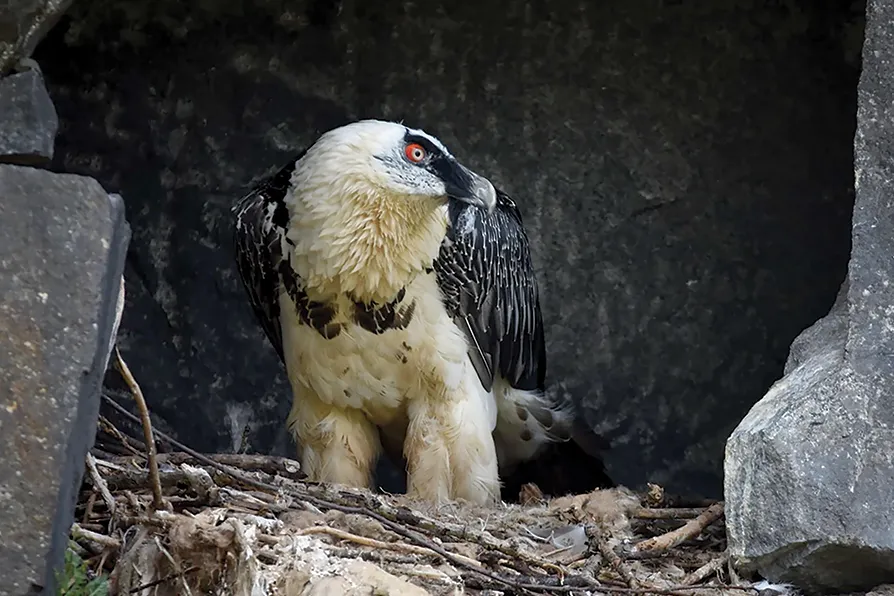
 Good nests are used and continually built on by generations of vultures / Pic: Nicholas Turland/CC

It’s time to stop retreating and go on the offensive to promote working-class interests, argues DOUG NICHOLLS
Marco Rubio wants to defeat socialism in Nicaragua, not restore ‘democracy,’ writes JOHN PERRY
Believe it or not, there was a time when the US government built beautiful homes for working‑class Americans to deal with a housing shortage, writes ERAN BEN-JOSEPH
DIANE ABBOTT provides an analysis of the reasons for EU and British voters’ dramatic swing to the right
Train drivers’ union Aslef general secretary DAVE CALFE speaks to Ben Chacko about his hopes that Burnham’s devolution agenda will include the importance of the railway





TO CELEBRATE Pride Month, the EHRC guidance on the Equality Act and equality legislation has been put before Parliament. This has been covered in some major news outlets as if it will force toilets in public spaces to exclude trans people.
That’s not true, though the celebratory tone of that coverage indicates an unpleasantly mainstream transphobia. Further, the EHRC redefinition of “single-sex spaces” as referring exclusively to sex registered at birth is disappointing.
In fact, the EHRC guidance states that “it is very unlikely to be proportionate to put a trans person in a position where there is no service that they are allowed to use” (13.148), and that “the impact of separate or single-sex services on trans people should be considered when the service provider is deciding whether it is justified to have a separate or single-sex service” (13.143). It also underlines that businesses and service providers have a duty to ensure no less favourable treatment of service users based on their trans identity or others’ perception of their gender.
The whole idea that single-sex toilets are “normal” or “natural” is itself something to be challenged: in Britain they were a 19th-century cultural creation, arising largely in workplaces. But this debate isn’t going to convince anybody.
Instead, to celebrate Pride Month, the Science and Society team have been reading a research paper published in Nature Ecology & Evolution in January 2026. The research, led by Chloë Coxshall and Vincent Savolainen, analysed data across all primates, and compared their ecological conditions to the status of reported same-sex sexual behaviour observed and reported in scientific studies.
Of the 491 non-human primate species about which the scientists compiled data, there were 59 species in which same-sex sexual behaviour has been reported. When excluding species only observed in captivity, or those with fewer than three recorded instances in the wild, there were 23 species that the researchers are most confident in showing same-sex sexual behaviour.
These include the common marmoset, the mountain gorilla, and the chimpanzee. The occurrence of homosexual behaviours was higher for species inhabiting environments with greater food scarcity or increased predation, and also for those primates with more complex social structures.
Although expressed through scientific language and statistics, the article evokes the idea that homosexual behaviour is something that is natural, evolutionarily useful, and associated with a high degree of complex social ties — something we might analogise as culture.
But can we really conclude such a thing from this meta-analysis of primate studies? It’s difficult to imagine that the quantitative data on the prevalence of homosexual activity in wild primates is accurate, given the difficulties that must arise in observing it. Nevertheless, the tone is welcome.
Queer sexual behaviour and identity is present in a large portion of the human population, and to find this mirrored in evolutionarily close relatives is not surprising. Yet sharing these stories is a way of connecting to ourselves and the animals that most closely resemble us.
The gays among us might preen at our scientifically suggested connection to survival and complex sociality, but all humans are part of the complex interplay that produces the demographics of a population.
We don’t need explanations for queerness for any individual’s behaviour. Explanations like this one don’t give us that; what they do is give everyone a share in the the collective experiences of humanity.
The legitimacy of animals as metaphors is contentious. As we have covered before (https://morningstaronline.co.uk/article/f/anty-capitalists-and-anty-communists), the natural world is deeply strange and varied, and the meaning we make from anthropomorphising it is doubly so.
Primates are not the first animals whose same-sex behaviour has been taken as an inspiration for human queer life. The natural world is full of animals with fascinating relationships to sexual characteristics and behaviour, from cuttlefish that switch behavioural roles to snails that switch reproductive roles.
Of particular contemporary resonance is the seahorse, used by trans dads as a symbol of active reproduction in fatherhood, as the male seahorse carries and births live young.
The meaning here for men who give birth is easy to imagine, but the metaphor could also resonate for any man whose fatherhood does not include literal pregnancy, but does include a high degree of love and care of their offspring.
Seahorses are one of only two fish species that swim upright, perhaps contributing to their status as charismatic species that capture human attention. Birds are perhaps popular for this reason too: penguins are particularly beloved, in particular in their documented care of chicks and of each other in harsh conditions — some share chick-rearing duties equally; some are socially or sexually monogamous.
Nature also abounds with species that routinely kill sexual partners, like spiders and mantises, or others like lions, bears and mice that kill their own or their partner’s offspring.
We are at liberty to choose caring metaphors instead — understanding that they are metaphors, and nature itself doesn’t tell us to be one way rather than another.
Some older beliefs about animals can strike us as strange. In early medieval Europe, a popular belief was that all vultures were female. Further, people believed that female vultures were impregnated by flying into the wind, an idea that persisted into the 13th century (www.bestiary.ca).
This idea seems to have come about because male and female vultures don’t have visible sexual characteristics to distinguish them. It was also promoted by Christian theologians in the early church as evidence of the feasibility of virgin birth.
It’s not true that vultures reproduce without sexual intercourse. However, the history shows how animals have been used to justify certain values and beliefs.
Vultures also have a more literal connection to human culture. Bearded vultures, which live in high crags between Europe, Asia and East Africa, build nests in remote caves. Good nests are used and continually built on by generations of vultures.
Bearded vultures were endemic to the Pyrenees until extinction from the region over 100 years ago. In research published in October 2025, researchers investigated 12 of these nests, and found in them the human items that vultures had taken and kept in their nests. To their astonishment, the oldest of the human artefacts, which included leatherwork, string and shoes, was 675 years old.
Though nature is miraculous in its own right, the beauty of animal metaphors is not in the essential truth about what’s natural, correct and acceptable. Instead their value is in what the stories tell us about the creativity and diversity of human experience, which is infinite.
