DOUG NICHOLLS says the parasitic finance markets must be challenged or another British government could be toppled


 Latest editorial

Congo’s itinerant gold miners complicate efforts to track and contain Ebola’s spread
Poverty, refugee displacement, child labour and militia violence are exacerbating the challenge of health workers to limit this deadly contagious disease. CONSTANT SAME BAGALWA and MARK BANCHEREAU report
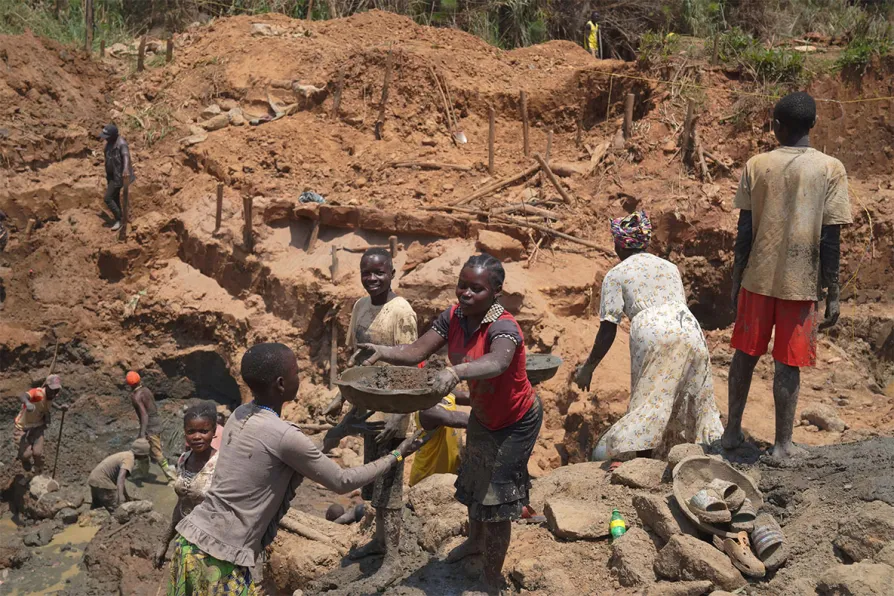 People search for gold at a mining site in Iga-Barriere, Ituri province, eastern Congo, Friday August 14 2026 (AP Photo/Dieudonne Dirole))

The late country singer’s Imagination Library has put hundreds of millions of books into children’s hands. We should build on that legacy by defending the libraries at the heart of our communities, says BRENDA AITCHISON
Deprivation is a fundamental factor in criminal behaviour that must be addressed but, KENNY MacASKILL argues, there needs to a major rethink in sentencing to tackle overcrowding
MML director MEIRIAN JUMP outlines the recently refreshed library’s busy autumn schedule that ranges from book sales, archival exploration, community work with online education and the ever popular site tours
Some thinkers and authors on the right are openly discussing the possibility that the historically successful party of the British ruling class may be exhausted
Class struggle is the motor of history but the direction and detail of change at any time and place is the outcome of many factors, suggests the Marx Memorial Library and Workers’ School
TONY BURKE surveys the shifting political landscape and the challenges Labour needs to address if it is to prevail in the 2028 federal elections





ISAAC BATISA is only a child, but he spends his days digging for gold at a mining site in Congo, hoping to earn enough money to support his family.
The 11-year-old is among hundreds of people, many of them children, working at the artisanal gold mine in eastern Congo’s Ituri province, where the country’s fast-moving Ebola outbreak is concentrated.
For Batisa, though, the disease that has killed more than 2,300 people among over 5,000 cases is not his immediate concern. He just wants to return home with some earnings, sometimes as little as $2 (£1.50) a day.
“We don’t know about Ebola here,” he said.
As the outbreak spreads and kills people faster than any previous outbreak, a major challenge for monitoring the disease is that miners are constantly on the move in hard-to-reach, unsafe territories.
The Associated Press (AP) gained rare access into one of Ituri’s largest mines, in the locality of Iga-BarriEre, where miners crowd into pits to dig for gold. Although there are no known reports of the outbreak reaching any of Congo’s mining sites, officials say it’s difficult to know the true situation in remote areas. Most new cases and deaths are reported among groups not being monitored, they say.
Health measures
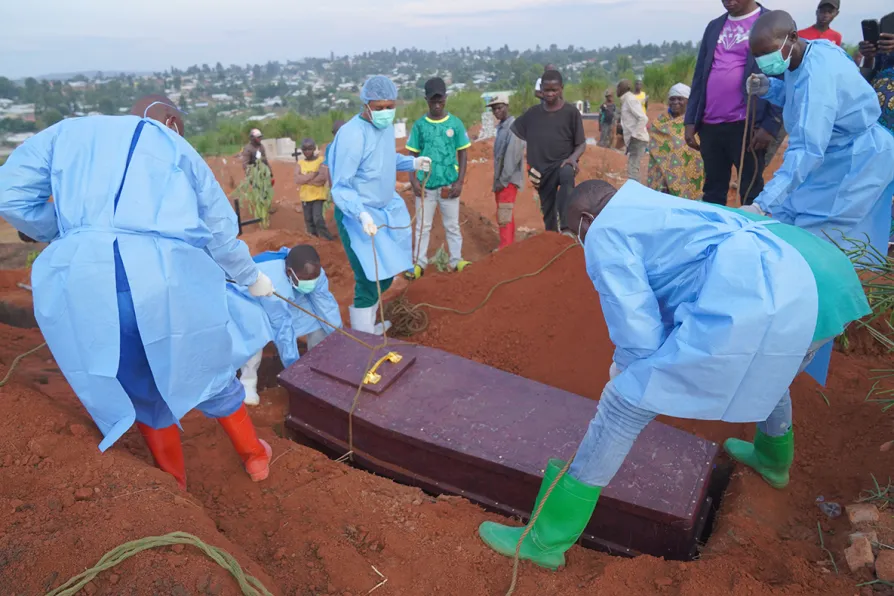
Ebola spreads through direct contact with the bodily fluids of an infected person or through contaminated objects and surfaces. However, measures to limit the spread, such as regular handwashing and social distancing, are not followed at the artisanal mining sites. Here gold extraction is carried out by workers using basic hand-tools such as shovels and pans. Many of the mines are illegal, with miners deliberately evading local authorities.
The Bundibugyo virus that has caused the current outbreak in Congo is less common than others that cause Ebola disease, which is complicating the response, because there are no specific treatments or vaccines.
In parts of the east, including Ituri, artisanal gold mining draws a highly mobile workforce as miners travel across villages in search of gold and related work while small-scale traders travel between mining areas and population centres to trade the precious metal.
But that constant movement is also making Ebola harder to contain, complicating efforts to find infected people and trace those who may have been exposed, said Mari Ndika, an Ebola response worker involved in disease monitoring.
“Artisanal miners may come into contact with several communities as they move from one place to another [which] can facilitate the transmission of the virus if a person is infected,” she said.
Lost contacts
Health workers recently lost track of two miners who had been identified as Ebola contacts after they moved to another mining site, according to Anna Ndroy Kansime, a community worker who educates people about the disease.
“They left for a destination that, to this day, remains unknown,” said Kansime.
The danger is particularly acute because health authorities are already struggling to keep up with the virus. People can become infected in one place and travel elsewhere before monitoring teams know they have been exposed, potentially creating new chains of transmission that are difficult to trace.
Complicating the effort, there is no reliable system for registering mine workers and tracking their movements, Kansime said.
Rebel violence
The minerals in eastern Congo, not only gold but also coltan, tin and tungsten, have been a source of decades-long conflict and of economic opportunities for its residents.
The 11-year-old Batisa said his parents and two of his brothers were killed in an attack by Congolese rebels. He now lives with his aunt together with five siblings, and said he was encouraged to work at the mine by his aunt, whom AP was unable to reach for comment.
More than 100 militant and other armed groups operate in eastern Congo, including the Allied Democratic Forces, affiliated with the Islamic State group, and the CODECO militia in Ituri. Fighting has displaced large numbers of people and deepened the poverty that drives families toward artisanal mining.
About two million people work in artisanal and small-scale mining across Congo, according to a 2024 report by the Organisation for Economic Co-operation and Development. There is no reliable recent estimate of how many are children like Batisa.
The United Nations Children’s Fund (Unicef) estimates that 15 per cent of children aged from five to 17 in Congo are engaged in child labour.
In Ituri province, where conflict has uprooted families and where jobs are scarce, the mines offer the possibility of cash, however dangerous the work.
At the Iga-Barriere site, the search for gold takes miners beneath the earth through shafts that can extend dozens of metres underground. Tunnels are dug largely by hand, often with little reinforcement. Above ground, others work in open pits, digging through and sorting earth in search of gold.
Lack of protection
Children work alongside adults. Pregnant women can also be found in the open pits, sometimes late into their pregnancies, Kansime said.
Singoma Aime, a 36-year-old miner, said they lack adequate protection in their work at the sites. “We especially need hand-washing facilities because everyone comes from home to work at the site,” Aime said.
The outbreak unfolding across six provinces in eastern Congo is already the fastest-growing Ebola outbreak in history. It is on track to become history’s deadliest if it surpasses the 2014-16 west Africa Ebola outbreak that killed more than 11,000 people.
Nearly 5,000 people have been infected by the disease in Congo, including 2,325 deaths, with Ituri accounting for nearly 90 per cent of the cases. Experts believe the virus was spreading in the mining town of Mongbwalu as early as February, months before authorities declared the outbreak on May 15.
Last week, the Mercy Corps aid group warned that Ebola cases have been reported along a major travel route about 35 kilometres from Congo’s border with South Sudan, expressing concern over the outbreak’s “widening footprint.”
Its speed remains “extremely concerning” as it outpaces efforts to track and slow it, Trish Newport, emergency coordinator with humanitarian group Doctors Without Borders, known by its French acronym MSF, told AP.
“We see family members that come in who have had 15 people in their family die. We rapidly need to scale up to be able to prevent more deaths from happening, more families and communities from being impacted,” she said.
According to Ndika, the response worker, that includes educating miners about prevention and working with local authorities, mine managers and communities to identify and track suspected cases.
But challenges remain, including impassable roads, the presence of armed groups and the movement of people displaced by violence. It’s also not easy to slow down the miners as they move around, Kansime said.
“For many families, gold is what pays for food,” she added.

Similar stories
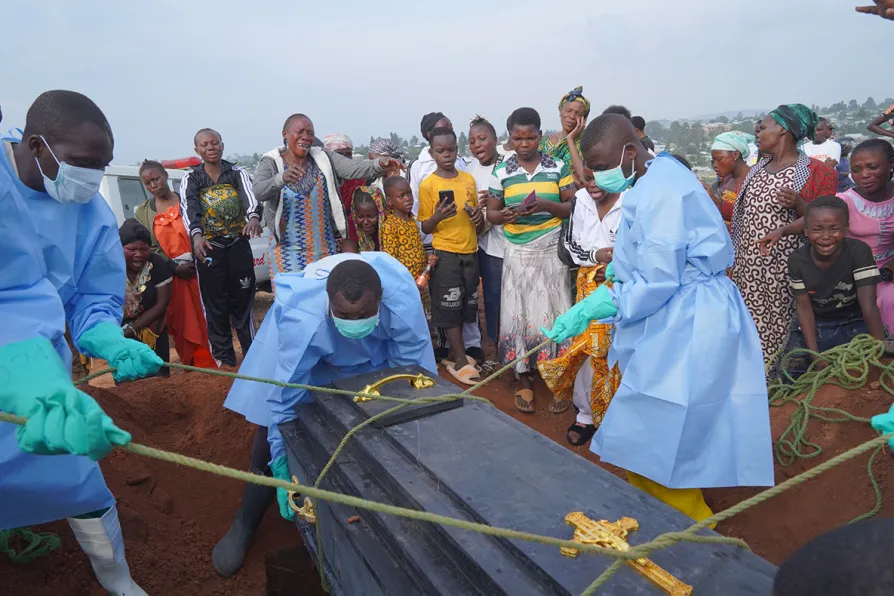
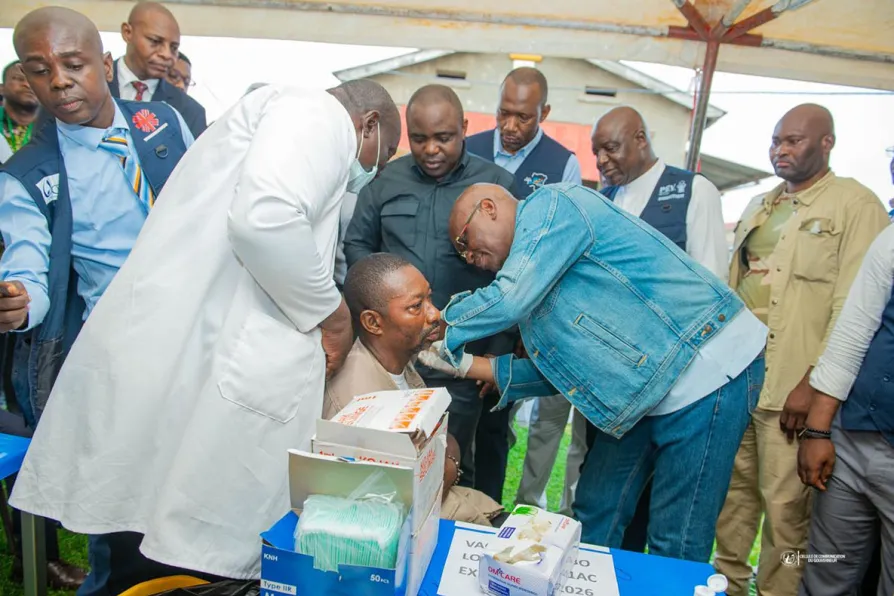
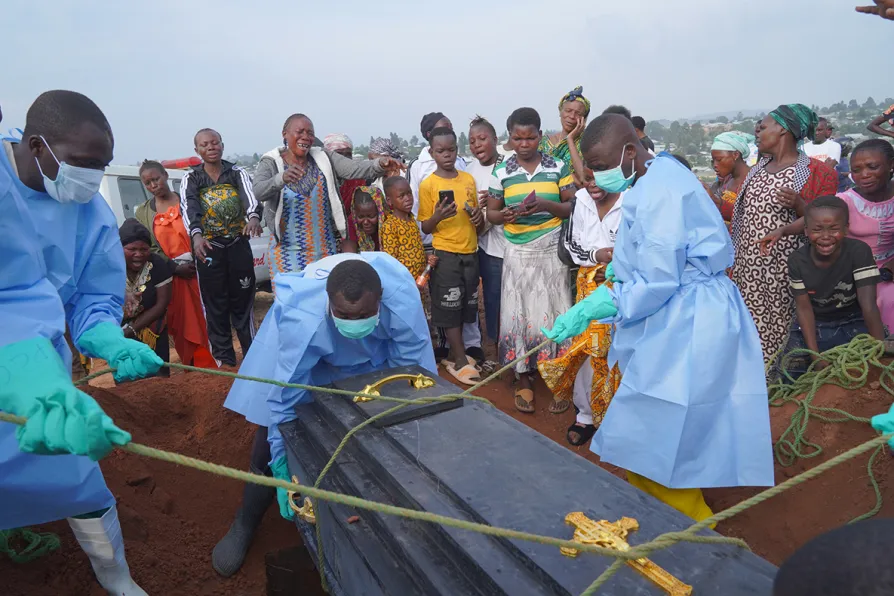
As thousands die in the eastern DRC, a global health emergency is being starved of funds, says S KRISHNASWAMY