ROB WARZYNIAK wades knee deep through a pile of ‘dead canaries’ of Trumpist policies which exacerbated the horrors of US capitalism domestically


 Latest editorial

‘Britain’s bases on Cyprus put our country in danger’
Cypriot lawyer and former central committee member of the Progressive Working People’s Party (Akel) TOUMAZOS TSIELEPIS discusses the case for expelling the British military from Cyprus
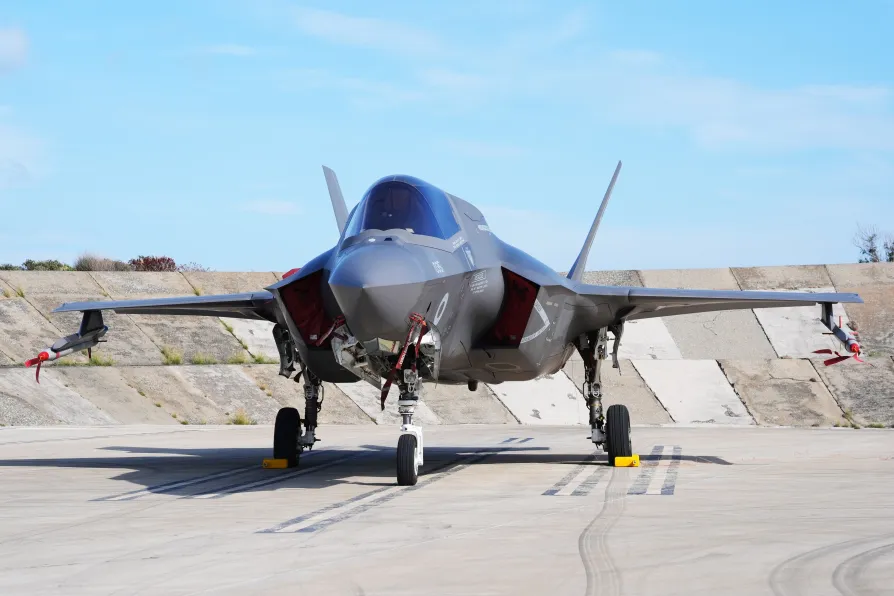 An F-35 jet at RAF Akrotiri in Cyprus, March 27, 2026

Without evidence or Nato consultations Berlin’s answer to the Leipzig incident is a rupture of relations. SEVIM DAGDELEN examines why
FRANCISCO DOMINGUEZ introduces the background to a conference on defending Latin America’s sovereignty
The glacier collapse in Nepal is yet another warning that a warming planet is making Himalayan disasters more frequent and destructive – but the countries facing the greatest risks are often those least responsible, says LI YANG
Nick Blair is set to benefit from a hugely lucrative contract to ‘virtually’ train the British army for its next war. Like father, like son, writes SOLOMON HUGHES
Even when tragedy strikes, Western media cannot resist the opportunity to turn it into a sordid propaganda opportunity, as the Nepal-China border tragedy shows, writes CARLOS MARTINEZ
Trade unions should be at the heart of the anti-racist push for reparations for the historic legacy and continuing impact of slavery, writes ROGER McKENZIE





In recent days, and following the attack on the British Base in Akrotiri, the issue of the bases has been in the news. How appropriate is it to raise the issue of the status of the bases now, so suddenly?
Obviously, the reason the issue has returned to the forefront with such intensity is indeed the incident involving the drone that struck the British Base in Akrotiri, which confirms what the Progressive Party of Working People (Akel) has always stressed — namely that the presence of the bases is a potential source of danger for our country and people.
The President of the Republic is making certain moves that give the impression of being made to serve communication purposes than of substance. For example, the issue of the bases’ withdrawal is not even on the table.
Indeed — initially the impression was cultivated that the government was raising the issue of removing the bases from Cyprus here and now.
As things progressed, however, it became clear that the intended discussion does not concern the status of the bases, but rather various other issues unrelated to their very presence on the island.
I believe that such issues must be handled responsibly, without creating excessive expectations that may prove unfeasible, at least at this present time.
Given that there is no public consultation—at least no consultation by the president with the political parties or political figures regarding this issue—how correct is that? In other words, should the President of the Republic act on his own?
It is a fact that the National Council was briefed after the events you mentioned had already taken place. The issue has two aspects. One is precisely that the bases on the island constitute a remnant of colonialism The bases, and more generally the entire framework of the Zurich–London Agreements, were the price paid for independence. Such agreements are extremely controversial, and their validity can be challenged, just as has happened in the case of Mauritius.
In other words, there are legal grounds and strong arguments for challenging the Treaty of Establishment that regulates the status of the bases. This is what we have been doing continuously, at least as far as Akel is concerned, ever since the bases were established on our island. Through marches, protest rallies, and numerous other actions. This is being done and must continue to be done.
It is another matter, however, to initiate the procedures provided for under international law for the removal of the bases. Once we press the button, there will be no turning back; we must see it right through to the very end. Consequently, we must carefully assess the timing of our actions, the prevailing conditions, and how feasible this ambitious undertaking will be at that particular moment.
Is it feasible to raise such an issue right now?
The unresolved Cyprus issue creates additional serious difficulties regarding this matter. Let me give an example.
If we initiate procedures to remove the bases, what will happen to the territories they occupy? And we are talking mainly about Dhekelia. We must ensure that these territories are returned to the Republic of Cyprus and are not left at the mercy of the Turkish occupying army. I would like to remind you that in 2004 a special protocol was included in the Annan Plan, complete with maps, according to which, in the event of a positive outcome of the referenda, approximately half of the territories of the bases would be returned to the federal republic, both in Dhekelia and in Akrotiri. In Dhekelia, 90 per cent would be returned under Greek Cypriot administration and 10 per cent under Turkish Cypriot administration.
Are these the only outstanding issues, or…?
There are other difficulties arising from the unresolved Cyprus problem. Such as, for example, the fact that the United Kingdom, since the Mont Pelerin III conference in early 2018, has stated that the Treaty of Guarantee is an anachronism and must be abolished from the very first day of a solution. We must ensure that they maintain this position, as well as the position regarding the return of half of the bases’ territory.
There are other related difficulties that we must take into account and address before proceeding with the process of abolishing the Treaty of Establishment. No legal proceeding guarantees a positive outcome, but in our case there is a strong case and a favourable opinion from the International Court of Justice—the one I mentioned earlier regarding the case of Mauritius.
There is, however, a difference. The argument put forward that such agreements are invalid was quite correct, but the court’s main argument was that Britain’s agreement was with the colony. It was not with Mauritius as an independent state.
Does this apply to Cyprus?
In our case, at least formally, the agreement was with the newly established Republic of Cyprus. I say this to conclude that no such process can lead with absolute certainty to the desired result, but, I repeat, there is a strong argument. Certainly, if the Cyprus problem were not pending, things would be easier because we would not face the obstacles I mentioned earlier. We must take these into account and overcome them before we set the process in motion.
Now, the issue of the bases in Cyprus, which you mentioned in relation to the Treaty of Guarantee, is linked to the Treaty of Establishment. If we “tamper” with this treaty, are there dangers in doing so?
It was a network of treaties (the Treaty of Establishment, which formally established the Republic of Cyprus and essentially regulated the status of the bases, the Treaty of Guarantee, and the Treaty of Alliance).
The difference between the Treaty of Establishment and the other two is that the Treaty of Guarantee and the Treaty of Alliance were concluded with the United Kingdom, Greece, and Turkey. The provisions of these two agreements — but not those of the Treaty of Establishment — had become fundamental articles of the constitution, which are supposedly unamendable and irrevocable (if that is even possible!). The Treaty of Establishment, however, was bilateral, between the Republic of Cyprus and the United Kingdom alone.
I understand, however, that the potential dangers you refer to concern the widely held view that, since the Treaty of Establishment established the Republic of Cyprus, its repeal would also abolish our state. This is not valid, since the existence of any state does not depend on such treaties; it is not a legal but a factual reality. This is a broad issue and I cannot elaborate further; I will simply note that several states have denounced such agreements and no-one has ever questioned their continued existence (Nigeria, Libya, Malta, etc).
What does this mean—that we can make the change?
We can certainly initiate procedures, but there are the political difficulties I mentioned earlier, as well as legal difficulties that we must take into account and overcome before proceeding.
One difficulty, for example, is that while the United Kingdom accepts the jurisdiction of the International Court of Justice, it has subsequently expressed a reservation stating that this does not apply to Commonwealth member states. To bring a case before the International Court of Justice, either the other party must generally accept its jurisdiction, or they must agree with you through a mutual consent to appear. So there is this difficulty.
It is for this reason that Mauritius chose not to file a lawsuit, but to seek an advisory opinion from the International Court of Justice. You can request an advisory opinion without the other party’s consent, provided that the relevant request is approved either by the general assembly or by the security council of the United Nations. In this case, the UN general assembly was activated, but the advisory opinion, unlike a decision, is not legally binding on Britain.
However, it is an act of great political prestige, and this was demonstrated in the case of Mauritius, where the United Kingdom was forced to take it into account in order to reach a compromise with Mauritius. Not exactly the one Mauritius wanted, but a compromise was reached.
Let me tell you that Akel had submitted a document to the National Council in which it suggested that a potential option was exactly what Mauritius did, decades later. Akel’s document was not limited specifically to the Treaty of Establishment, but concerned the entire aforementioned framework of the 1960 Agreements.
However, I want to reiterate that these processes are time-consuming and do not guarantee a certain outcome. Careful preparation and choosing the right moment are necessary, bearing in mind the difficulties that objectively arise, mainly from the fact that the Cyprus problem remains unresolved.
Let me tell you that as early as the 1960s, President Makarios denounced the Zurich–London Agreements from the pulpit. He knew, of course, that this did not amount to their automatic abolition. But it was a statement of intent, a declaration that carried its own significance. Therefore, the National Council does indeed need to engage in consultation and deliberation on how to overcome the problems and dangers before we set procedures in motion.
In other words, there is a great deal of exaggeration in how the issue was presented by the mass media and regarding the actual weight of the relevant reference in the European Council’s Conclusions.
Will all these possible procedures, regardless of the outcome, aim to abolish or alter the nature of the bases?
At first, it was not clear exactly what it meant that discussions with the United Kingdom would begin. It appears from the briefing given to the National Council that the goal at this precise moment is not to initiate the process for the abolition of the bases.
And one last thing. Are the British bases Cypriot territory or British? There is some confusion among the public regarding this issue.
The provision of the Treaty of Establishment is that the territory of the British bases remains under the sovereignty of the United Kingdom. This implies an acknowledgment that they are indeed a colonial remnant.
Beyond that, however, this provision—I repeat—can certainly be challenged. Every international treaty must respect the fundamental principles and mandatory rules of international law. You cannot write whatever you want in an international treaty.
There are certain limits which, not only in our view but also according to the ruling of the International Court of Justice in its advisory opinion on Mauritius, are being violated. This does not mean that the Treaty automatically ceases to be in force. The validity of an agreement—which, I repeat, we can quite justifiably challenge—is one thing; its force is another. The Treaty of Establishment remains in force because the procedures for its termination have not been initiated.
And the reasons why these procedures have not been initiated are primarily the political and legal difficulties facing this endeavour, especially under conditions of occupation.
This interview was published in the Cypriot newspaper Haravgi. A translation was provided to the Morning Star by the Progressive Party of Working People (Akel).

Similar stories

The US is hell-bent on dismantling the International Criminal Court as part of its assault on global legal systems, but others also have valid reasons to seek its demise. BEN CHACKO provides the analysis

The International Court of Justice has delivered its clearest ruling yet that the right to strike is protected under international law, write Professor TONIA NOVITZ, Professor KEITH EWING and Lord JOHN HENDY KC
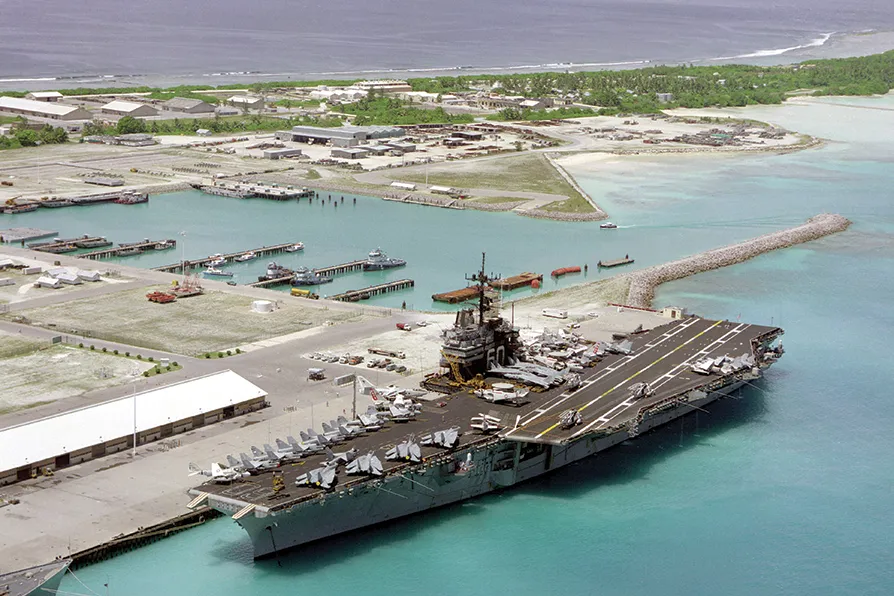
Trump’s ‘Peace Council’ is not a peace project, but a war and colonial council that renews Western colonialism, writes SEVIM DAGDELEN
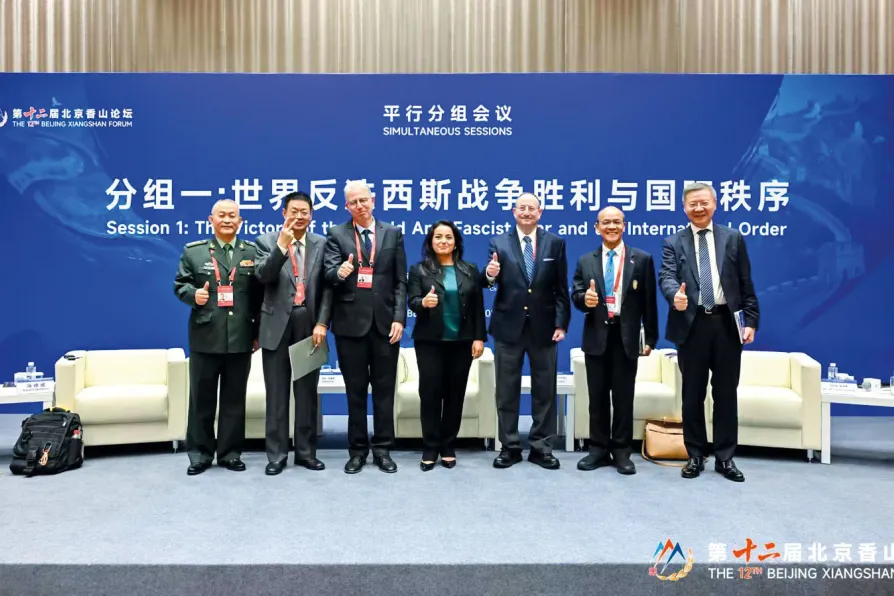
In a speech to the 12th Xiangshan Forum in Beijing, SEVIM DAGDELEN warns of a growing historical revisionism to whitewash Germany and Japan’s role in WWII as part of a return to a cold war strategy from the West — but multipolarity will win out