WILL STONE samples the 20th anniversary atmosphere of this eclectic end-of-season indie festival


 Latest editorial
Best of 2025 books with Alex Hall
Looking for moral co-ordinates after a tough year for rational political thinking and shared human morality

Comics are not just superheroes and spandex – it can be public art, telling public stories, suggests HARRIET EARLE
The bard serenades the Diggers of Wigan and their festive followers
ALEXEI SAYLE speaks to Angus Reid about a lifetime of protest, how to hone political art – and what to do now
ANDY HEDGECOCK, JAMES WALSH, LEO BOIX and MARIA DUARTE review Just An Illusion, Everybody Digs Bill Evans, Blue Film, Oasis: Don’t Look Back in Anger, and Runner
MARIA DUARTE recommends a nerve-wracking reconstruction of the 72 hours before the Normandy landings





ITS been a tough year for rational political thinking and shared human morality. Whether we look to Kant, Aristotle or the simple golden rule, the chasm between any professed ideals and the reality of 2025 has become an abyss.
What is good, sensible and progressive stands in stark opposition to the world we inhabit.
Formal democracy has hollowed into a sham. Great powers are run by oligarchies that deliberately sow division to maintain control. The 2024 British election proved this: voting Labour to eject the Tories merely revealed that changing the party in power is meaningless when policies remain captive to capital.
Starmer, Trump, Merz have each proven to be nothing more than spokesmen for capitalist power.
Meanwhile, the genocide in Gaza has proceeded, testing our collective capacity to bear witness and exposed our government’s depravity.
In Britain, justice is being undone: from the proscription of Palestine Action to the threat to jury trials by a successor to Bernie Grant, what we thought we had — such as it was — now seems in peril.
This manufactured culture war found its starkest symbol in a section of the white working class manipulated into festooning the country with Union Jacks and painting red crosses to demarcate who does not belong.
Against this bleak landscape, facts remain a necessary weapon. They are needed to dismantle the far right’s central fiction: not a wave of “anti-white racism,” but the enduring, scientifically measurable reality of anti-black racism.
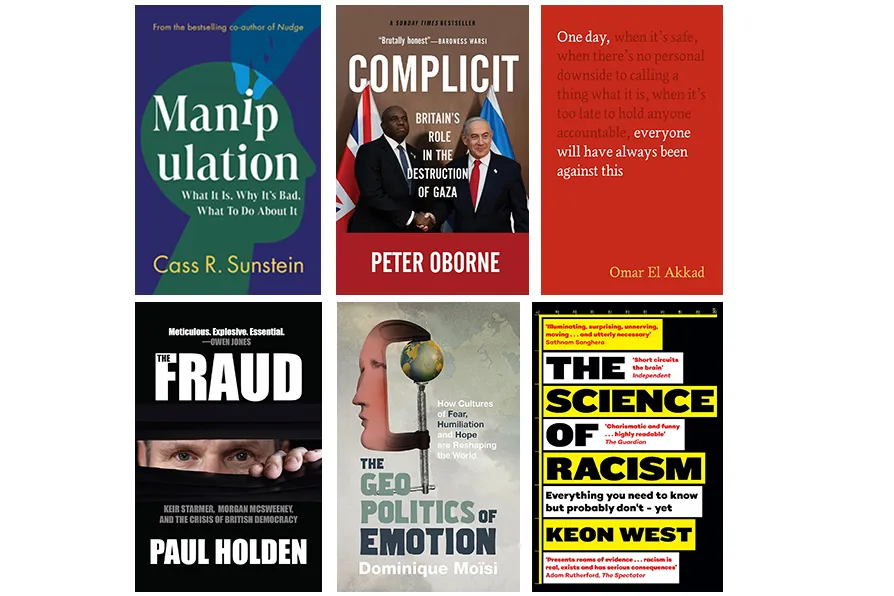
Keon West’s work The Science of Racism, (Picador, £10.99) confirms it as systemic and lethal. A surname like Oluwakuyesi, versus Farquarson, dictates your job prospects. Darker skin alters for the worse your risk of police violence and the quality of your healthcare. This isn’t opinion; it’s evidence.
The hollowing of politics was detailed in Paul Holden’s exposé of Labour under Starmer and his Svengali, Morgan McSweeney, The Fraud: Kier Starmer, Morgan McSweeney and the Crisis of British Democracy, (OR Books, £19.99).
The group Labour Together took a hammer to the party’s foundations, reshaping it into its current deformed state for nakedly ideological and careerist ends.
It revealed a truth uglier than mere policy betrayal: the cheap ambition of those who believe they could escape the deluge.
This complicity demands accountability. Omar El Akkad’s meditation (One Day, Everyone Will Have Always Been Against This, Canongate, £16.99) reminds us that, as with South African apartheid, future generations will deny supporting today’s genocide.
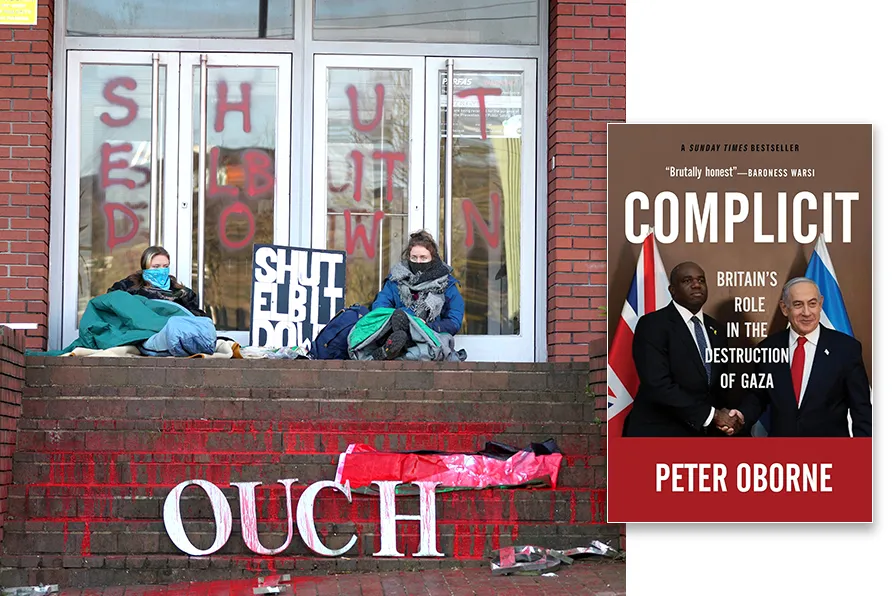
We must hope Peter Oborne’s Complicit: Britain’s Role in the Destruction of Gaza, (OR Books, £11.99) will one day serve as evidence in the trials of Britain’s political class. The question hangs: is maintaining power worth the risk of future imprisonment?
In a world unmoored from reason, Stuart Jeffries’ global treatise on stupidity, A Short History of Stupidity (Polity, £25) was vital. He revealed that what a society labels clever or stupid is often a cultural manifestation. Sometimes the stupid are smart and the clever are morons.
The corollary is damning: many of our supposed clever minds are also just spouting fancies of extraordinary daftness backed up with status and acclaim.
Internationalist pundit Dominique Moisi, in The Triumph of Emotions: Geopolitics in an Age of Resentment, Anger and Fear, (Polity, £14.99), disavowed his Russian ancestors for imaginary Ukrainian ones to side with geopolitical “goodies.”
Cass Sunstein asked ChatGPT about being manipulated while shopping online and published the results as a book: Manipulation: What It Is, Why It Is Bad, What to do About It (Cambridge University Press, £22).
The true body-shock, then, comes not from stupidity but from stark, rational alternatives.
Michael Schaeffer Omer-Man and Sarah Leah Whitson’s Blueprint: From Apartheid to Democracy: A Blueprint for Peace in Israel-Palestine (University of California Press, £23) was so sensible, so just, and so obviously life-saving that its very existence underscores the atrocity: its recommendations at present have no chance in our current international politics.
The system is not broken. It is operating precisely as designed. That means excluding humanity’s best ideas.
Our leaders are not stupid; they are operating with a cold, logical brutality that our criticism and action must match and dismantle.

Similar stories


ALEX HALL treasures a meticulous examination of international institutions that have given in to Israeli pressure during their still unfolding campaign of genocide
Looking for moral co-ordinates after a tough year for rational political thinking and shared human morality
GAVIN O’TOOLE welcomes, and recommends a a candid, evidence-based record of Britain’s role in the slaughter visited by Israel upon the Palestinians