


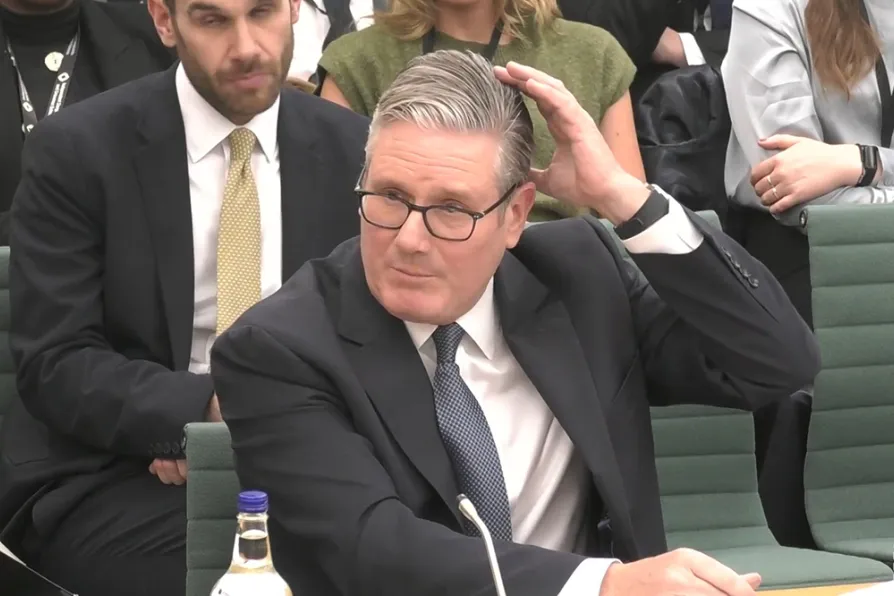
 Screen grab of Prime Minister Sir Keir Starmer appearing before the Liaison Committee in the House of Commons, London, December 15, 2025





POLLING evidence indicates that Britain is still heading for a Reform government at the next general election, now less than four years away.
However, that is more than enough time for Nigel Farage to be stopped, if the forces opposed to what would be an extreme right-wing government can cohere and mobilise.
Today’s YouGov opinion poll puts Reform on 28 per cent of the vote, with Labour on 18, the Greens and the Tories both on 17 and the Liberal Democrats on 14 per cent.
There is some evidence that recent scandals, including revelations of Farage’s school days racism, the conviction of its leader in Wales for acting as paid a Russian agent, and a series of inappropriate words and deeds by Reform MPs and council leaders, have taken some of the shine of the party’s image.
Under Britain’s absurd and anachronistic first-past-the-post voting system, however, that 28 per cent could still be enough to propel Reform into office, even though more than two-thirds of the country would be opposed.
Results in particular constituencies will become a lottery as voters have to choose between five serious options, and more in Scotland and Wales. Yet the prospects for the anti-Reform parties uniting are all-but invisible, the more so since developing a common positive plan for government would be utterly impossible.
So the priority must be to drive down the Reform vote to the point where it cannot secure a breakthrough to become a major force in the Commons.
That in turn requires, first, the ruthless exposure of Reform as divisive and racist, as neo-Thatcherites behind the populist mask, and as a menace to British democracy.
Many pledging their support to Farage at present have no real idea of the true nature of his party, nor of the consequences of its coming to power. They are simply, and understandably, frustrated and even disgusted with the status quo and its political champions.
It also demands building the broadest possible alliance on the streets against Reform’s racism and authoritarianism. The Together initiative, holding its first national demonstration in March, is a welcome step.
As Reform have broadened their attack from asylum-seekers to all migrants to British-born ethnic minorities their racism is becoming increasingly evident. Millions can be won to oppose them on that basis.
But there also needs to be a change in the government. The frustrations powering Reform’s rise are a direct consequence of Keir Starmer’s manifold failings in office, and they will not abate until he is replaced.
So Labour’s main contribution to building the anti-Reform front must be to change its own leadership as soon as possible.
Of course, a new face in Downing Street will signify little in itself unless it is accompanied by a complete overhaul of policy and political strategy.
Reform voters will not be won over by pandering to Farage and his prejudices, as championed by the Blue Labour faction, nor by attacks on welfare and pensioners.
Instead, decisive measures to tackle the cost-of-living crisis, cut energy bills, invest in green jobs of the future, nationalise water and the other utilities, tax wealth and big business and launch a major house-building drive will be required.
Reversing the militarisation of the economy and society must also be a key part of any programme for the government’s renewal.
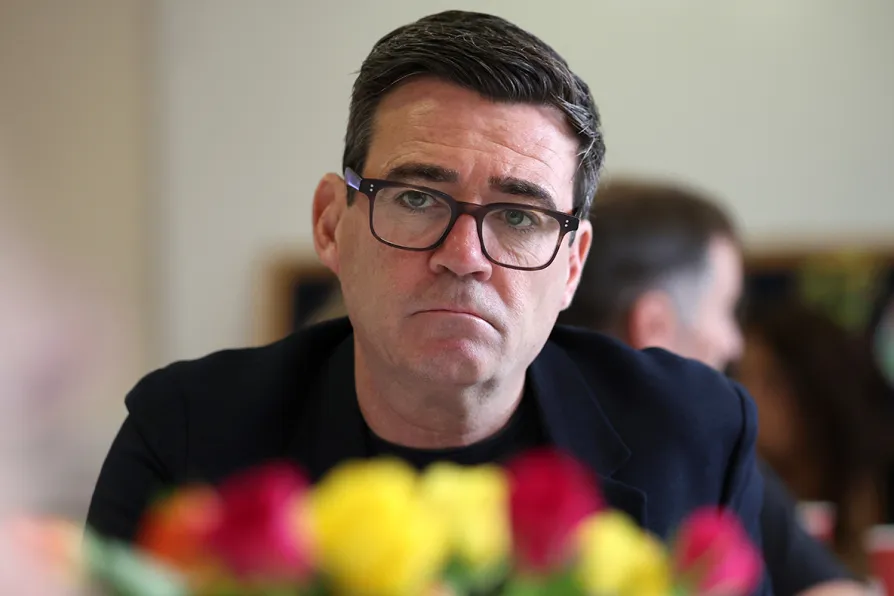
Whether Angela Rayner, Andy Burnham, Ed Miliband or someone else is the instrument matters less than this programme.
Reform is thriving on the listless drift of Starmer’s administration. It is time for Labour MPs to step up, and do their bit for the anti-Farage front, by bringing the curtain down on it.
