


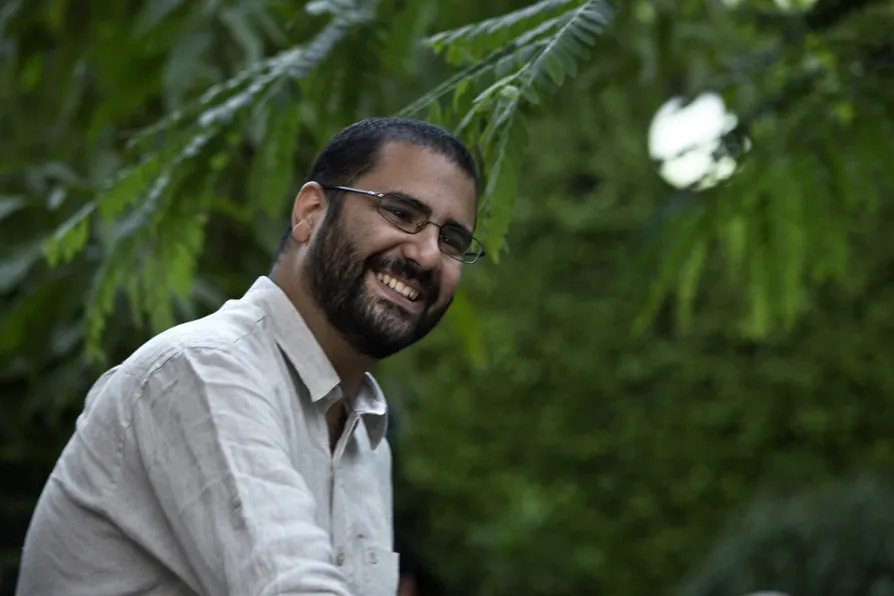
 Alaa Abdel el-Fattah pictured in September 2014





ALAA ABD EL-FATTAH, whose release and family reunion after years in the Egyptian prison system should be an uncontroversial success story for British diplomacy, is becoming a test case.
The sustained media attempt to discredit him is designed to relativise our commitment to human rights and degrade the concept of citizenship so it only applies to those deemed politically acceptable.
This explains the mockery former Starmer aide Paul Ovenden directs in The Times at the campaign for his release.
In a more civilised age Ovenden might have been expected to keep his trap shut after being forced to resign over disgusting text messages he sent about black socialist MP Diane Abbott. Given his whinge on resigning that it was “chilling” things he’d texted almost a decade earlier were being used against him, his decision to join the feeding frenzy around historic social media posts by Fattah is hypocritical at best.
Ovenden’s attacks on Abbott took place in the context of the sick bullying culture of the Labour right, exposed in great detail by the report leaked in 2020 on Labour’s handling of anti-semitism allegations. (One of those suspended because of disgraceful conduct exposed in that report, Emilie Oldknow, is now associated with Wes Streeting’s bid to become prime minister).
The Labour insiders who worked tirelessly to sabotage the Jeremy Corbyn leadership exhibited jeering contempt for the idealistic mass membership who’d joined Labour because they wanted to change the world for the better.
The same attitude is reflected in Ovenden’s testimony that the Fattah case was a “running joke among my colleagues” — a clique in which concern for a man imprisoned for years after a joke of a trial was simply incomprehensible (“sheer weirdness” in Ovenden’s own words).
There are Trumpian echoes here, which we cannot afford to ignore given liberal centrism’s growing alignment with the illiberal hard right.
Human rights are a joke to these people — a fringe issue that governments shouldn’t worry about. Nor do they apply universally — if you once said objectionable things on social media, then why should the British government lift a finger to end your unjust imprisonment?
If the Reform-Tory mob calling for this British citizen to be kicked out of the country want to see citizenship tied to political conformity, Ovenden shares a number of their obsessions: “The Stakeholder State ferments between the NGO and the campaign group, the celebrity letter-writing campaign and the activist lawyers.” Power, he argues, no longer lies with voters but with these influential groups.
Of course there are “stakeholders” whose influence on government policy overrides voters’ concerns: most of them are corporate, and they explain why wildly unpopular arrangements that make money for a few, like a privatised water supply or for-profit provision of NHS services, continue.
These are not Ovenden’s target: instead he wants to delegitimise political activism, implying that campaigns for justice are a distraction that politicians could do without. This is deeply sinister at a time when the government is desperate to suppress anti-war activism and imprison protesters.
“Activist lawyers” — a category that might once have included Keir Starmer — are a headache for governments that ride roughshod over our legal rights and continually push the boundaries of what the police can do to us.
The co-ordinated propaganda campaign against Fattah is part of a wider political offensive, which if successful will weaken protections against a repressive and overbearing state for all of us.
