Even the oligarchs of the artificial intelligence industries are warning that their creations have the capacity for the ultimate destruction of the planet and its population. ANDREW MURRAY suggests that there might just be other solutions


 Latest editorial
After our success ‘Together,’ what next for the anti-racist movement?
The sheer number present on the day, estimated at half a million, points to organisational acumen and bodes well for developing the movement, says DIANE ABBOTT
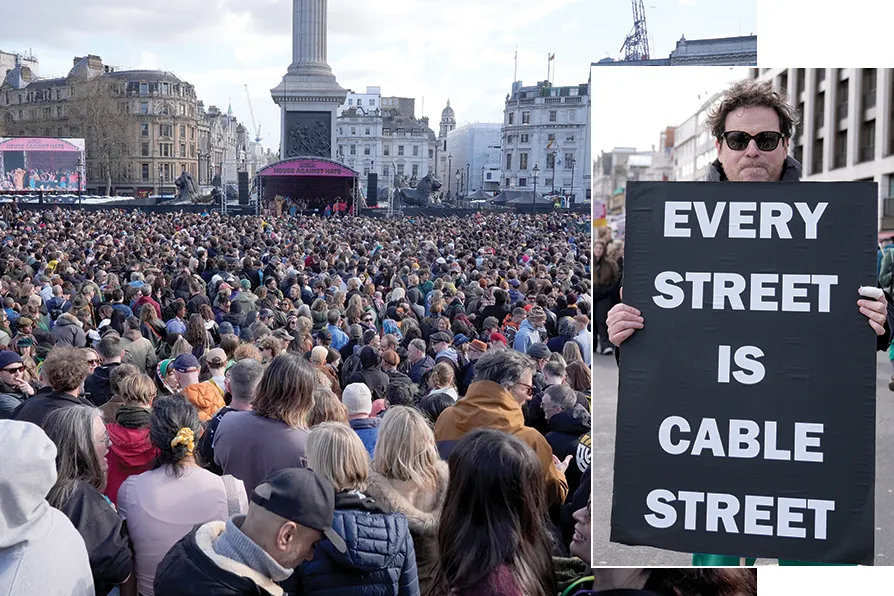 VOX POPULI: Together Alliance rally in Trafalgar Square, Londonon last Saturday
The Labour government must deliver on its commitment to bring back privatised services into the public sector. This not only saves money but also creates accountability and generates wider social benefits, argues ANDY MCDONALD MP
PCS is demanding the long-overdue return of essential services to public ownership, explains FRAN HEATHCOTE
Despite promises of a new era of insourcing, billions of pounds of public contracts continue to flow to private firms. Unions are now calling for urgent action to bring services back in-house, says EDDIE DEMPSEY
Public ownership of Great British Railways has enormous potential to improve our railway network, but that can’t happen unless jobs, employee rights and union recognition is at the heart of the transition, argues MARYAM ESLAMDOUST
If Labour is genuinely committed to supporting working-class students it must act urgently to reverse the funding crisis affecting universities and colleges, JO GRADY tells Christophe Domec
Challenges from the unscrupulous misuse of AI to steal actors’ voice and physical likenesses is being met with a firm union response, writes LYNDA ROOKE





THE “Together” demonstration was an enormous success. Even the enemies of anti-racism have been unable to rubbish it.
Like the overwhelming response of the media, their response was sullen silence. It is really disgraceful that the BBC did not carry it on any news bulletin, and says something quite disturbing about the state broadcaster.
A huge mobilisation by committed anti-racists does not fit the editorial line of the BBC, whose agenda corresponds to all the political forces promoting racism.
There can be no dispute. We have recently seen a number of pro-Palestine demonstrations which brought out people in their hundreds of thousands. On the other hand we saw last September’s demo organised by the far right, which was widely claimed as numbering 100,000 to 150,000.
We saw from aerial photos that the Together march was of the same order as the largest Palestinian demos, but probably a bit larger, while it was clearly much, much larger than the Tommy Robinson/Elon Musk festival of reaction.
Yet the success of the Together demo was not simply in bringing half a million out onto the streets to oppose the far right and the racists, although that is an important marker of its success. Equally important is that the mobilisation has such breadth and depth.
Trade unionists, anti-racists, peace campaigners, pro-Gaza currents, defenders of public services, faith communities and those who simply want to stop the far right and Reform UK.
These are the dimensions of a real mass movement, in size, breadth and depth. This is the enormous gain we have to build on.
Of course, everything that takes place happens in a context. In a period of just six months, we have had both the largest ever mobilisation of the far right in this country, and the largest, far larger mobilisation of those opposed to racism and the far right.
Both of these are a product of the long economic crisis which began in 2007-2008. The first operates to deflect from the crisis and offers only scapegoats.
The second, Together demo, opposes this and the political manifestations of it, the electoral rise of Reform UK and the street mobilisations, hostel burnings of the far right and the fascists.
The economic crisis shows no sign of abating. On the contrary, the illegal war on Iran seems set to exacerbate the existing crisis. As a result, we should expect that both the far right and those opposed to it will grow over the next period.
Clearly, we need to operate in a way that maximises our growth and minoritises them.
Here, the political context is paramount. The initial reaction of the far right came with the sieges of asylum-seeker hostels in the summer of 2024. But, as previously explained on these pages, the motivation was an anti-Labour one.
These riots occurred straight after the election of a Labour government and notably did not take place in the (often very deprived) areas which had elected Reform UK MPs.
From that time onwards Reform UK surged in the polls. It has now been ahead in the polls consistently for over a year. There is a real danger that they will be a factor of some sort in the formation of the next government.
But that is not being sustained. Reform UK’s average polling went from 15 per cent in the 2024 general election to a high of 32 per cent at the beginning of 2026. But is drifted significantly lower since that time, and is currently at a half-way point between these two, at 23 per cent.
There has certainly been a slightly greater focus on Reform UK’s policies, and even a smattering of critical comment.
Labour’s policy of building up Reform UK to undermine the Tories (including getting its own candidate effectively to stand aside in Clacton to benefit Farage) has been dropped.
There is too the Trump effect, where Farage has not been helped by association with a US president who is massively unpopular in this country.
But the decisive blows against Reform UK have come from voters, first in the Caerphilly and then in the Gorton and Denton by-elections. In both cases, voters coalesced around the progressive candidate they thought was best-placed to defeat Reform UK.
This led to significant defeats for Reform.
Whether this degree of focus and political sophistication can be replicated in a general election remains to be seen. But the by-elections have shown that the anti-Reform majority can be mobilised and can win.
Unfortunately, none of the voters’ main choices included the Labour Party. The sad reality is that, as long as the government is offering a menu of war, austerity and racism, that is unlikely to change.
The Labour leadership is set on this course, no matter what the consequences are for people’s lives or even the fortunes of the Labour Party itself.
Therefore, the movement that came Together on the demo will have to rely on its own strengths to move forward. Fortunately, these are considerable. No-one else is coming to save us.
There are several distinct strands to this movement, and it is important to understand the principal ones and how they relate to each other. The first is the opposition to either Reform UK and/or the far-right street thugs.
The second is all those who are extremely worried about the prospect for a government of the extreme right, and what that would mean across a range of policies, from immigration, to the NHS, to workers’ rights and to civil liberties.
The third is the body of committed anti-racists who are primarily motivated in opposing racism and fascism. They have been led throughout by Stand Up to Racism.
None of these groups operates from siloes. There is a great deal of overlap between them, and any diagram illustrating their commonality would be rather complicated.
This illustrates how the movement can be built going forward. It needs to appeal to different people, groups and communities based on their strongest motivations to come Together to oppose the racists and the far right. But it also needs to explain how these issues are linked, and how the racists try to divide us.
The maximum unity, and the maximum strength of the movement can only be achieved by raising all these issues.
We have already shown that we can beat back the far right and the racists. Together, we can win.
Diane Abbott is MP for Hackney North and Stoke Newington and Mother of the House of Commons.

Similar stories

The Together Alliance is hosting two summits, North and South, to build power and plan action against the scourge of racism peddled by the right. DANIEL KEBEDE urges mass participation
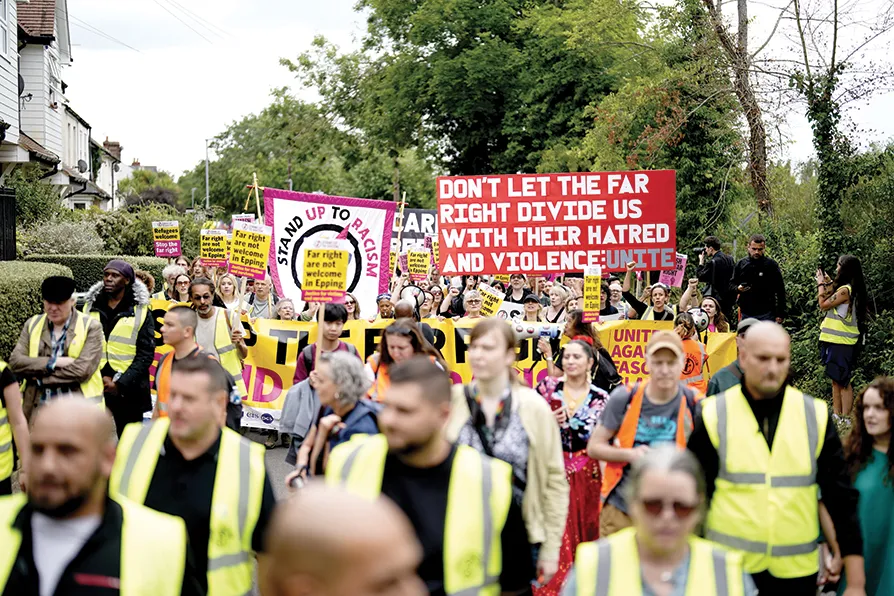
May elections will soon be upon us and SABBY DHALU calls for a maximum mobilisation, across Britain, to defeat Reform UK and the right at the ballot box
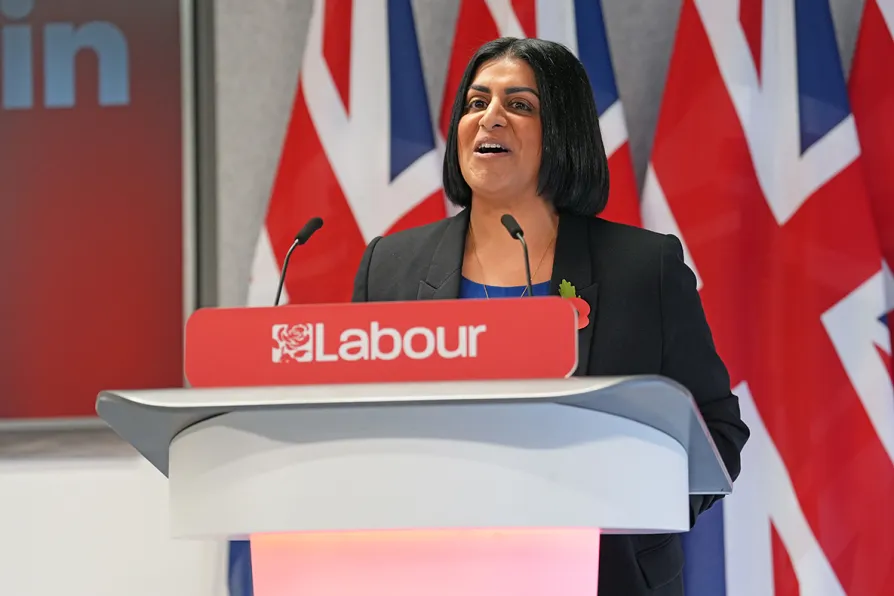
DIANE ABBOTT warns that Shabana Mahmood’s draconian asylum proposals fuel racist scapegoating and risk demoralising Labour’s base – potentially paving the way for Farage to No 10