


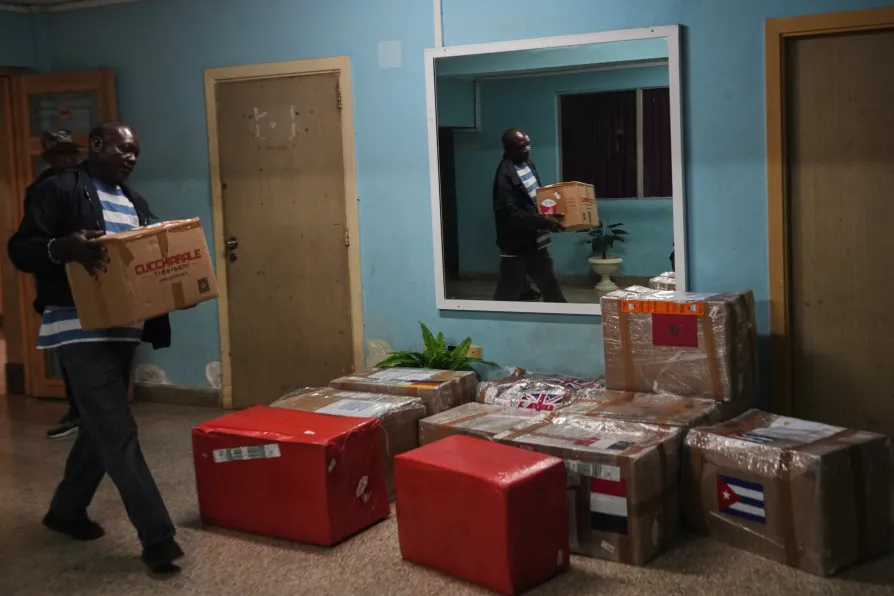
 A hospital worker carries medical supplies donated by members of the European Convoy to Cuba in Havana, March 16, 2026





ACTIVISTS from across Europe and Latin America arrived in Cuba on Wednesday to deliver desperately needed medical aid to the Caribbean island.
The decades-old US blockade of Cuba was deepened after the US carried out an illegal attack on Venezuela on January 3, killed 100 people and kidnapped President Nicolas Maduro and first lady Celia Flores.
Washington then stopped all Venezuelan oil supplies to Cuba and threatened heavy tariffs against any country that supplied fuel to the Cubans.
The activists belong to the Our America flotilla and plan to deliver more aid in solidarity with the Cuban people.
The flotilla, made up of rights groups and public figures, plans to deliver 20 tons of aid to the island by air and sea to help Cuba through its worst economic crisis in three decades.
Cuban media said that another convoy was set to leave Chile on Wednesday with “medicines, supplies and food to help Cuba cope with the tightening of the energy blockade imposed by the US.”
Another group of 140, including doctors, lawyers, union leaders and activists, plan to fly from Miami, Florida, to Havana on Friday to deliver 2.8 tons of medical supplies to clinics and hospitals, according to the women-led peace group Codepink, one of the operation’s organisers.
An aid flotilla from Mexico is also expected to reach Havana by the end of the week.
Separately, plans are being made for a solidarity event along the Havana waterfront.
Among those expected to take part are Pablo Iglesias, a former Spanish politician and founder of the left-wing party Podemos, Irish punk-rap group Kneecap, Brazilian climate activist Thiago Avila and former Labour leader Jeremy Corbyn.
Mr Corbyn said that the US had blockaded Cuba for six decades and “now the Donald Trump administration is intensifying,” but a majority of people around the world sided with the Cuban people.
“To defend the Cuban people is to defend sovereignty and freedom against the criminal logic of the blockade” imposed by Washington,” said Mr Iglesias.
Meanwhile, Cuban authorities slammed the decision by Costa Rica on Tuesday to close its embassy in Havana and for the Cubans to close their diplomatic presence in San Jose.
In a statement, Cuba’s Ministry of Foreign Affairs said the move was “clearly taken under external pressure.”
“Havana views this action as yet another instance of the Costa Rican government’s historical alignment with US policy against Cuba,” the statement said.
