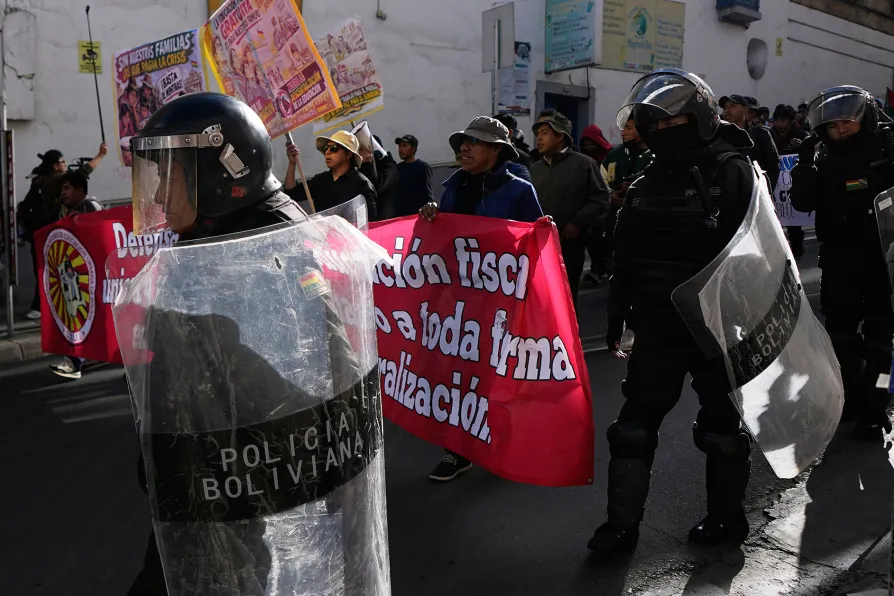
 Police escort protestors during an anti-government demonstration in La Paz, Bolivia, September 15, 2026






BOLIVIAN legislators have approved a $1.9 billion (£1.4bn) loan agreement with the International Monetary Fund (IMF), despite labour movement warnings that government spending cuts required under the deal would deepen hardship for already struggling families.
Just hours after Congress approved the loan, President Rodrigo Paz announced an immediate end to subsidies on diesel in line with IMF demands. Petrol remains subsidised for now, though Mr Paz has already reduced that support in recent months.
Such austerity measures threaten to reignite unrest in Bolivia, where weeks of road blockades in June and July paralysed much of the country as demonstrators demanded the right-wing president’s resignation. On Thursday, a state of emergency that Mr Paz had declared in response to the protests was extended by Congress for another 90 days. It allows for military intervention and the suspension of some civil liberties.
Main labour federation the Bolivian Workers’ Central and other unions have voiced fierce opposition to the IMF loan, predicting that measures tied to the deal would deliver a hammer blow to ordinary people’s living standards.
The Senate ratified the IMF agreement a day after the lower house had approved it, clearing the final legislative hurdle for the three-year financing programme aimed at replenishing dwindling foreign reserves and stabilising the ailing economy marked by high inflation and weak growth.
Although Mr Paz’s Christian Democratic Party lacks a majority in Congress, the centrist and right-wing legislator that dominate both chambers rallied behind the deal. The Movement Towards Socialism, the party that dominated Bolivian politics after former coca growers’ union leader Evo Morales won the presidency in 2005, now holds just two of the 130 seats in the lower house and none in the 36-member Senate.
The IMF first announced the staff-level agreement in July after months of negotiations with Mr Paz’s neoliberal government, which took power last year following nearly two decades of socialist rule.
The deal still requires approval from the IMF executive board before the funds can be disbursed.
Declining natural gas exports have deprived Bolivia of dollars needed to import petrol and diesel, contributing to chronic fuel shortages that began in 2023 and have persisted under Mr Paz. The Iran war has pushed up global fuel costs, making fuel subsidies an even greater burden on public finances.

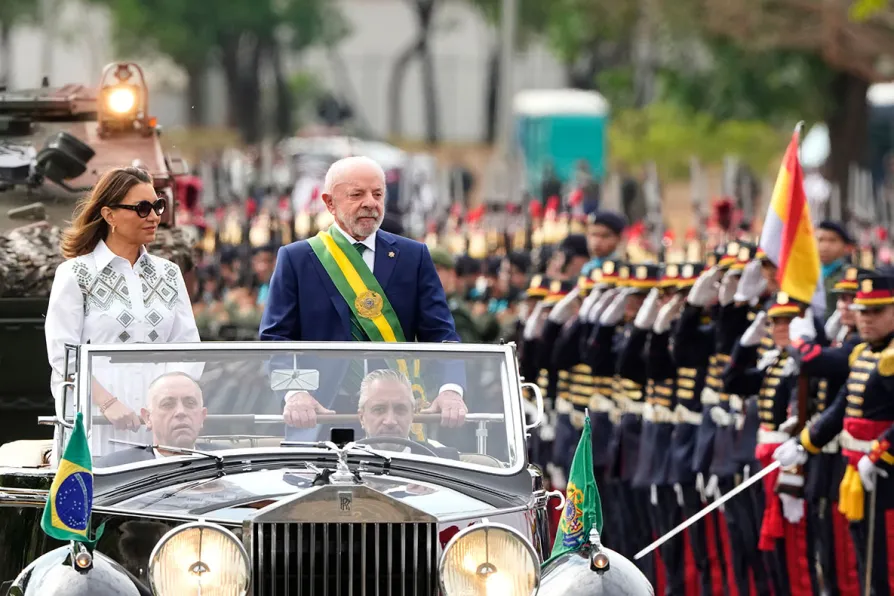
Powerful agribusiness interests are trying to overturn efforts by the Lula government to protect the environment and indigenous peoples of the Amazon region, writes GABRIELA SA PESSOA