

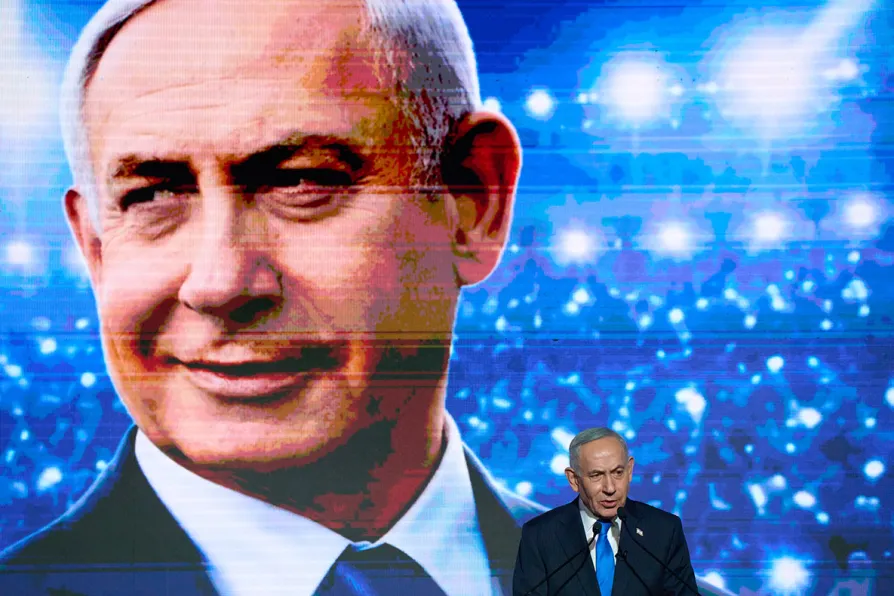
 Israeli Prime Minister Benjamin Netanyahu speaks at his Likud party New Year event in Tel Aviv, Israel, September 17, 2026





SYRIA has branded Israel the “greatest threat” to stability in the Middle East during a meeting of the United Nations security council.
Damascus’s permanent representative Ibrahim Olabi was speaking at the council’s monthly meeting on Syria’s transition since the fall of president Bashar al-Assad’s government.
Syria, Israel and Turkey also exchanged accusations over which country is entitled to have a military presence on Syrian soil.
Mr Olabi told the council that he had hoped to focus on the country’s progress but was compelled to address Israel’s actions in his country, according to a UN summary of the meeting.
He said: “Israel penetrated our villages, displaced our people, bombed our facilities, while we chose to spare the region further suffering.”
Mr Olabi went on to accuse Israel of responding to mediation efforts and dialogue with “air strikes, incursions and violations.”
He added that Israel’s aggression posed “the greatest threat facing the stability of the entire region, not just Syria,” noting an emergency declaration by 44 nations outside the council chamber that condemned a visit by the Israeli leadership to Jabal al-Sheikh inside Syrian territory on September 9 as an unlawful act and a “blatant violation” of international law.
Israeli ambassador to the UN Danny Danon played down Israel’s presence in Syria and instead lambasted Turkey.
He said: “If Israel’s tiny defensive buffer is considered a threat to Syrian stability, then what about a foreign power that controls a much larger portion of Syrian territory and is building its military presence there? I am talking about Turkey.
“Turkey has 20,000 troops and over 100 bases in Syria, controlling 5 per cent of its territory, 50 times larger than Israel’s ‘security buffer.’
“Turkey is now following the Iranian proxy playbook.”
Turkish ambassador to the UN Ahmet Yildiz countered that Turkish forces in Syria were there at the invitation of Damascus.
He said: “We categorically reject Israel’s attempts to smear Turkey’s legitimate co-operation with Syria and portray it as a threat in an effort to justify its own violations of international law.”
Mr Yildiz accused Israel of undermining this co-operation through “reckless attacks” and incursions into Syrian territory, and called on Israel to de-escalate and withdraw its forces.
Mr Olabi insisted that the council’s meetings on Syria “should not be talking about proxy issues any more,” adding: “That was the case during the [Assad] regime era. It should no longer be the case.”

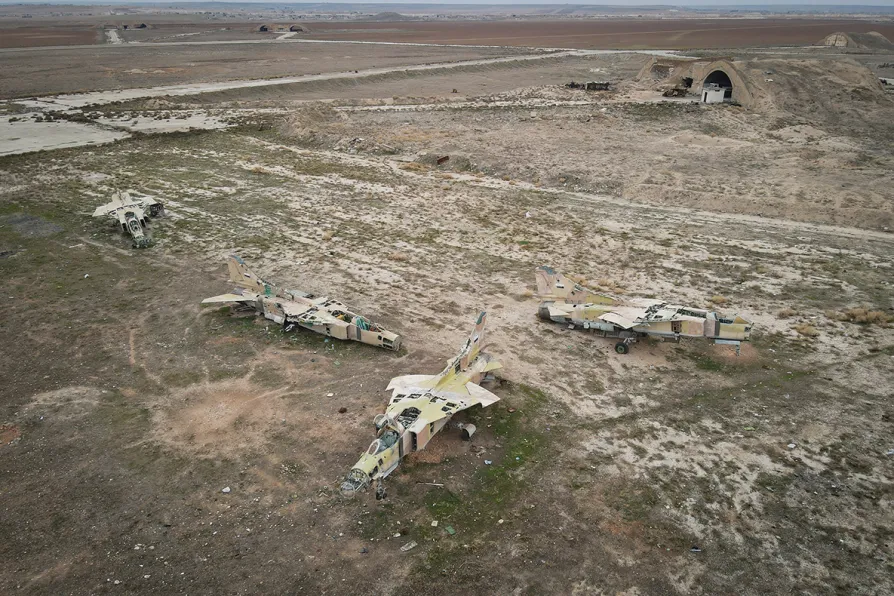
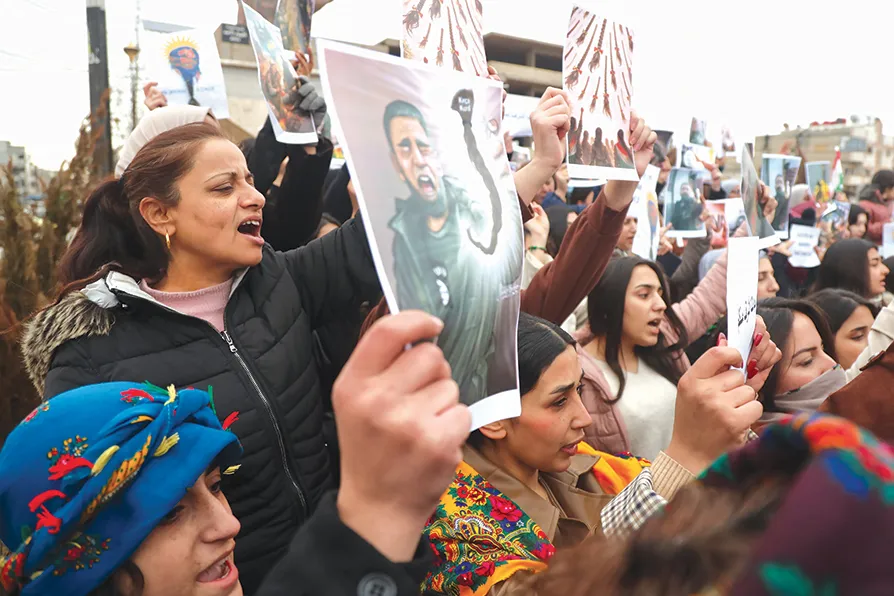
VIJAY PRASHAD details how US support for Syrian President Ahmad al-Sharaa allowed him to break the resistance of the autonomous Syrian Democratic Forces (SDF)