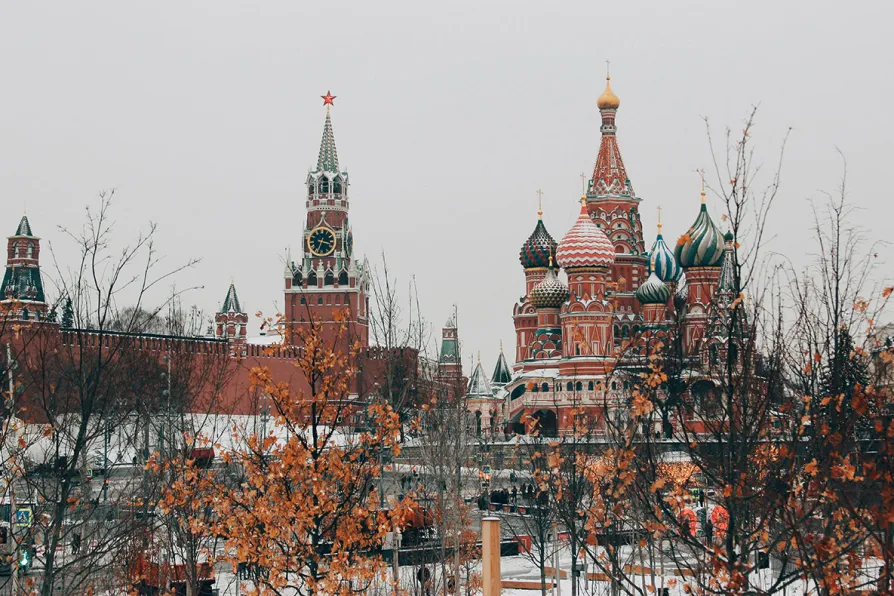
 The Kremlin in autumn, Russia





RUSSIANS began three days of voting today in the country’s first parliamentary election since Moscow’s forces invaded Ukraine in February 2022.
President Vladimir Putin’s United Russia party is all but assured to maintain its overwhelming control of the lower house State Duma, with several smaller parties also expected to retain seats.
Authorities spread the election over the weekend in a bid to boost turnout among the 111 million eligible voters and even allowed electronic balloting.
Mr Putin told the nation ahead of the vote that “your choice and resolve will once again demonstrate that millions of people stand behind our fighters, that we are a united people, bound by shared values, historical memory and love for the motherland.”
Voters cast two separate ballots, filling half of the Duma’s 450 seats by choosing political parties listed on the ballot paper and the other half by selecting individual candidates in single-seat constituencies.
The liberal Yabloko party, the only registered political entity that has come out against the war with Ukraine, was removed from the ballot last month by Russia’s Supreme Court, and only has a few dozen candidates in the single-constituency contests.
Muscovite Alexander Vertukhin said he believed “what United Russia and the communists are doing is quite sufficient — their platforms cover everything.”
Speaking at a Moscow polling station, pensioner Galina Vavilova said she thought ending the war in Ukraine was “the most important thing right now.”
She added: “Everyone wants peace, that’s what it comes down to, so that our guys are safe and sound.”
Fellow pensioner Lyudmila Kalinina wished for life “to stabilise for the better” and for “an end to the big divide between the ultrarich and the extremely poor.”
The election follows a summer of long-range Ukrainian drone strikes on oil refineries, with warehouses belonging to online retailers Wildberries and Ozon being attacked as well.
For the first time, the parliamentary election includes residents of four Ukrainian regions that became part of Russia as a result of battlefield gains.
Voting also is taking place in Crimea, the Black Sea peninsula taken over by Russia in 2014.
Authorities in Kiev denounced the voting in the Russian-held areas as illegal and urged foreign governments and international organisations not to recognise the election, warning Ukrainians that taking part in organising the balloting could carry criminal liability.