Latest editorial
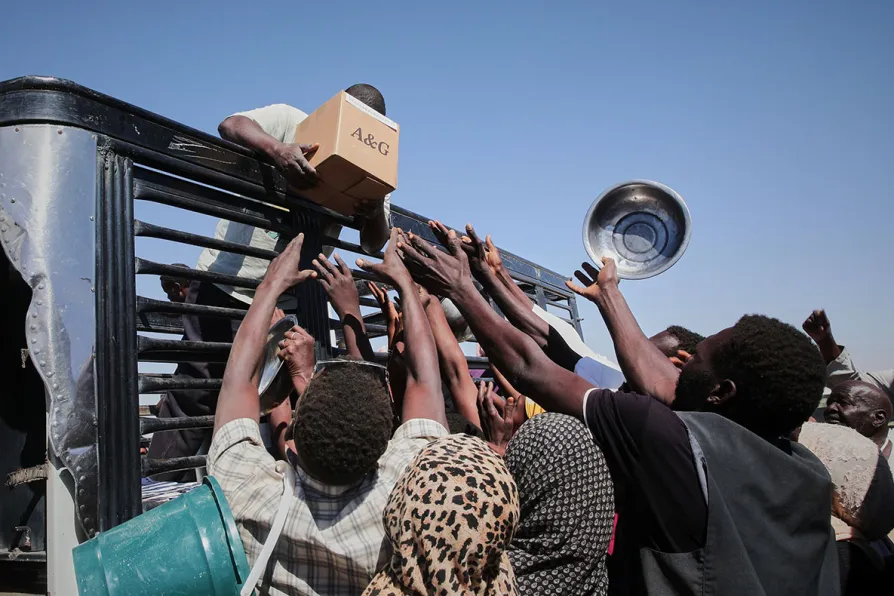 Sudanese families displaced from El-Fasher reach out as aid workers distribute food supplies at the newly established El-Afadh camp in Al Dabbah, Sudan’s Northern State, November 16, 2025





AID networks in Sudan are on the brink of collapse, United Nations agencies have warned.
The UN International Organisation for Migration (IOM) said on Monday that ongoing fighting, heavy rains and continued displacement threaten an “imminent end” to Sudan’s emergency relief supply via the IOM-managed Common Humanitarian Pipeline.
The war between the Egyptian and Saudi-backed Sudanese army and the rival United Arab Emirates-backed Rapid Support Forces (RSF) paramilitary has killed more than 200,000 people since it broke out in April 2023.
The conflict has also created the world’s largest hunger and displacement crisis. But amid a sharp cutback in global aid funding, resources are stretched.
In a statement, IOM director-general Amy Pope said: “The entire humanitarian system could collapse within weeks if we don’t act now.
“Without new funding, we won’t be able to get help where it’s needed most.”
Around 8.6 million people remain internally displaced in Sudan, with ongoing violence, flooding and heavy rain continuing to damage shelters and forcing people to move, the organisation said.
IOM said its network of nearly 100 national and international NGOs had supplied aid to 2.8m people since July 2023, but all of its members are short of funds.
The cost of keeping the IOM system running for a year to support 305,000 people is $15m (£11m) and the agency would require $42m (£31m) to return to 2024 levels of aid.
Funding for Sudan from the World Food Programme (WFP) has also fallen, dropping by about half this year, its acting head told the Reuters news agency
Executive director Carl Skau said that, while access had represented humanitarians’ largest obstacle in the past, now “we have a presence that we are not fully utilising because of the lack of funding.”
Last year, WFP received $645m (£478m), but this year’s funding has only reached $206m (£153m) so far.