Even the oligarchs of the artificial intelligence industries are warning that their creations have the capacity for the ultimate destruction of the planet and its population. ANDREW MURRAY suggests that there might just be other solutions


 Latest editorial
Ukraine-Russia conflict is a war against working people everywhere
Some British unions are making a strategic error in backing militarised solutions instead of working for a ceasefire and end to the war, argues LINDSEY GERMAN
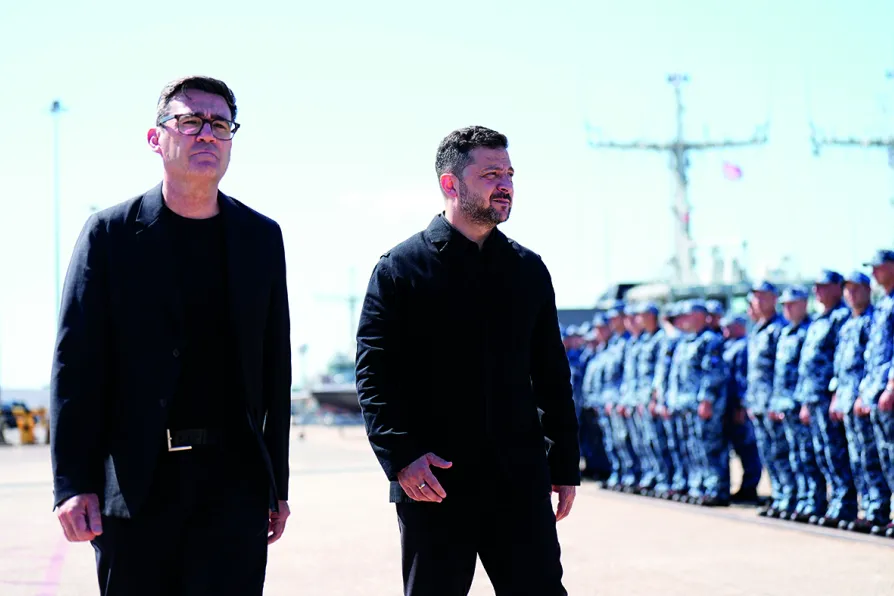 Prime Minister Andy Burnham (left) with Ukrainian President Volodymyr Zelensky as they view Ukrainian vessels and meet Ukrainian military personnel at HM Naval Base in Portsmouth. Picture: Aaron Chown/PA Wire/PA Images. Monday July 27, 2026.
The Labour government must deliver on its commitment to bring back privatised services into the public sector. This not only saves money but also creates accountability and generates wider social benefits, argues ANDY MCDONALD MP
PCS is demanding the long-overdue return of essential services to public ownership, explains FRAN HEATHCOTE
Despite promises of a new era of insourcing, billions of pounds of public contracts continue to flow to private firms. Unions are now calling for urgent action to bring services back in-house, says EDDIE DEMPSEY
Public ownership of Great British Railways has enormous potential to improve our railway network, but that can’t happen unless jobs, employee rights and union recognition is at the heart of the transition, argues MARYAM ESLAMDOUST
If Labour is genuinely committed to supporting working-class students it must act urgently to reverse the funding crisis affecting universities and colleges, JO GRADY tells Christophe Domec
Challenges from the unscrupulous misuse of AI to steal actors’ voice and physical likenesses is being met with a firm union response, writes LYNDA ROOKE





ALREADY into its fifth year, the war in Ukraine is shaping the politics of Europe in a way which is damaging for working-class people. It is this war, rather than the continued one raging across the Middle East, which is obsessing European leaders, who are focusing their rearming efforts on the danger of a supposed Russian threat to the whole continent, while making social cuts and worsening working conditions at home.
German Chancellor Friedrich Merz wants to enforce a longer working week to pay for a new arms economy which centres on war with Russia. In Europe, the Ukraine war and increased arms spending are linked, and they are also linked to further attacks on us.
The Tories have been demanding even more be spent on arms alongside cuts to housing benefit and reinstatement of the two-child cap on benefits, a particularly cruel policy that would push hundreds of thousands of children into poverty.
It is crucial that we understand the connection between the two. And it is why if we care about workers in both Ukraine and Russia we should be arguing for a ceasefire and negotiations, rather than continuing a war which has inflicted huge military casualties on both sides and is increasingly targeting civilians in drone and rocket attacks.
It is right that every trade unionist should support those suffering from war, showing solidarity and humanitarian support, and welcoming refugees. But our government’s support for Ukraine is completely connected to what is in reality a proxy war between Nato and Russia.
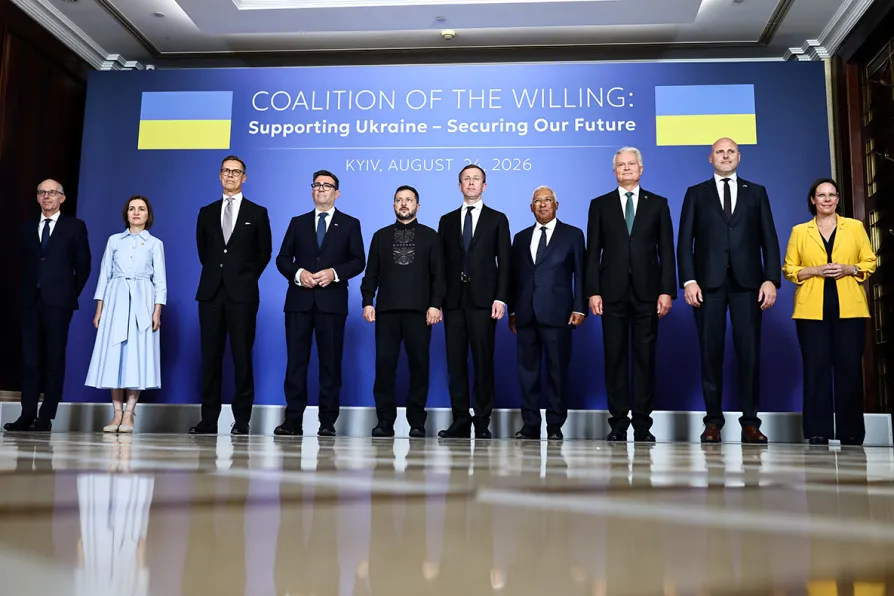
The policy of the Starmer government was to do everything it could to fund and broaden the war to defeat Russia. Andy Burnham is continuing this policy. His first overseas visit was to Kiev, and he is giving blueprints to develop weapons to Zelensky. As well as regularly increasing shipments of weapons, Britain has now been directly involved in Ukrainian air strikes inside Russia and on Russian targets, directly impacting Britain in open warfare with Russia — to which the Kremlin threatens to respond. The deep strikes inside Russia could not happen without Nato collaboration.
The reality is the conflict has now gone on for longer than the first world war and is not being won by either side. We know the dangers of either side deciding to escalate for various reasons — horrific outcomes, including the widening of the theatre of war, and the involvement of nuclear weapons. The danger of current wars linking up into a third world war is all too real.
The war is increasingly unpopular at home and abroad. Polling in May by Lord Ashcroft shows that British people support a diplomatic solution to the Ukraine war by a margin of more than four to one. And nearly three-quarters of Ukrainians said they would prefer to see direct negotiations begin between diplomatic representatives of Ukraine and Russia, with only 20 per cent preferring simply to fight until Russia’s military is defeated.
Some 74 per cent of Ukrainians would accept a peace deal freezing hostilities along the current front line and backed by Western security guarantees, according to a Kyiv International Institute of Sociology (KIIS) poll in September last year.
Working-class people have no interest in supporting these wars or the imperialist powers behind them. Which is why the campaign by Stop the War and a number of major unions for welfare not warfare, wages not weapons, is so hugely important.
But it’s difficult to reconcile this position with the pro-Ukraine policies that many of those unions have, or those who continue to demand significant increases in military spending. Burnham is following Starmer’s policy of rearmament which will hit their members at home.
There is also remarkable silence on what is happening in Ukraine itself. The government and Establishment are clearly riddled with corruption. There have been divisions and resignations at the very top, centred on the direction of the war, and with the former defence minister calling for elections, which have been suspended during wartime. There is growing opposition to conscription, where men are being seized on the streets to sign up for a war where the likelihood of death or injury is very high.
Similar charges can be made against Russia, and its invasion in 2022 was rightly condemned by the anti-war movement. While trade unionists here rightly condemn the abduction of Ukrainian workers at the Zaporizhzhia Nuclear Power Plant by Russian occupying forces, for example, there seems little recognition of the extent to which the Zelensky government is anti-union and has cracked down hard on unions and workers’ rights since the start of the war.
Anti-union laws have effectively banned independent unions. Only unions whose leaders are prepared to speak out in support of Zelensky, rather than against the continuation of the war or in favour of a negotiated peace deal, are still functioning.
Solidarity with the workers of Ukraine, as with all working-class people, is an absolute given in any war because it is they who pay the highest price. It means we need to end the war. We must acknowledge the huge toll paid in the war by workers on both sides of the war. If the majority of Ukrainians and Russians want some sort of negotiated peace to stop the slaughter, then trade unionists should too.
It’s important to get the politics right if we’re to combat the present war drive ideologically and practically. It has been 25 years since the events September 11, when we formed the Stop the War Coalition to oppose the war on Afghanistan and on Iraq. We opposed the Taliban and Saddam Hussein but were very clear that our main enemy was at home, recognising the danger of any intervention by our and the US government to bring about regime change.
Our opponents on the right accused us of appeasement. Opposing our own ruling class does not imply support for its enemies. We do not refuse to criticise repression and imprisonment — we have demanded that Boris Kagarlitsky and all other Russian anti-war prisoners be released immediately and unconditionally just as we recently demanded the release of Ukrainian anti-war activist Bogdan Syrotiuk. But what it represents is a recognition that the first duty of anti-war activists is to oppose their own government and that the main enemy to working people here and abroad remains firmly at home.
With a government carrying on the now-tradition of pouring arms into Ukraine and refusing any opportunity for a ceasefire to put an end to the carnage, even as it demands ever greater sums of money for militarism, it is more vital than ever to do so.
Lindsey German is national convener of the Stop the War Coalition

Similar stories
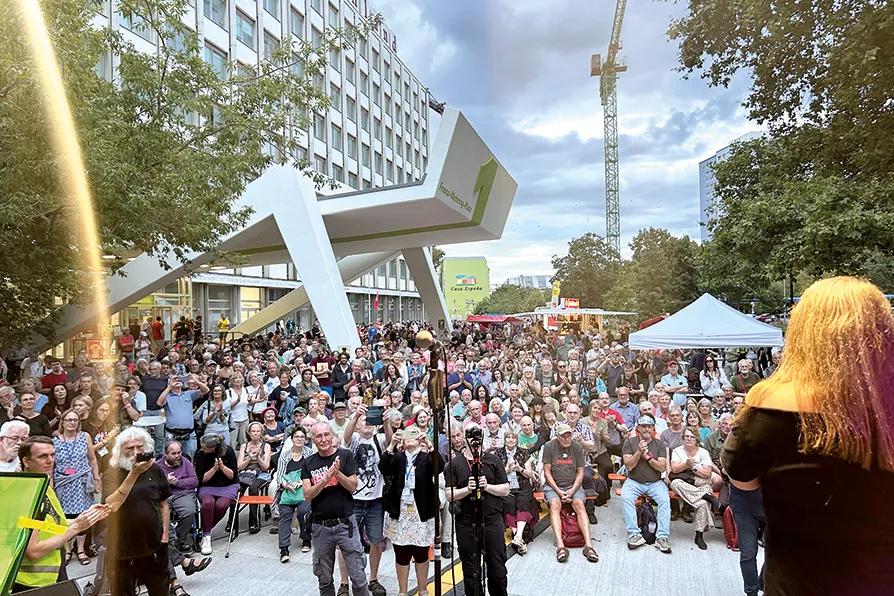
JOHNNIE HUNTER reports from the German Communist Party’s (DKP) weekly Unsere Zeit (Our Newspaper)-organised Peace Days festival in Berlin last weekend
Andy Burnham offers unconditional support for Zelensky but no solutions to the underlying conflict between the Nato/EU bloc and Russia, says NICK WRIGHT