TUC president and POA leader STEVE GILLAN speaks to Ben Chacko on the eve of Congress 2026


 Latest editorial
Congress should support a policy duet that harmonises with Labour’s perspectives
Live music and musical education are both under attack and threaten to impoverish our culture. The Musicians’ Union seeks allies in the fightback, writes NAOMI POHL
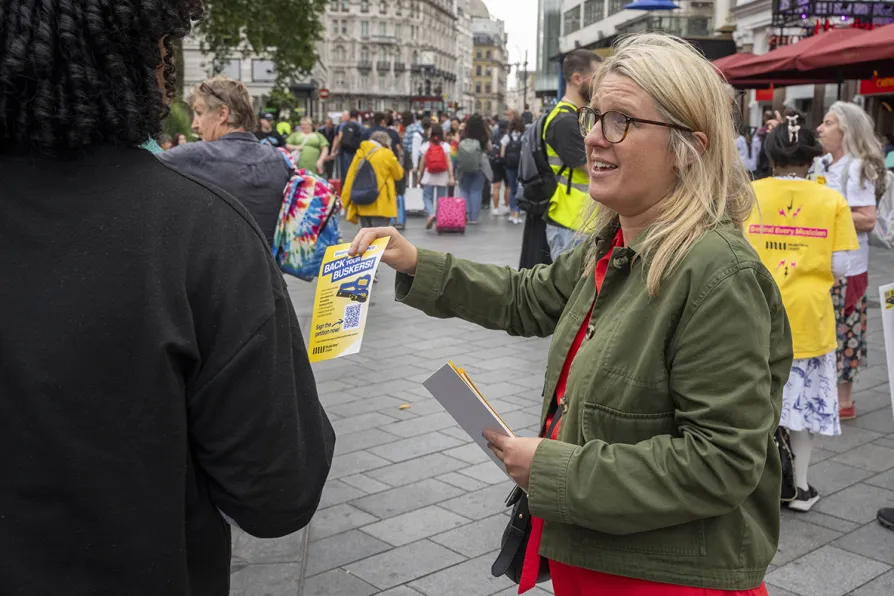 Naomi Pohl campaigning for musicians’ rights in Leicester Square. Picture by: Jeff Moore Media Assignments/PA Archive/PA Images. Thursday August 7, 2025.

As Cuba faces the most dangerous moment in its recent history, Britain must do more than condemn the US blockade at the United Nations, writes KEVIN COURTNEY, chair of the Cuba Solidarity Campaign
The Together Alliance is hosting two summits, North and South, to build power and plan action against the scourge of racism peddled by the right. DANIEL KEBEDE urges mass participation
Morning Star assistant business manager BERNADETTE KEAVENEY and international editor ROGER McKENZIE remember attending the 2001 TUC, suspended midweek after news of the World Trade Centre attacks
Whether it’s dented bike frames or broken ferries, MATT KERR wishes politicians had the same steely staying power of elite engineering instead of chasing disposable self-importance
The events of 9/11 reverberated across the United States and then the world. JOHN WIGHT remembers the eerie atmosphere that exposed racial divisions at the heart of Hollywood





THE Musicians’ Union (MU) is moving two motions at this year’s TUC Congress, highlighting key issues of concern for its members.
Both issues — the importance of live music in theatres and music education in schools — are absolutely core to the MU’s purpose and unite its almost 37,000 members. Both also highlight areas of work where members’ opportunities to work, their pay and conditions are under threat.
To start with music education, over the past 15-plus years, we have seen music teachers moved onto more precarious contracts, including zero-hours ones.
This has happened at the same time — this is no coincidence — as music and other arts subjects are falling down the list of curriculum priorities.
Labour intends to turn this around and ensure that music remains a key priority for schools. Participating in music benefits all children and young people, whether they go on to play an instrument longer term or not.
It boosts wellbeing, improves academic performance and can open the door to alternative career and achievement pathways for children who wouldn’t thrive on Stem subjects alone.
Our motion calls for equal access to music education in schools, which we know chimes with wider Labour policy as well as commitments made to music specifically in their manifesto.
A postcode lottery, where what parents pay for instrumental tuition varies from local authority to local authority, means access is far from equal at present. In the long term, this will lead to less diversity among professional musicians and in the music they create.
In addition, we are calling on the government to undertake a review of the music education workforce — including both visiting music teachers and classroom teachers. And finally, we are asking for TUC support to argue for all shortage subjects to be covered by teacher-training bursaries.
Our “Keep Music Live” motion has resulted from an increase in recorded music in some areas of live performance. It has long been a key pillar of our collective bargaining agreement for touring theatre and the West End that musicals should employ a live band. We know this is what audiences want and expect, as shown by our recent petition to save the Northern Ballet orchestra, which gained around 15,000 signatures.
The MU has a proud history of railing against new technologies replacing musicians’ employment; from early synthesisers to generative AI. There have been some cases, such as with DJs for example, where we’ve soon realised that legitimate music-making is just evolving and that more traditional employment will survive and in fact thrive.
But in musical theatre job replacement is taking place as a result of a system called “key comp,” which essentially means that keyboard players can trigger sounds replicating instruments.
This means an orchestra in a theatre pit can sound larger than it really is. In some extreme cases, such as the recent touring production of Friends the Musical, musicians are replaced entirely with recorded music.
This is a breach of our collective agreement for the touring-theatre circuit and it puts us in dispute with the offending producers.
At a time when generative AI threatens musicians’ livelihoods on a scale previously imagined only in the recorded music sector, it is more important than ever that musicians are engaged to perform in live productions and venues.
The use of “key comp” and recorded music in theatre is almost always a cost-cutting measure and a means to reduce employment. That is why our motion is so relevant to TUC delegates, as an important trade union issue.
Naomi Pohl is general secretary of the Musicians’ Union

Similar stories

DAVE WARD of the Communication Workers Union says unions must step up to meet the challenges of a transformed world of work

Labour must deliver its manifesto promises in full and begin the bigger task of restoring workers’ collective power, says MATT WRACK
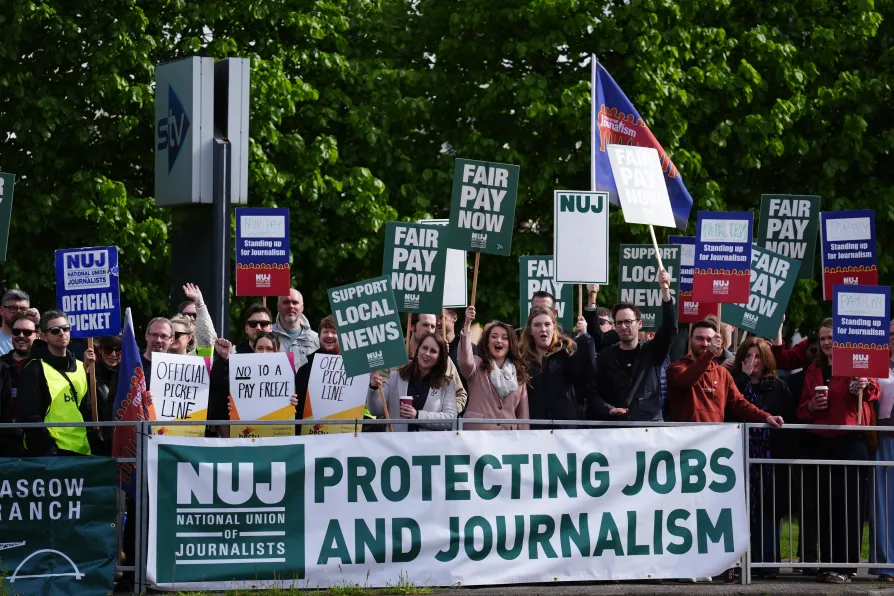
The NUJ is calling on the trade union movement to challenge the power of tech giants and resist cuts to public service broadcasting, with the future of quality, accessible journalism at stake, says LAURA DAVISON

Funding education properly is the surest means of empowering new generations to play a full part in democratic participation and social progress, it is also essential for children with special needs to achieve their potential, writes ANDREA BRADLEY