TUC president and POA leader STEVE GILLAN speaks to Ben Chacko on the eve of Congress 2026


 Latest editorial
Stand up for journalism and public service broadcasting
The NUJ is calling on the trade union movement to challenge the power of tech giants and resist cuts to public service broadcasting, with the future of quality, accessible journalism at stake, says LAURA DAVISON
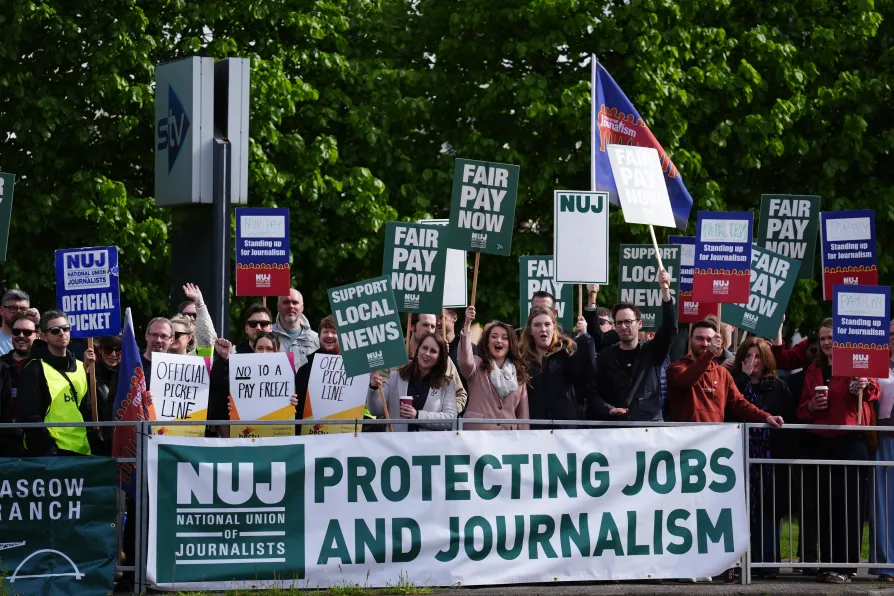 Members of the National Union of Journalists (NUJ) and Bectu who work at STV on the picket line outside their offices in Glasgow, May 8, 2026

As Cuba faces the most dangerous moment in its recent history, Britain must do more than condemn the US blockade at the United Nations, writes KEVIN COURTNEY, chair of the Cuba Solidarity Campaign
The Together Alliance is hosting two summits, North and South, to build power and plan action against the scourge of racism peddled by the right. DANIEL KEBEDE urges mass participation
Morning Star assistant business manager BERNADETTE KEAVENEY and international editor ROGER McKENZIE remember attending the 2001 TUC, suspended midweek after news of the World Trade Centre attacks
Whether it’s dented bike frames or broken ferries, MATT KERR wishes politicians had the same steely staying power of elite engineering instead of chasing disposable self-importance
The events of 9/11 reverberated across the United States and then the world. JOHN WIGHT remembers the eerie atmosphere that exposed racial divisions at the heart of Hollywood





THE NUJ submitted two crucial motions to this year’s TUC Congress, addressing tech giants’ unchecked power and the urgent need to protect public service broadcasting.
At the heart of both is the principle that the future of journalism cannot be left to the vagaries of an under-regulated and increasingly concentrated media market.
Our members have well-founded fears over the enormous power tech giants wield over the industry. Google commands more than 90 per cent of search engine traffic. Meta accounts for around half of advertising spend. And X remains one of the most widely used sources of news.
This dominance has come at the expense of workers and people’s ability to access accurate information. As journalists struggle to stay afloat in a gutted media landscape, tech companies suck up and spit out their work without making any contribution to its production.
At the same time, the likes of X and Facebook have replaced trusted news sources while failing to take responsibility for the disinformation and AI-generated fake news pushed by their algorithms and published on their platforms.
The only thing that capital understands is cost. The same platforms that pillage and profit from our industry should be compelled to play a meaningful role in its preservation. The motion we have submitted calls for a 6 per cent windfall tax on the tech giants to be reinvested in the sector to protect jobs, improve conditions and increase public access to quality news.
We’re also calling for a bolstered digital services tax to sustain funding — plus unambiguous enforcement of copyright law so that journalists and other creative workers are properly remunerated for the theft of their labour.
In an era of online disinformation and corporate media control, universally accessible public service broadcasting is needed more than ever. Our second motion focuses on the growing threats facing the sector.
It has been a worrying time for our members with the proposed takeover of ITV by US giant Comcast, Ofcom’s inexplicable decision to allow STV to cut local programming, and the BBC slashing one in 10 jobs as part of another brutal cost-cutting drive.
The BBC provides an essential public service. It reaches 94 per cent of adults across the UK each month, generates £6.7 billion every year, employs around 20,000 people and provides work for thousands of freelances. This is despite decades of underinvestment and political interference. Since 2010 the BBC’s budget has been cut in real terms by around 30 per cent and the latest round of cuts will have a devastating impact on communities across the UK with diverse original programming set to be axed.
Our motion, allied with calls from sister unions, calls on the TUC to sound the alarm over continued cuts to public service broadcasting and to press the government to intervene now. It also calls on the union movement to mobilise public support for workers and campaign for a properly funded, independent and representative BBC.
Some of this work has already started. In July the NUJ joined Bectu, Equity, the Musicians’ Union, The Writers’ Guild of Great Britain, and Unite in launching a public petition calling on the director-general and Prime Minister to back the BBC and its workers.
The renewal of the BBC Charter is a real opportunity to give the corporation the resources and reforms it needs. This includes addressing structural issues, such as ending political appointments on the BBC board, introducing worker representation, and providing secure universal funding.
Both of our motions show that journalism requires proactive government support. Fair taxation, stronger regulation and bolstered public service broadcasting are all essential to protecting the industry, workers, and the public in a rapidly changing media landscape.
Laura Davison is general secretary of the National Union of Journalists.

Similar stories
DAVE WARD of the Communication Workers Union says unions must step up to meet the challenges of a transformed world of work
Claims that digital media has rendered press power obsolete are a dangerous myth, argues DES FREEDMAN
![[Pic: Andrew Wiard]](https://msd11.gn.apc.org/sites/default/files/styles/desktop/public/2026-01/19860406_a_wiard_0001.jpg.webp?itok=d2RMNwWw)
LAURA DAVISON traces how Murdoch’s mass sackings, political deals and legal loopholes shattered collective bargaining 40 years ago – and how persistent NUJ organising, landmark court victories and new employment rights legislation are finally challenging that legacy