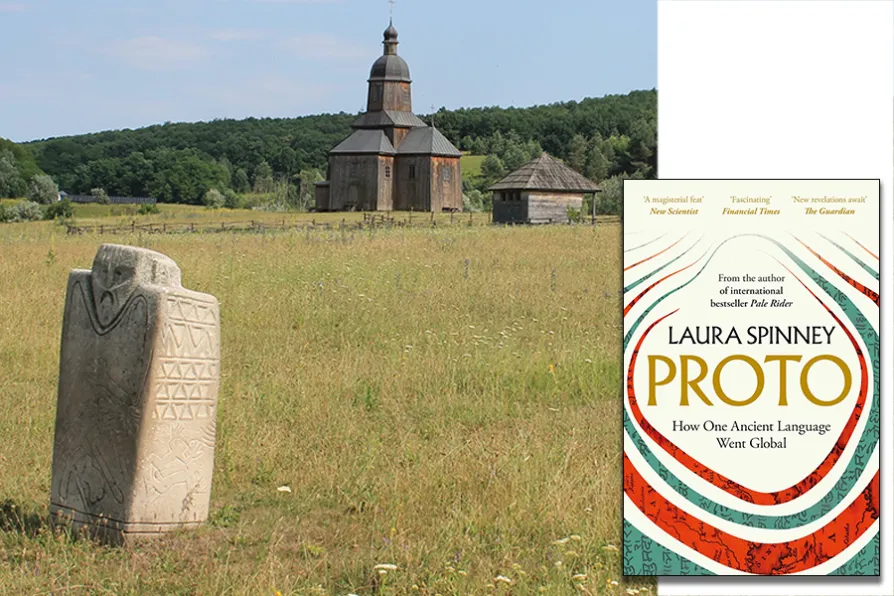
KEN COCKBURN traces the one original language – that of the Yamnaya pastoral nomads – from which all European and Indian languages derive


 Latest editorial
How did such a horror come to pass?
ALEX HALL recommends a searing panorama of our global predicament
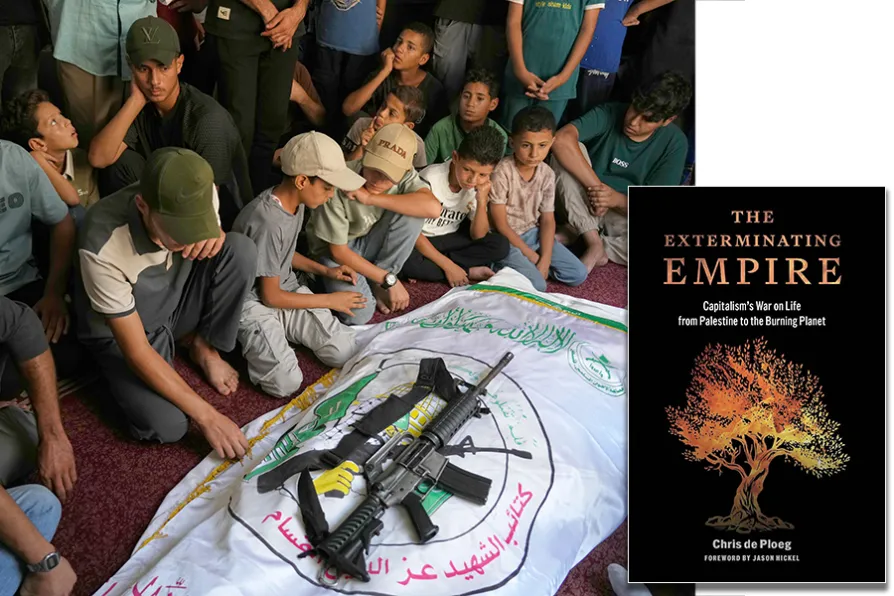 Palestinians mourn Muhammad Yazouri, killed in an Israeli airstrike. His body lies draped in the flag of the Mujahideen Brigades, a Palestinian militant group, with a rifle laid on top. Khan Younis, southern Gaza Strip, September 11, 2026.
PAUL DONOVAN is fascinated by the debunking of the iconic British war hero
Comics are not just superheroes and spandex – it can be public art, telling public stories, suggests HARRIET EARLE
ALEXEI SAYLE speaks to Angus Reid about a lifetime of protest, how to hone political art – and what to do now
The bard serenades the Diggers of Wigan and their festive followers





The Exterminating Empire: Capitalism’s War on Life from Palestine to the Burning Planet
Chris Kaspar de Ploeg, Monthly Review Press, £20.72
THE Exterminating Empire began life as a Master’s thesis, nurtured into book form by Jason Hickel — the degrowth economist and author of The Divide, who contributes the foreword. The mentorship was well placed and De Ploeg has produced an impressively searing panorama of our global predicament.
De Ploeg and Hickel highlight the public disorientation caused by the genocide in Gaza, and the collapse of moral credibility and hope that has followed. Western leaders poured in arms, military support, and diplomatic protection. Meanwhile their own people saw bombed hospitals, mass graves, and slaughtered children while Israeli leaders openly confirmed that this was their intent.
How did such a horror come to pass? De Ploeg does not flinch: it is not an aberration. It is how 500 years of Western capitalism has operated regardless of whether or not we can now see it on our phones. This is Gaza’s context. Imperialism’s modus operandi is violence, permeating every pore of the capitalist order.
The threads of Gaza, climate change, Covid, tobacco, the car industry, reproductive rights, voting, and the way that nation-states form and operate are expertly woven together through seven chapters, each of which provides a precis of what happened, in whose interests, and why. The scholarship is formidable: nearly a third of the book is footnotes spanning a vast range of studies.
Capitalism is characterised by omnicide: the killing of everything. This is natural outcome of the prime motivation of profit. This includes not just a genocide against a people inconveniently living for centuries in lands desired by settlers, but also the war against their living conditions. The destruction of Gaza’s farmland was foreshadowed by the US war against Vietnam’s forests.
Following Aime Cesaire, de Ploeg insists racism is integral to the way the system operates. Without racism you cannot dehumanise an entire people, a lesson as central to US slavery as it is to the Gaza genocide. Ideologies enforce realities, to paraphrase Voltaire: anyone who has the power to make you believe absurdities, has the power to make you commit atrocities.
The response to the climate crisis has been shaped by corporations and private capital. That is why the worlds biggest polluter — the US military — is exempt from intervention. That is why the crisis was externalised onto individuals using carrier bags and plastic straws. That is why the fossil fuel monopoly still predominates against more efficient (and less monopolised) green energy. And why, amid continuing record-breaking heat waves in the UK, newspapers offer little more than advice.
The crises march on. Protest is criminalised. The climate is ignored. Action is undermined. The forces of life are suppressed.
Seven chapters survey the horizon of our present condition. It makes for hard reading. For those already disturbed by what they have seen in Gaza, had the book ended at chapter seven, despair might be the only rational response.
But de Ploeg does not leave us there. He offers serious guidance on how pro-life and pro-people forces can respond to the formidable tasks ahead.
Crucially, he draws inspiration not only from the Marxist tradition of the West but also from the indigenous resistance of colonised peoples in the global South: Cuba, South Africa, and Palestine itself. This means organising. It means taking political risks with groups not always welcomed into coalition.
For the existing left, it means fishing in different parts of the river, preparing the ground, and establishing long-term strategies. It means persistence: water will eventually wear down rock. It means avoiding provoked disorganisation. And it means, as Che Guevara insisted, being motivated by great feelings of love.
The final chapter ends where it began: with Palestine. De Ploeg quotes Yahya al-Sinwar: “I entrust you with Palestine, the land I loved until death and the dream I carried on my shoulders like a mountain that never bends.”
To resist is the only decent thing left to do.

Similar stories
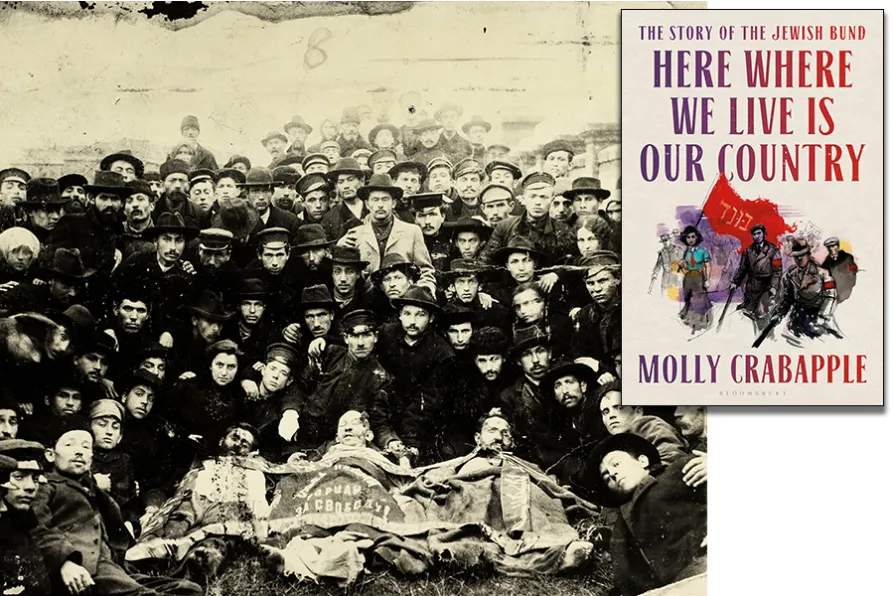
ALEX HALL welcomes a history of the Bund, and its emphatic demand for working-class solidarity across racial and ethnic difference
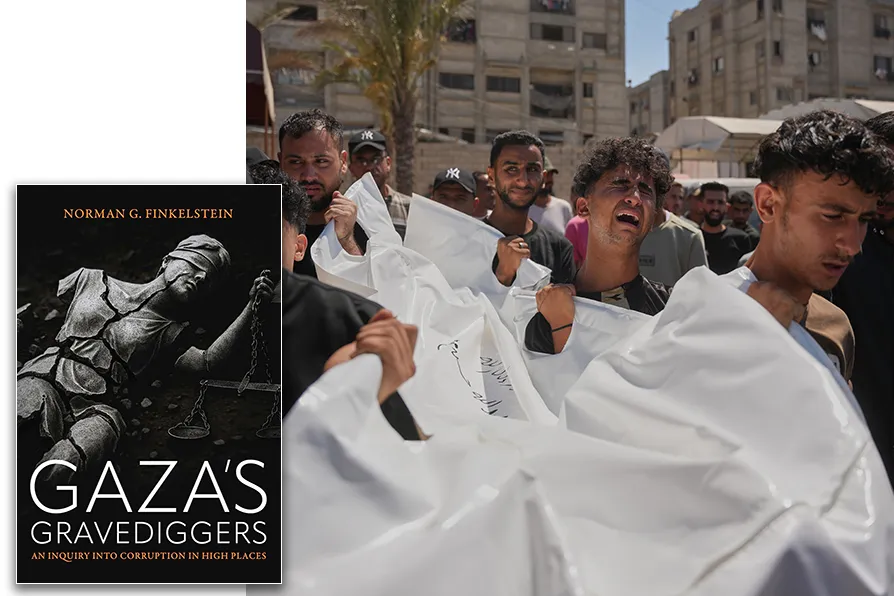
ALEX HALL treasures a meticulous examination of international institutions that have given in to Israeli pressure during their still unfolding campaign of genocide
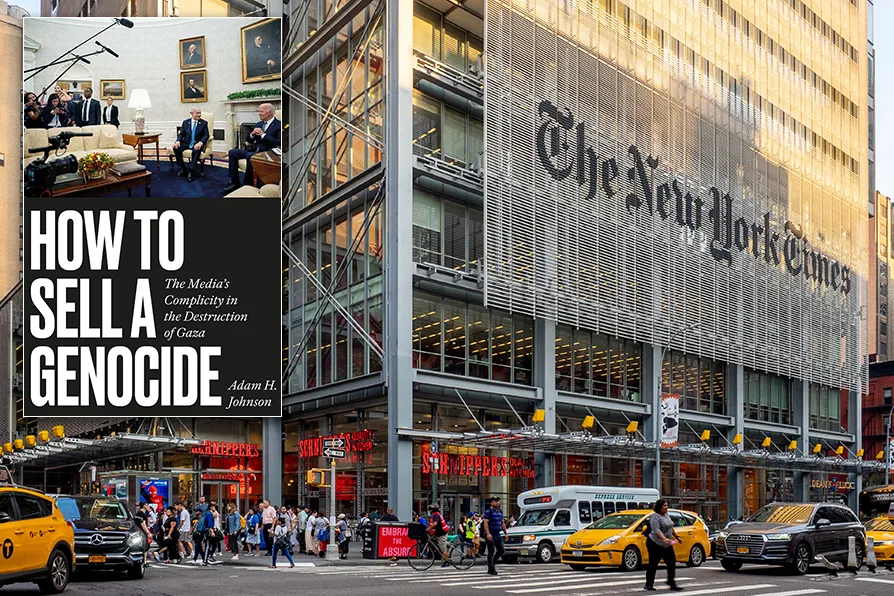
GAVIN O’TOOLE recommends a methodical unmasking of the US media’s complicity in the Israeli genocide, that should be a template for what’s needed to bring Britain’s corporate media to book
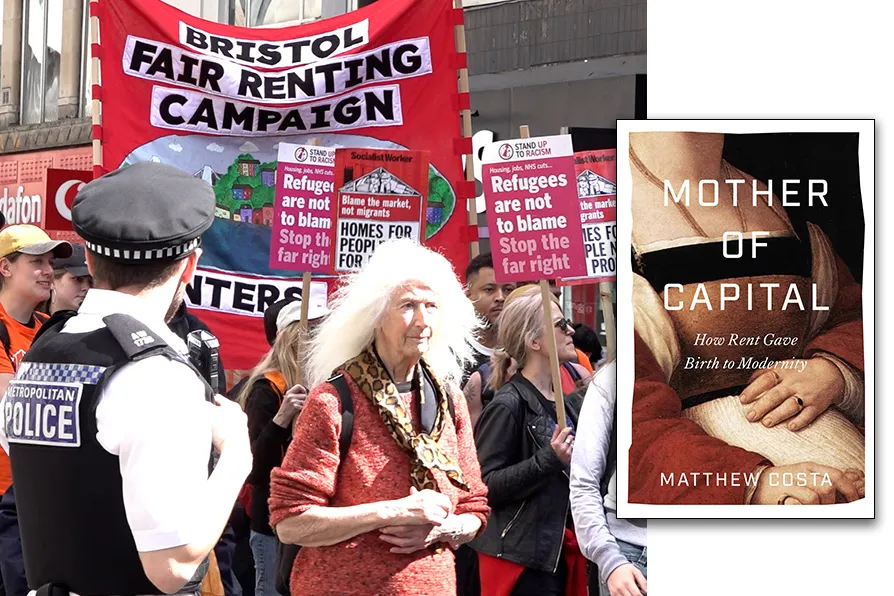
ALEX HALL is fascinated by a lucid and historically convincing account of how rent has dominated capitalist economies from feudalism to modernity