
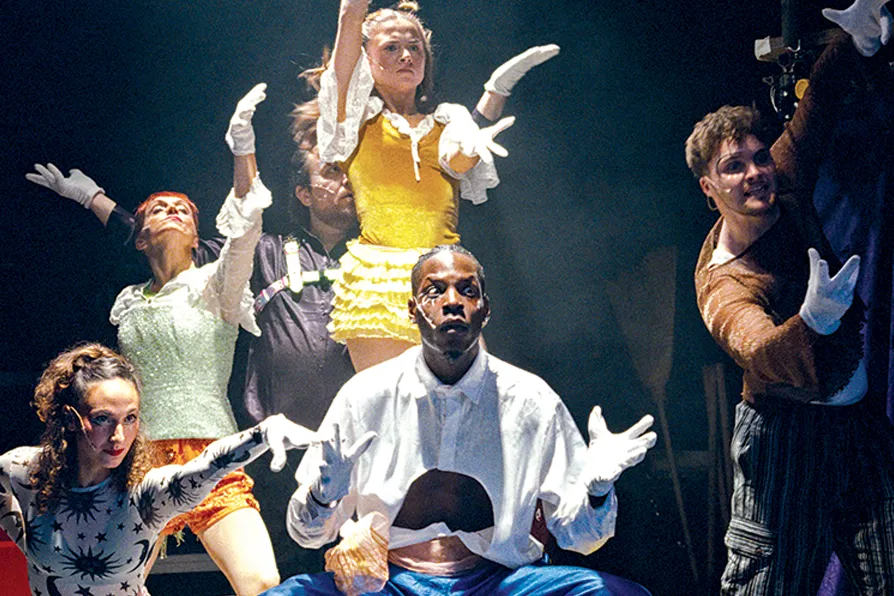
PETER MASON applauds the revival, 39 years later with the same team and cast, of Manfred Karge’s version of Brecht’s 100-year-old play, Mann Ist Mann

The Marilyn Monroe conspiracy
PAUL DONOVAN applauds an intriguing multi-layered depiction, dominated by a stunning impersonation of Marilyn herself
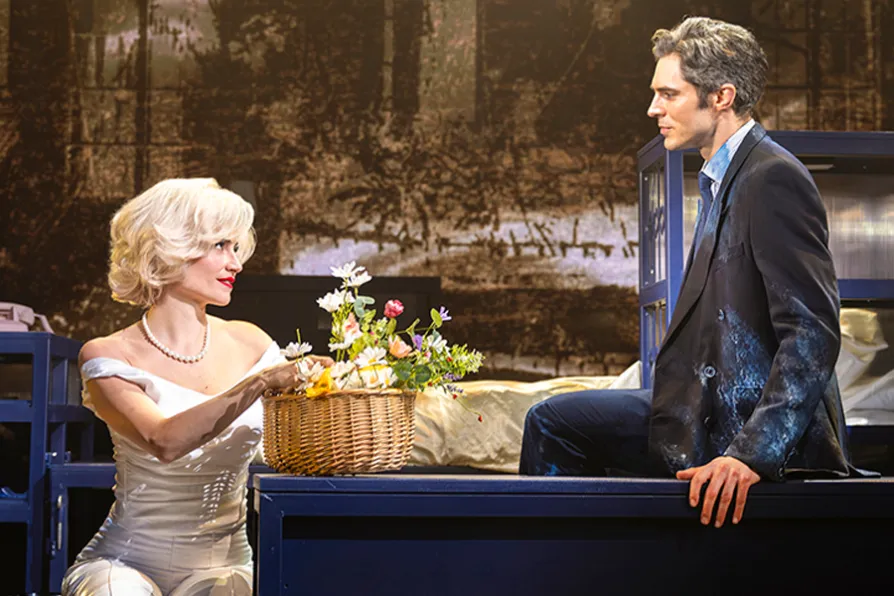
 STAR TURN: Pixie Lott as Marilyn and Paul Kane and Robert Kennedy [Pic: Pamela Raith Photography]
New releases from Biita Houdei, The Mary Wallopers, and The Tubs
New releases from Biita Houdei, The Mary Wallopers, and The Tubs
MAYER WAKEFIELD applauds a fearless attempt to bring to the stage the 1984 toxic gas disaster in Bhopal, India
ALEX HALL applauds the account of a dogged, traumatic and punishing campaign for justice that has lasted from 1998 to the present day
NICK WRIGHT laments the political bias of an epic attempt to tell the history of the liberation of France from the Nazis, that excludes both the decisive contribution of the Soviet Red Army, and of the French communist party itself





Who Killed Marilyn?
Emerald Theatre, London
PIXIE LOTT dominates this play about the life and, ultimately, the death of Marilyn Monroe.
The play comes at a timely moment, namely, the 100th anniversary of Monroe’s birth; something that is being marked by an excellent exhibition, Marilyn Monroe — a Portrait, at the nearby National Portrait Gallery.
A lot is packed into the two-hour-plus play, that runs through the life and loves of this 20th century icon. Heavy on conspiracy theories, this multi-layered depiction also addresses the insecurity of Monroe’s life. Her demons, born of a troubled upbringing.
Totally in control of her image when modelling, she struggles to get the recognition she feels she warranted as an actor. Always the sex symbol, rather than the actor. Confident, yet vulnerable.
The sense of conspiracy comes from the involvement with President John F Kennedy and his brother Robert Kennedy. Indeed, the production could arguably be perceived as a roller-coaster of ’60s conspiracies.
The closeness of relationship between the shady worlds of politics, organised crime, law enforcement and showbiz is well captured. Mafia boss Sam Giancana, seemingly implicated in the demise of Marilyn, with J Edgar Hoover’s FBI in the background extracting leverage, particularly on the Kennedys. Giancana and the mob were also later rumoured to have played a role in the assassination of JFK.
The production is well put together by director Philip W McKinley. The lighting adds a sinister element. Everything, though, centres around Lott.
The narrative is strong, running through Marilyn’s life’s and loves, from baseball player Joe Di Maggio to playwright Arthur Miller and the Kennedys. There are the cheesey moments, like when, in the throes of passion, Monroe asks JFK to repeat the part of his presidential address: “Ask not what your country can do for you, ask what you can do for your country.” Maybe, an ironic nod that Kennedy’s multiple partners were serving their country.
The whole play centres around a static set, made up of the bed where Monroe died. Lott is the narrator throughout, shimmering from one scene to the next.
One criticism would be that maybe there is too much swapping around of characters, with all but Lott and Ryan Ellsworth (Dr Ralph Greenson) having multiple roles. So Julie Armstrong plays housekeeper Eunice and J Edgar Hoover, while Simon Bass is Arthur Jacobs, Frank Otash, Joe Kennedy and Lawrence Olivier. This can give a certain cramped feel.
The production is narrow in that it does not stray much beyond Monroe’s sex life, there could have been more depth.
Overall this is a production certainly worth seeing. An intriguing conspiracy tale, sewn together by writer, Sharleen Cooper Cohen. It certainly raises questions about what really happened to Monroe. Well directed and executed by a good cast, it is Pixie Lott who steals the show.
Runs until October 29. Box office: (020) 8165 9933, emerald.london.

Similar stories
MAYER WAKEFIELD is entertained but let down by an audacious production that, sadly, doesn't ring true

MARY CONWAY is disappointed by drama that, despite accomplished performances, cannot overcome an unfocused script
MARY CONWAY keeps up with the sheer pace of a drama about the terrible gap between sanitised reporting and real-life turmoil of race and gender
JAN WOLF enjoys a British revival of the 1972 come of age farce/panto Pippin