
PETER MASON applauds the revival, 39 years later with the same team and cast, of Manfred Karge’s version of Brecht’s 100-year-old play, Mann Ist Mann

Organising capitalism’s discarded people
RON JACOBS welcomes a history of the Young Patriots Organisation that is also an organising manual with applications and implications for today
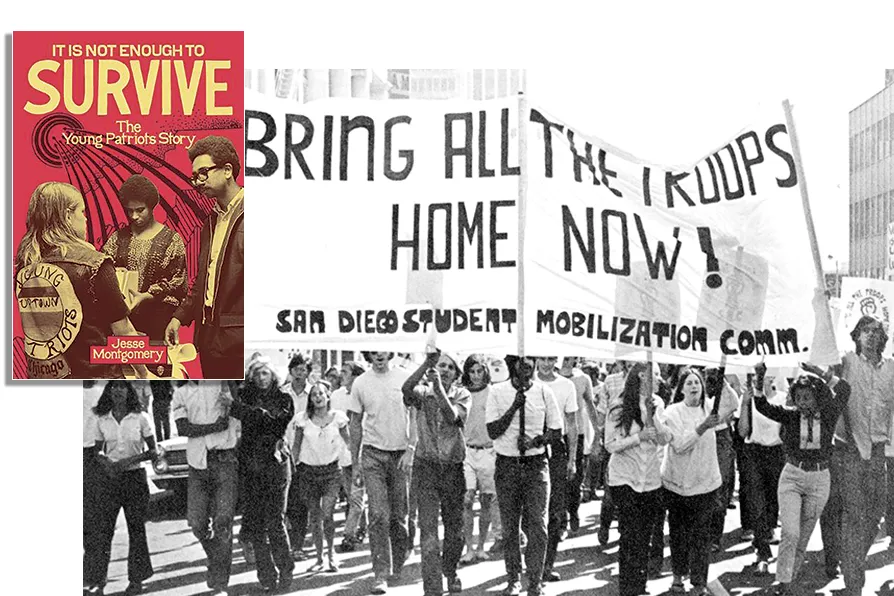
 PIVOTAL MOMENT: An anti-war march of University of San Diego students between 1970 and 1971 / Pic: Public domain

New releases from Biita Houdei, The Mary Wallopers, and The Tubs
New releases from Biita Houdei, The Mary Wallopers, and The Tubs
MAYER WAKEFIELD applauds a fearless attempt to bring to the stage the 1984 toxic gas disaster in Bhopal, India
ALEX HALL applauds the account of a dogged, traumatic and punishing campaign for justice that has lasted from 1998 to the present day
NICK WRIGHT laments the political bias of an epic attempt to tell the history of the liberation of France from the Nazis, that excludes both the decisive contribution of the Soviet Red Army, and of the French communist party itself





It Is Not Enough to Survive: The Young Patriots Story
by Jesse Montgomery
University of North Carolina Press, £24.99
THIS book, well-researched and tightly composed, is a deep look into the organisation, the times and place of the leftist Young Patriots movement, and a discussion of the meaning of culture, class, identity politics and community. Straightforward in its telling, it explores a time and consciousness when the political leanings of white-skinned refugees from the Appalachian region in the US South — hillbillies, if you will — were straying from their historically assumed place on the right side of the US political spectrum.
Of course, this assumption of their conservatism did have its exceptions — the histories of the coalminers and their struggles to unionise and fight the coal barons being the most well-known, but not the only such history of defiance.
Still, it was the migration from the southern US to the wartime factories of the urban north that provoked, in a manner similar to, but different from, the more documented northern migration of African-Americans during the same period. Both groups were leaving sharecropping and an essentially feudal economic existence behind while hoping to find a decent paying job in the rapidly expanding industrial shops of wartime and then postwar capitalism.
Unsurprisingly, many migrants didn’t find a pot of gold. Instead, they found themselves in urban ghettoes working day labour and thinking about the life they had left behind; a life that, like the country songs that romanticised it, seemed better than it did when they were actually living it.
Then came the 1960s: anti-racist protests and civil rights legislation, anti-poverty programmes and urban renewal, and a counterculture that rejected mainstream values and the US war in Vietnam. It was probably the war that turned more youth against the designs of the US government and the war machine it served than anything else.
More specifically, it was military conscription that was the catalyst. As the war escalated and the draft took more and more young men from their lives and dreamed-of futures, opposition to both also grew. Still, most working-class men went when the letter from the draft board came; many students, meanwhile, figured out a way to postpone or avoid the draft completely. This was the scenario from which the Young Patriots Organisation was birthed.
Montgomery relates this history in vivid detail. He begins by discussing the decision by elements in the Students for a Democratic Society (SDS) to organise in urban working-class neighbourhoods under a project with the acronym ERAP (Economic Research and Action Project).
From this beginning, a group calling itself Jobs or Income Now (JOIN) set up shop in Chicago’s Uptown neighbourhood. At first, it was only the outsiders doing the organising; they focused on tenants’ rights, unsafe housing, feeding people and assisting in fighting for welfare rights. Intent on getting locals to join them, the JOIN organisers held meetings, block parties and other protests against police brutality.
Slowly, but surely local youth and adults joined the organisation. Eventually, however, class differences and issues related to those differences caused a split. The middle-class organisers left and soon the Young Patriots Organisation was formed.
It was a heady time for leftist politics in the late 1960s and early 1970s. It was also a time when the growing power of the left — especially groups like the SDS, Black Panthers, Young Patriots, Young Lords and others — was freaking out the authorities across the board from the Chicago police to the FBI and even into the CIA and White House. It Is Not Enough to Survive relates these phenomena with detailed and animated descriptions.
Likewise, the text describes interpersonal relations between the group’s leaders, the group and the community, the group and other leftist organisations like the Black Panthers, and the repercussions of the conflicts that arose.
In his telling, Montgomery discusses the theory that accompanied the Young Patriots’ praxis and reflects on potential meanings and lessons. Important in these discussions is the formation and growth of the first Rainbow Coalition; a coalition whose potential was almost certainly one reason for the government’s assassination of its originator, Fred Hampton. The coalition faltered in the wake of such grotesque state repression.
Speaking of lessons, let me interject that not only is this a history and a case study, this book is also an organising manual with applications and implications for today.
Montgomery doesn’t just tell a history in his text. Indeed, two of his chapters discuss something not found in enough left-leaning texts of today. That something is culture and its role in organising for social justice and ultimately revolutionary change. The Young Patriots Organisation, like many other youth groups of the period and leftist groups in history, considered (or knew?) the importance of culture in their organising.
Understanding culture as contested territory, many new left organisations accepted and encouraged the growth of the 1960s counterculture. From the Yippies and their vision of a Woodstock Nation to Weatherman/Weather Underground’s somewhat clumsy (at least in the beginning) adaptation of the counterculture to the Panthers’ conscious rejection of what they called porkchop nationalism in favour of the Panthers’ revolutionary nationalism, the understanding of the importance of culture was obvious.
For the Young Patriots Organisation, the question was how to take the hillbilly culture already so important to the people they were organising and make it part of the revolutionary culture they hoped to inspire.
Montgomery’s discussion includes a consideration of why the group used and then rejected the so-called Confederate flag — a discussion that reflects the confusion around the flag’s meaning in the time period.
In a chapter titled Sing Me Back Home, after the Merle Haggard song about a prisoner on death row and his last request, Montgomery provides one of the most comprehensive and perceptive discussions of US country music and its meaning I’ve read in a long time.
Jesse Montgomery has done us a big favour in writing this book. In a historical moment when the far right seems insurmountable and the US public has forgotten how to put up the kind of fight required to put the far right back in the darkened cave it wants us all to exist in, this history of the Young Patriots and the circumstances of their all-too-brief existence provides hope and instruction.
Fascism may be rearing its ugly head today in a manner even uglier than that which existed in the repression of the late 1960s and early 1970s, but that doesn’t mean it can’t be defeated. After all, it must be.
Ron Jacobs is the author of several books, including Daydream Sunset: Sixties Counterculture in the Seventies published by CounterPunch Books. His latest book, titled Reality, Resistance, Rock and Roll is a collection of book reviews written for Counterpunch over the years and is now available. He lives in Vermont. He can be reached at: ronj1955@gmail.com.

Similar stories
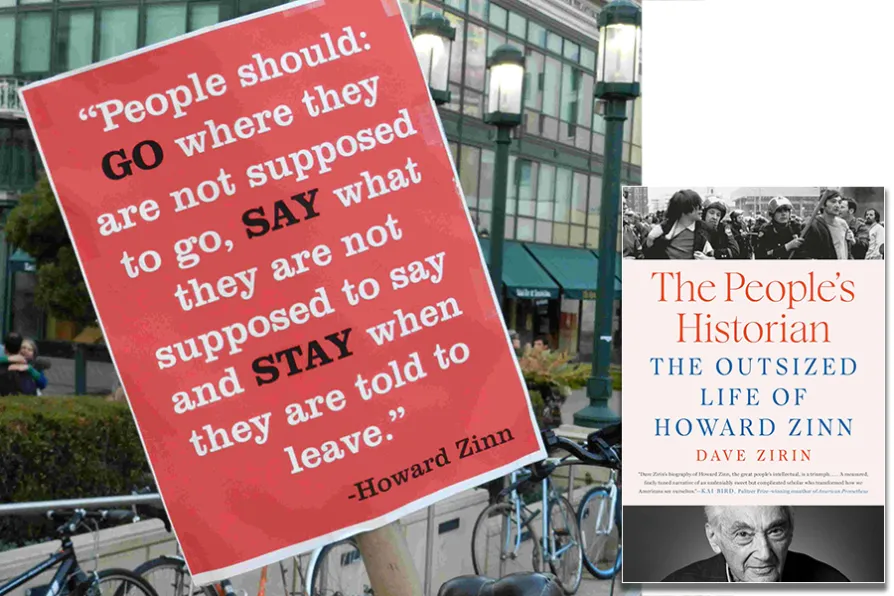
RON JACOBS welcomes the political lessons for today, about organisation and withdrawal from conflict, made by an erudite and conversational biography

RON JACOBS enjoys a great tale, told by a US communist, of the lives of working-class New Yorkers
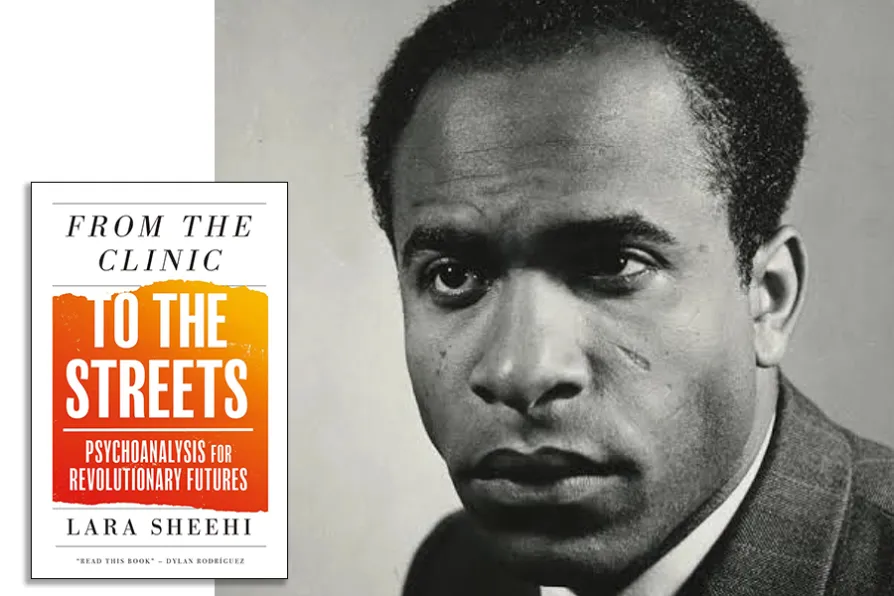
RON JACOBS recommends an important book that enhances the oppositional theories put forth by Fanon and, in doing so, remakes psychology itself
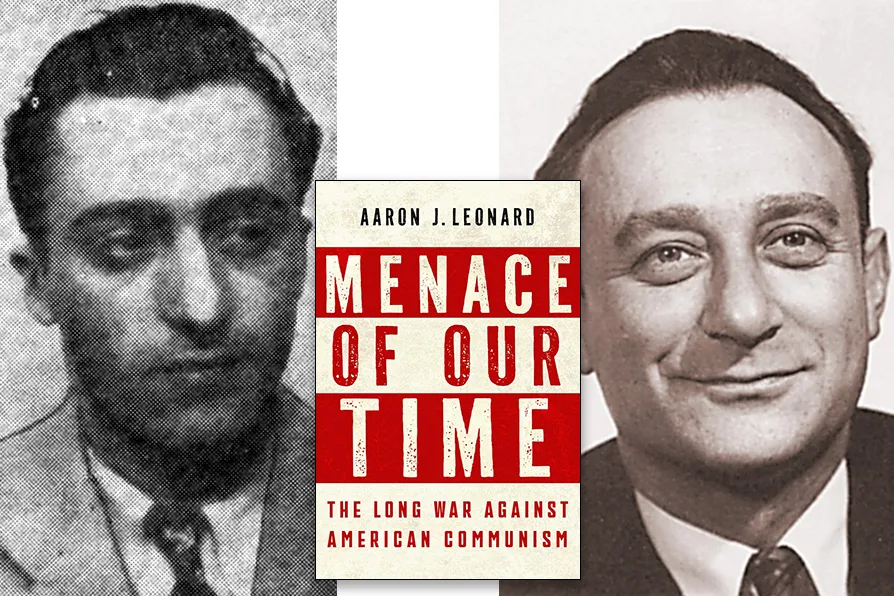
RON JACOBS is enthralled by an account of the surveillance and political repression on the left in the US