KEN COCKBURN traces the one original language – that of the Yamnaya pastoral nomads – from which all European and Indian languages derive


 Latest editorial
Engagement with marvellous art
MATTHEW HAWKINS looks at some of the Edinburgh Festival dance offerings
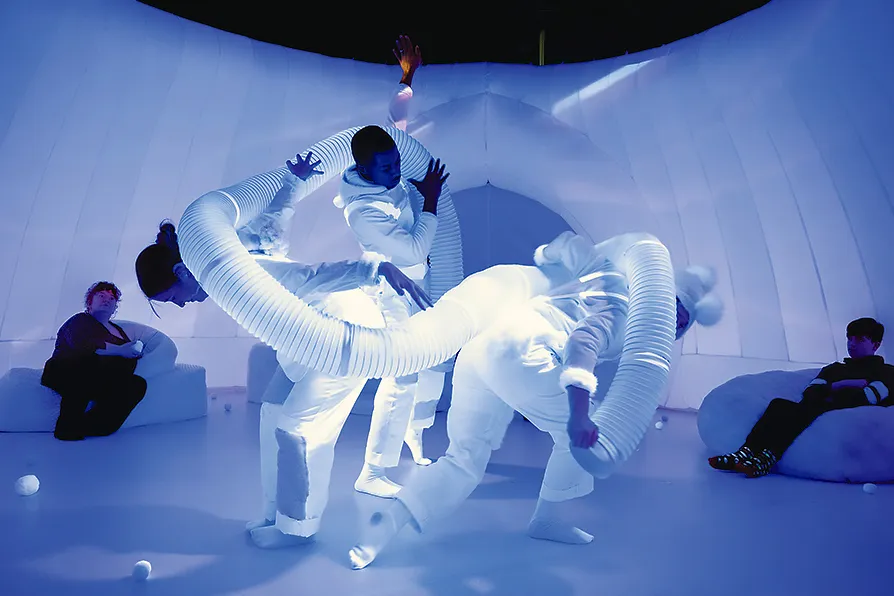 Brrr by Hayley Earlam / Pic Brian Hartley
PAUL DONOVAN is fascinated by the debunking of the iconic British war hero
ALEX HALL recommends a searing panorama of our global predicament
Comics are not just superheroes and spandex – it can be public art, telling public stories, suggests HARRIET EARLE
ALEXEI SAYLE speaks to Angus Reid about a lifetime of protest, how to hone political art – and what to do now
The bard serenades the Diggers of Wigan and their festive followers





GIVEN the premise that access to dance performance isn’t intentionally exclusive, it’s interesting to consider people whose sensory set-up hurdles entry to unfamiliar space.
Youngsters with autism will find their needs scrupulously met by the devisors of BRRR (⭑⭑⭑⭑☆) who have customised an inflated soft-play igloo to house targeted engagement. I attended BRRR as an observer and ally, informed by online material that fully delineates what to expect in terms of environment. On arrival, apt facilities — and someone clued in to explain it all — are helpfully present. Calm interest is the vibe. This may fluctuate.
Tundra-like, the realm of BRRR is smoothly rounded and equalised. The abiding regularity fosters visionary moments. From the distinctive place of their autism, a fabulous person will click with Brrrr’s intentions in exemplary fashion. Such moments are volcanically gratifying for all present — including carers. With patient flair, dancers are ready to animate the space with simulated gales and snow flurries but also with scintillating choreography by BRRR’s inventor Hayley Earlham.
If I Can’t Dance I Won’t Be Coming (⭑⭑⭑⭑☆) is a show that finds sophistication in its cascade of physical beats as they play across the jaunty gestures of a musical score by Matteo Fargion.
Sleuthing around the show’s title choice I surmise it must have been Fargion himself who threatened to boycott the Edinburgh premiere unless he could participate. He performs here, in choreography by Karl Jay-Lewin that frames a bundle of resilient individuals in actions of effervescent nervy nuance. Their pursuit is transformative, yet they adhere to the notion of “people who happen to be dancing,” with a human urge to hold it all together and get it across.
In the way that silent movie players, in Lang’s Metropolis, for example, would act and react as cued by the megaphone bark of an unseen director, these dancers seem driven by an eerily unseen prompt. We see where some haven’t entirely got the memo but gamely co-operate and extemporise lively doppelgangers. Simultaneously iconic and dressed as themselves; adopting frisky body language of broad appeal; this Arte Povera crew could crop up anywhere — where dancing is allowed.
On another scale entirely Ihsane (⭑⭑⭑⭑☆) is given by the Grand Ballet du Geneve with choreographer Sidi Larbi Cherkaoui’s Eastman troupe at EIF. The formula here is one of expressive dance-theatre production laced with live music, by Jasser HajYoussef, and amplified verbal explanation.
Amid rich stage action, a disembodied voice reminds us of how we’re born with genius that gets oppressed by society, so that we become cogs in the machine. We are meanwhile looking right at an emanation of cultural industries. These are hardly cog-free.
Our International Festival is built around an idea that engagement with marvellous art is civilising. In the immediate post-war era (yes, that war) the festival’s dynamic centred on classics, established and recent: Shostakovich’s best, Britten’s latest and the like. More recently, there’s a trawl for big works whose content is specifically geared to a civilising message. Ihsane finds the finance and facility to fit the remit this time.
The amplified voice returns to tell us how grief might not have to be rage or destruction but could be understood as language; a continuum that seeks not to complete us but to negotiate and coexist. I was thus persuaded to see Ihsane as a production finding its own language of grief; communicating this search with honourable success — and sometimes excess.
Layering is incessant. High-tech video panels manifest landscape images, graphic bloodied-flag depiction and Warholian facial close-ups. Geometrically decorated scenic pieces truck and transform. Singers and musicians perform ritually. At any still moment, a Biennale-worthy image would do its resonant thing.
The intended purpose of some extended dance scenes (solo writing especially) is sometimes bound into the gratuitous reminder that these are glorious contemporary dancers, with everything in the right place. The stage hardware pile-up starts to look like a status flex. Arabic inscription graffiti emerges with a flamboyant touch that elsewhere brings heaviness.
We’re shown enaction of a patriarchal language lesson and the chastisement of a slow student. We see the same victim grown and outcast, choreographically tortured and left for dead. There’s pantomime of halal slaughter. People play a compressed execution scene and subsequent carnage.
Then, with miraculous stealth, silken curtains surround the ensemble. They strip down to their embellished skinsuits and embark on a wild shadowplay/rave that effectively says: lose yourself! My scepticism blew away right there. I accepted events that had gone before and I savoured the hereafter. Did pure Shostakovich perhaps have such a “lose yourself” effect on initial EIF attendees?
In the end, nothing is too good for Ihsane — in real life, a fellow of cruel, senselessly violent departure from our world. This performance memorialises him and circuitously invites future engagement around redemptive ritual. Please may we all stay involved. May we also ever thrive on the plurality of our festival days.
Brrr is on tour from December 3 to February 6 in Scotland. For venues and tickets see: madeinscotlandshowcase.com.
If I Can’t Dance I Won’t Be Coming runs until August 27. Tickets: assemblyfestival.com.

Similar stories
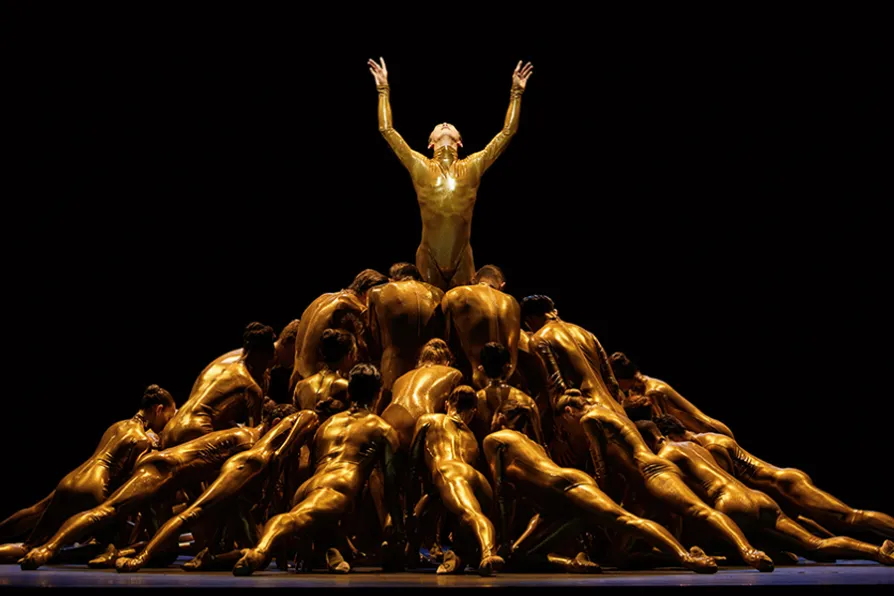
MATTHEW HAWKINS witnesses a contemporary ballet that represents human life as subjected to artificial intelligence
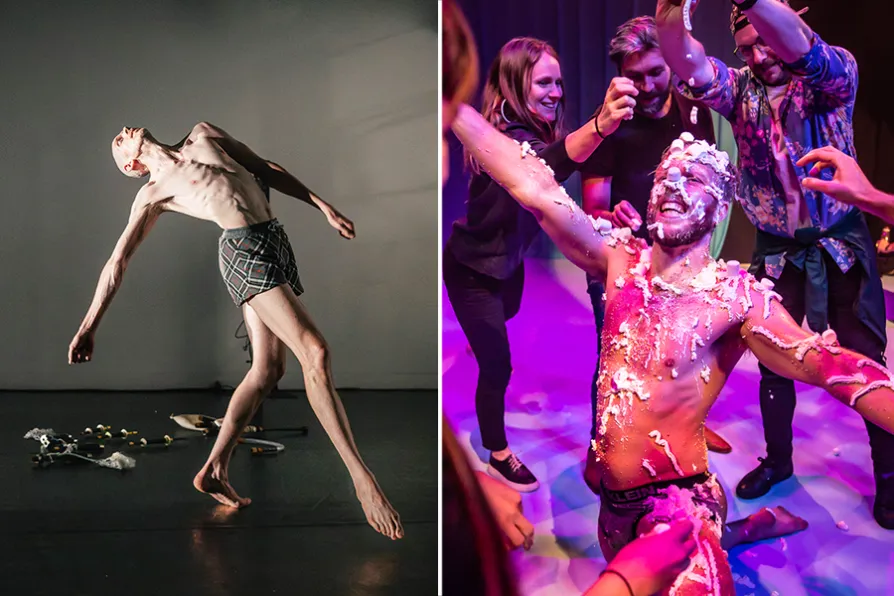
An immersive, participatory display by a queer Australian Aboriginal performer, and a rebellious unravelling of traditional Scottish dance
At the Edinburgh Fringe, MATTHEW HAWKINS reviews eight shows in a single day in one venue, all of which reward the spectator
MATTHEW HAWKINS checks out the centenary performance of Rambert Dance Company