DOUG NICHOLLS says the parasitic finance markets must be challenged or another British government could be toppled


 Latest editorial

Two hundred and forty-nine articles, a black professor, one media industry
CLAUDIA WEBBE speaks out against the lethal mechanics of Britain’s culture-war press
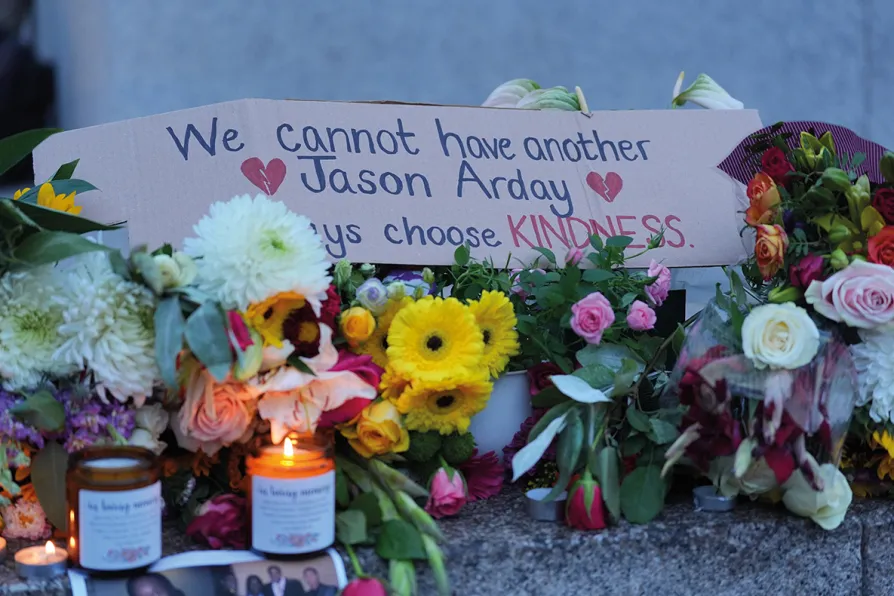
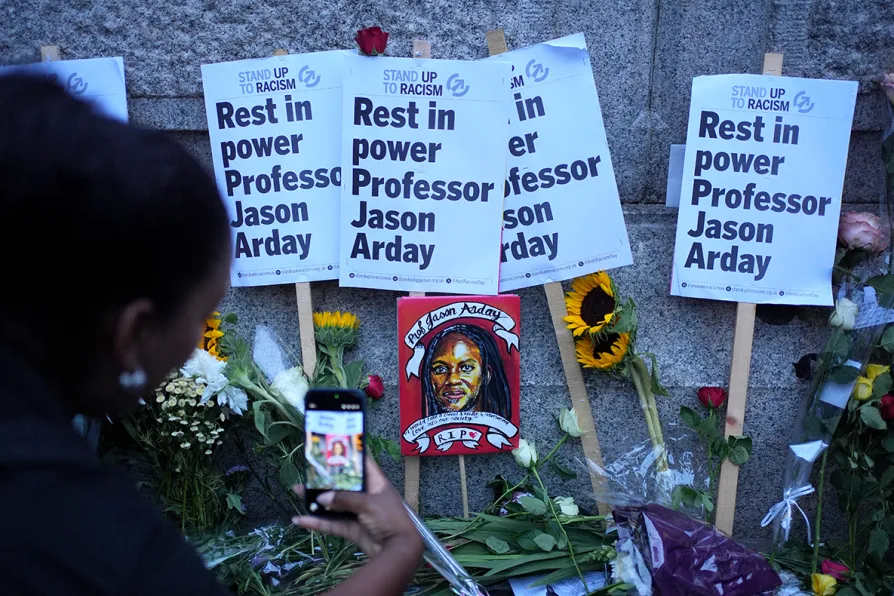 Tributes left after a vigil, organised by campaign group Stand Up to Racism, for Professor Jason Arday on the steps of the National Gallery in Trafalgar Square, central London, August 17, 2026

The late country singer’s Imagination Library has put hundreds of millions of books into children’s hands. We should build on that legacy by defending the libraries at the heart of our communities, says BRENDA AITCHISON
Deprivation is a fundamental factor in criminal behaviour that must be addressed but, KENNY MacASKILL argues, there needs to a major rethink in sentencing to tackle overcrowding
MML director MEIRIAN JUMP outlines the recently refreshed library’s busy autumn schedule that ranges from book sales, archival exploration, community work with online education and the ever popular site tours
Some thinkers and authors on the right are openly discussing the possibility that the historically successful party of the British ruling class may be exhausted
Class struggle is the motor of history but the direction and detail of change at any time and place is the outcome of many factors, suggests the Marx Memorial Library and Workers’ School
TONY BURKE surveys the shifting political landscape and the challenges Labour needs to address if it is to prevail in the 2028 federal elections





ON JULY 24 2026 the Telegraph opened its front page and rebranded a black Cambridge professor. Not by his name. Not by his title. Not by his work. The paper called him “Cambridge’s diversity poster boy.” Chosen deliberately. Reused in headline after headline. That was the starting gun.
Twenty-two days later, on August 14, Jason Arday was found dead at an address in Battersea. He was 41 years old.
Between those two dates the British media published 249 articles about him. One hundred and eighty-eight of them appeared in the nine days between his resignation on August 5 and his death. Fourteen national outlets appeared on the same bar chart when the press-accountability project NewsCord audited the cycle.
The Times ran 44 pieces. The Telegraph ran 40. The Daily Mail ran a psychiatrist’s speculative diagnosis of Arday’s mind, and hours later he was gone, and the column was quietly deleted from the Mail website without acknowledgement. At 3.11pm on August 14, one minute before the ambulance service called the police from Arday’s home, the Telegraph published a piece interrogating whether the boy Arday had described in his memoir had really existed.
These are not my numbers. They are the numbers of a NewsCord audit, cross-referenced against the Telegraph’s own public archive, which returns roughly 40 of the paper’s own Arday articles in a single query.
He had asked them to stop. In his resignation letter on August 5 Professor Jason Arday wrote that he had concluded “the only way to bring this chapter to an end is to step away.” He asked, in his own words, “only for understanding, for compassion, and for the space to begin again.” One hundred and eighty-eight articles were published about him in the nine days that followed.
The story that broke in July was that a Cambridge professor faced questions about citation and about his CV. That is a matter for internal investigation. Liverpool John Moores University had already adjudicated the same plagiarism claims and had cleared him. Exactly one national article in the entire 22-day cycle mentioned that adjudication. One, out of 249. Every other paper knew, and every other paper omitted this.
The story the media told was not the story that was there. The Daily Mail coined “Professor Plagiarism” and used it as his name in headlines. The Telegraph coined “diversity poster boy” and then coined “Cambridge fantasist” and then coined “Cambridge’s woke poster boy.” Every rebrand carried a different attack. Every rebrand became headline furniture. Once you rename a black person and demonise them you have relieved yourself of the obligation to report accurately. You have made them a character in your serial.
The Spectator sustained the pile-on in weekly opinion form. Twelve separate pieces in three weeks. Toby Young called Arday “the gift that keeps on giving.” Tom Slater wrote “How Black Lives Matter created Jason Arday.” Peter Wood was imported from the American National Association of Scholars to write about “the Dukes and Dauphins of DEI.” Patrick West published a headline calling a living professor a fool. Andrew Gilligan opened a second front on Arday’s Cambridge colleague Farah Ahmed. So, in the Spectator alone we have 11 writers, one editor, and one proprietor. Both revenue models paid. Advertising against the daily papers. Subscriptions to the weekly. All part of one media industry.
We have seen this pattern before: Diana. Caroline Flack. Amy Winehouse. In each case the industry rebranded the subject, sustained the coverage past the point of professional duty, and printed the eulogy for the person it had hunted. Meghan Markle was renamed, reframed and driven out of the country by the same press. She survived. Others did not. In every comparable pile-on where the subject was a white man, the news cycle moved on.
The plagiarism claims that regularly surface in British academia do not become national serials. Only when the subject is black. Only when the subject is working-class. Only when the subject represents, in the media’s own political language, everything the culture-war press is paid to attack. NewsCord’s editors put it in plain terms after Arday died: “When it concerns a black man from a working-class background, the cycle doesn’t move on until he is dead.”
I speak from my own case. The Crown Prosecution Service was obliged to apologise to me, after an independent finding of service failure, for a press release, that carried a false and reputationally damaging claim. That press release drove the media pile-on that sustained the original false reporting for years. Vile online abuse and phone calls continue to this day. It feels like slow murder. The coverage of the apology was a fraction of the coverage of the false claim.
Racism in the media is rife as an institutional operation. We are talking about an industry whose commercial logic responded to a black professor’s public position by generating 249 articles in 22 days. And with a Times headline the morning of his death interrogating his childhood. And a Telegraph column published at 3.11pm that day. And a Daily Mail column commissioned from a psychiatrist to speculate about a black professor’s mental state, deleted after Jason Arday died, without a word of explanation. And an industry that took the word of a self-described “race realist” academic and ran with it.
Nathan Cofnas has been described in those terms by his own college’s master and by the Cambridge University and College Union. Nathan Cofnas is the philosophy fellow who wrote that in a meritocracy black people “would disappear from almost all high-profile positions outside of sports and entertainment” and that the number of black professors at Harvard “would approach zero.”
Cambridge’s Emmanuel College terminated his affiliation on the finding that his views challenged the college’s core values. The Cambridge University and College Union condemned them as “race pseudo-science” and “eugenics.” Simon Woolley called it “abhorrent racism, masquerading as pseudo-intellect.” By all accounts, a known racist, the paper trail belongs to Cofnas. What the industry chose to do with it belongs to the media institution itself.
The mechanism has three parts. Rebranding. Volume. And the extension of the pile-on to anyone who spoke up the target, James Arday. The Telegraph attacked the Good Law Project, which co-ordinated an open letter of 10,000 signatories defending Arday. It even attacked the radio presenter James O’Brien for defending Arday on air. It attacked the vice-chancellor for having hired Arday. It attacked the panel that appointed him. It hounded every academic who signed and named each one it said had withdrawn. On July 24, the day the Telegraph broke the story, the University of Cambridge itself called the campaign “a vile campaign to undermine his credibility” and said its own internal investigation had cleared him.
Three weeks later Cambridge opened a fresh inquiry and let him resign. The university walked away from a public defence it had already made.
When its own reporting drew a Metropolitan Police inquiry, the Telegraph made that inquiry the story, converting itself from participant into martyr. Arguably, that is the move a newspaper makes when it has run out of arguments and has to change the subject to itself.
The commercial logic is the part socialism, and our socialist politics must name plainly, because no-one else in the mainstream will. Racism sells. Cruelty sells. The rebranding of a black professor sells. The Times ran 44 articles on one black man in three weeks because 44 articles on one man in three weeks moved subscriptions, moved advertising, moved clicks, and moved the platform algorithms that carried each headline into millions of pockets. Every ad slot beside every headline paid. Every share on every social media platform paid. The industry converted a black professor into content, and Jason Arday in the middle of it was converted into a corpse.
Our answer as socialist and as civil society is not a plea to be nicer. It is not another code of conduct. It is not another Ipso complaint form. The Leveson inquiry produced its recommendations in 2012. Parliament shelved them. Ipso adjudicates fewer than 2 per cent of racism complaints in favour of the complainant. Reform through the industry’s own bodies ends in the industry’s own boardroom.
What we need is public power. A publicly accountable regulator with the power to withdraw press cards. Journalism co-operatives owned by their workers and their communities. A public-interest media commons of the kind funded in Norway, Sweden and Finland. A statutory duty of care on outlets that publish about individuals, enforceable in court.
A break-up of the ownership concentration that puts five billionaires in charge of most of what a nation reads. The Norwegian PFU. The Swedish Pressens Opinionsnamnd. These models exist. They are what workers won in countries where the trade union movement understood one thing. Frederick Engels wrote of this in 1845. He called it social murder. Ruth Wilson Gilmore in 2007 called it racism organised through institutions to produce premature death. Both were describing what the British press has industrialised. The press is a workplace. The newsroom is a factory. The product of that factory, unregulated, is preventable harm.
The internationalist answer is solidarity. The black scholars of Britain stand with the black scholars of America, with Palestinian scholars barred from British campuses, with the Indian Marxist tradition that produced BR Ambedkar’s insistence that caste and race are structures of political economy. The press of the ruling class attacks for profit. It attacks for advertising. It attacks for subscriptions. It attacks for power. Every stage of the pile-on is profit. The dossier was profit. The rebranding was profit. The sheer volume and quantity of the articles was profit. The obituary was profit. And the debate about the pile-on is profit now.
Two hundred and forty-nine articles. Fourteen outlets. One media industry. One black professor. A wife. Two children. A father now buried at 41, a family in grief. And a Britain where the press writes obituaries for the people it hunted.
They published the evidence themselves. The media. The university. The state. All culpable.
Claudia Webbe was the member of Parliament for Leicester East (2019-24). You can follow her at www.facebook.com/claudiaforLE and x.com/claudiawebbe.

Similar stories
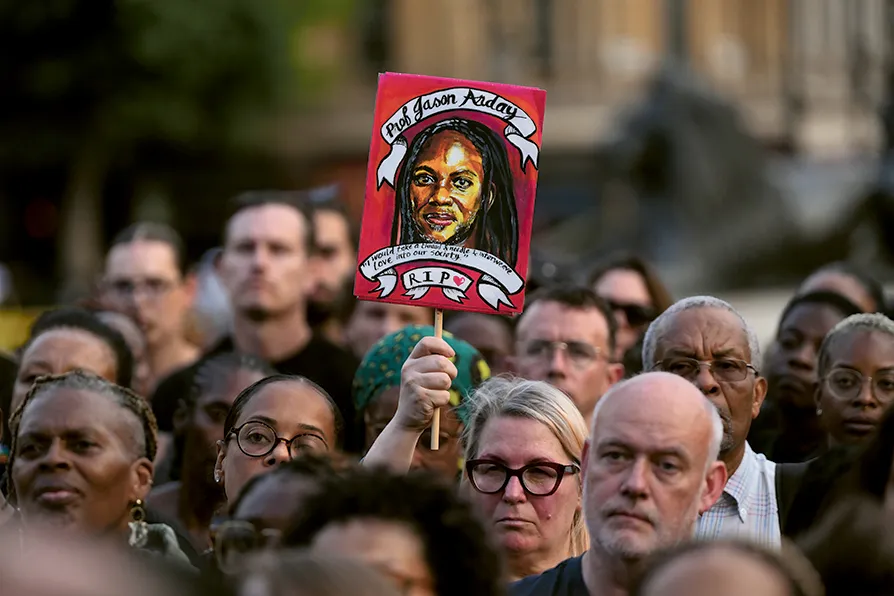
The attacks on black academics are well-funded and relentless, writes DIANE ABBOTT, and they need to be fearlessly resisted by all concerned
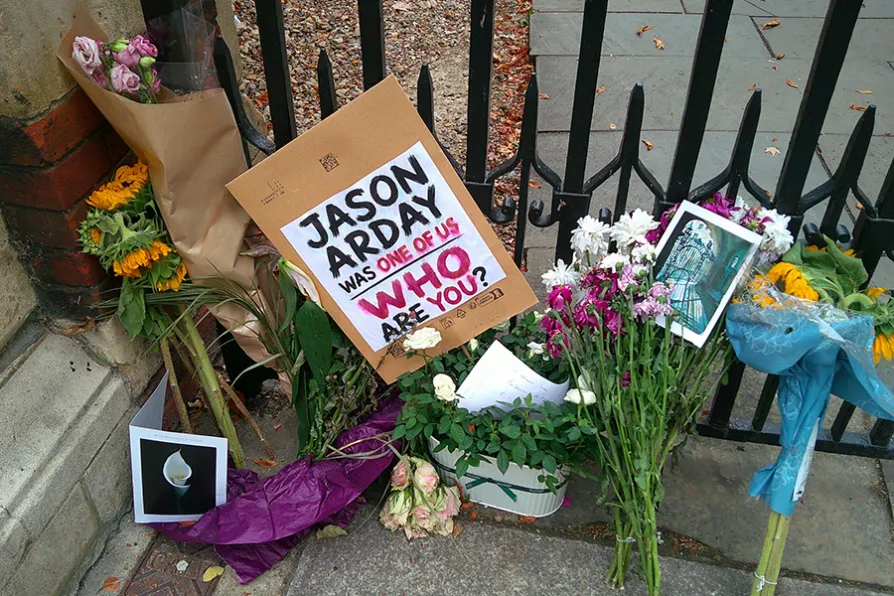
ANGUS REID urges us to understand the persecution of Jason Arday from a political and historical perspective, and to see the victim in human terms
The hounding of the late Jason Arday is an all too familiar experience for many black people. ROGER McKENZIE calls for collective action to combat what can feel like personal isolation