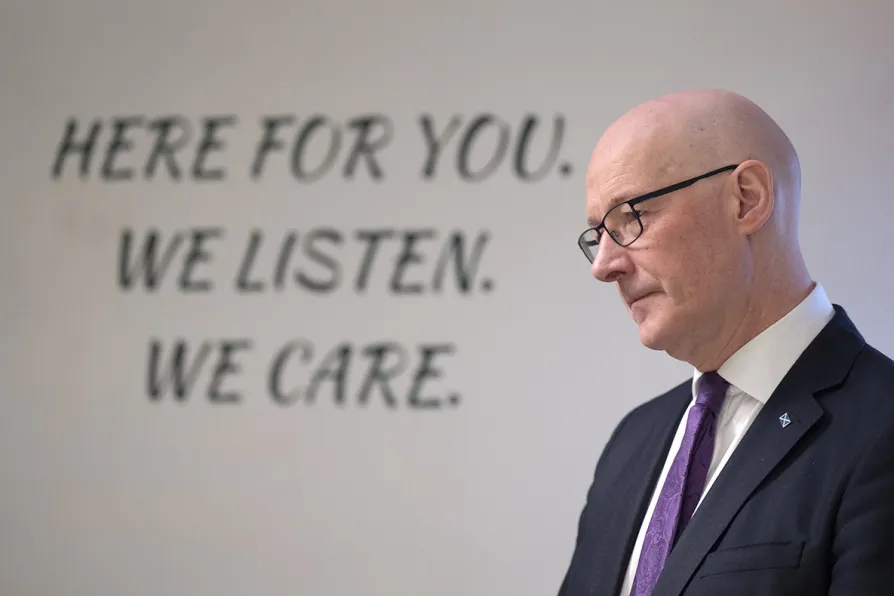
 Scottish First Minister John Swinney during his visit to mental health charity The Lighthouse for Perth, in Perthshire, for an announcement on funding to enhance emergency mental health support services, February 18, 2026






SCOTLAND’S brand of integrated health and social care is “failing patients” in mental health services, psychiatrists have warned.
A new report from the Royal College of Psychiatrists in Scotland (RCPsychiS) argues that a decade on from when social care and primary health care were brought together into 31 integrated joint boards (IJBs) across Scotland, the system remains “poorly co-ordinated” and is damaging patient safety, clinical leadership, and financial transparency.
Calling for a Scottish Parliament inquiry to examine the impacts of integration, RCPsychiS vice-chair Dr Pavan Srireddy said: “The current structure is failing patients.
“Mental health services support some of the most vulnerable people in Scotland, yet responsibility for these services is often spread across multiple organisations, with no clear line of accountability when problems arise.
“More than 10 years after integration, it’s right to ask whether the current arrangements are delivering the improvements that were intended.
“Too often, psychiatrists are excluded from key decisions about services and resources, limiting their ability to deliver the care patients need.
“Psychiatrists bring a unique understanding of patient need, clinical risk and service demand. Their expertise must be embedded in decision-making alongside policy and finance leaders to ensure that resources are directed where they can have the greatest impact on patient care.”
He argued the system ushered in by the 2014 Public Bodies (Joint Working) (Scotland) Act, which left health workers employed by the NHS and social care workers employed by councils while being directed by IJBs, had resulted in “fragmented decision-making and unclear accountability risk reducing the impact of funding intended for mental health services.”
“More than a decade after integration, there’s a culture of split responsibility without clear accountability, and this is simply unacceptable for patients, families and staff,” Mr Srireddy said.
“The college is calling for an independent inquiry by the Scottish Parliament into the effects of health and social care integration on secondary care and specialist mental health services.
“The inquiry should assess whether the current system is improving patient care, outcomes and the flow of mental health funding to front-line services.
“The college is ready to work collaboratively to build a more transparent, accountable and effective system that supports our workforce, makes the best use of resources and delivers high-quality mental healthcare that patients need and deserve.”
The Scottish government was contacted for comment.




In the second part of her critique of Wes Streeting’s TenYear Plan for Health, HELEN MERCER looks at the central planks of this privatisation blueprint