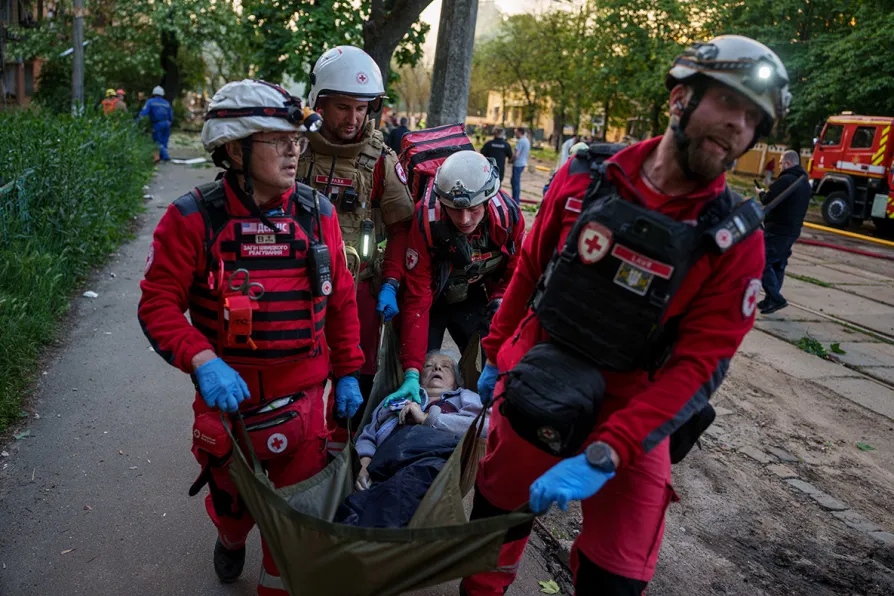
 Red Cross volunteers carry an injured woman into an ambulance after a Russian strike in the Lukianivka neighbourhood of Kyiv, Ukraine, May 24, 2026





SO FAR the strategy of the EU/Nato military alliance has been to fight Russia to the last Ukrainian. And support for this strategy linked Boris Johnson’s government to that of Keir Starmer.
Johnson flew to Kiev to strong-arm Volodymyr Zelensky into rejecting a peace deal that was substantially better than anything now available and the now departed Labour leader wanted to station British troops in Ukraine in violation of Russia’s red line.
When even the BBC reports street violence directed at the press gangs Ukraine’s minister of defence deploys to scour the street for draft dodgers, or any able-bodied male, to bolster the falling front lines in this most desperate war our new foreign secretary should take note.
The Ukrainian police report 600 assaults on “recruitment officers.” And earlier this month, in Lviv, hundreds of protesters surrounded a press gang, smashed their vehicle and overturned it.
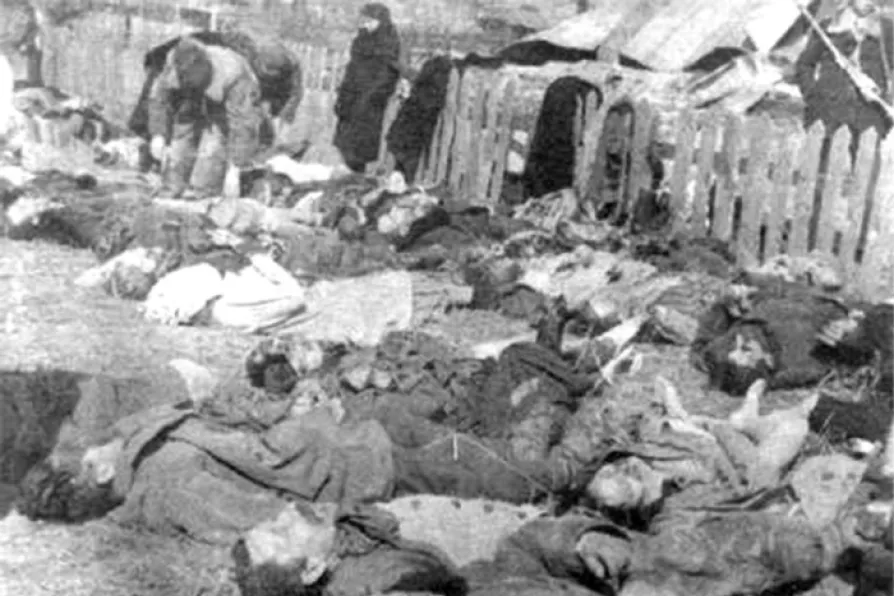
Lviv, for much of its history, has been the site of conflict between Ukraine and Poland. During the second world war it lost 90 per cent of its population, including 100,000 Jews, exterminated by the Nazis and their Ukrainian collaborators. The Polish population was forced into emigration or, as in the case of the 100,000 Poles in Volhynia, executed by Ukrainian Insurgent Army (UPA) fascists.
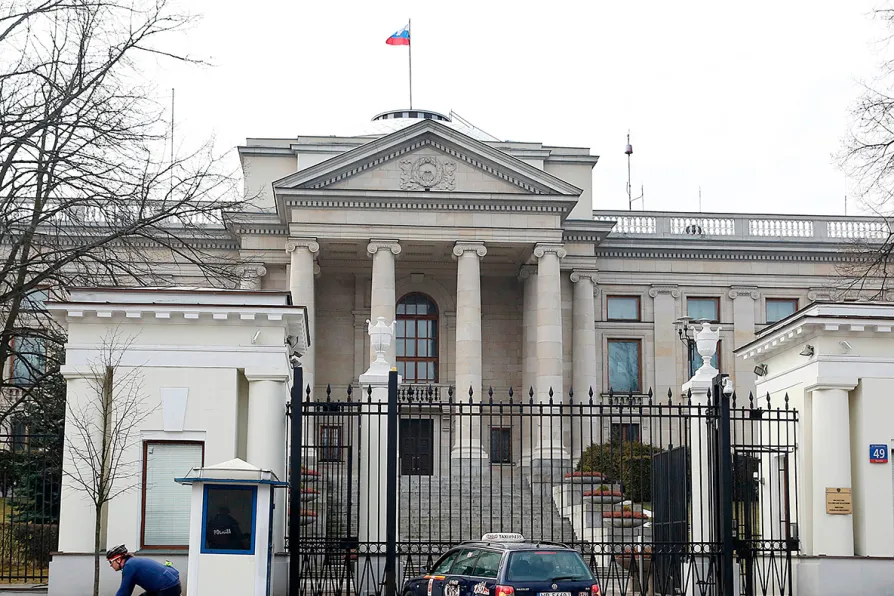
Last month Polish President Karol Nawrocki stripped Zelensky of Poland’s top honour after the Ukrainian president renamed a Ukrainian army regiment after the UPA.
Zelensky’s defence — that the soldiers of the renamed regiment themselves wanted the name change — is but a measure of the problem. This proxy war, sponsored by the EU/Nato military alliance, is dividing Ukrainian society while its beleaguered president is now compelled to rely even more on a fascist far right that lionises its collaborationist predecessors.
This newspaper condemned the Russian assault on Ukraine. And the evaluation of the Putin regime as a Russian nationalist iteration of a domestic capitalism grounded in the destruction of the Soviet Union’s socialist foundation stands.
But Labour’s new foreign secretary must take account of facts. Ukraine was enlarged when the post-revolution Soviet government added the Russian-speaking Donbass to the new Soviet republic and this was enhanced when, after the second world war, the former Polish lands to the west were incorporated and, later, Crimea was transferred from the Russian Republic to Ukraine.
And a reversal of Russian reacquisition of its former territories in the Donbass is not going to happen without an EU/Nato war with Russia.
To this add that the new battlefield conditions based on drone warfare are changing the nature of ground wars. It has compelled the recognition that traditional tactics based on air superiority and heavy armour — the scenario which saw the Soviets, in Winston Churchill’s words, “tear the guts out of the Nazi army” is no longer viable.
Recognition of this, and the manpower needs of modern warfare, is both tearing Ukrainian society apart and makes a nonsense of the foundation myth that underpins Nato’s march eastwards, that the Russian army poses an existential threat to western Europe.
One branch of liberal opinion wants an expensively rearmed European war machine less dependent on the United States.
This strategy is impossible with further destroying the social gains of the post-war settlement and will lead to war.
The British popular vote to leave the EU disrupted the capitalist economic consensus and created a crisis for our neoliberal ruling class. In much the same way a renewed bid for a long overdue peace settlement on Nato’s eastern border would disrupt the plans of the warmongers.
This is the foundation of an independent foreign policy for Europe where Labour could set an example to Europeans who want peace.

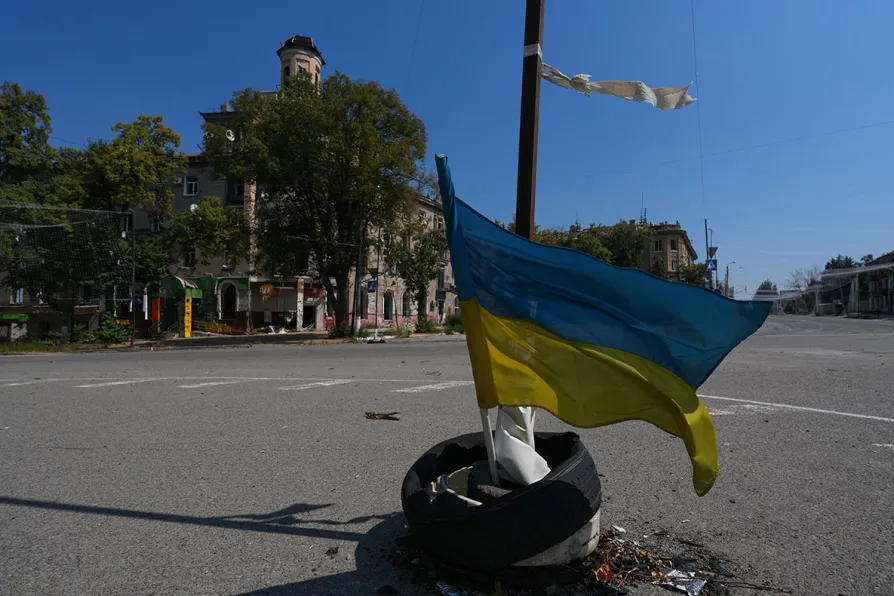
Andy Burnham offers unconditional support for Zelensky but no solutions to the underlying conflict between the Nato/EU bloc and Russia, says NICK WRIGHT
Poland’s anger over Ukraine’s celebration of the Nazi collaborationist UPA reflects more than historical grievance, says KENNY COYLE