Working people across Britain are fighting back against austerity, war, repression and exploitation. The challenge now is to unite those struggles, says Communist Party of Britain assistant general secretary JOHNNIE HUNTER

Scottish Labour must opt for change not excuses
Scotland's Labour leader cannot continue to evade responsibility for the party's decline, argues LAUREN HARPER
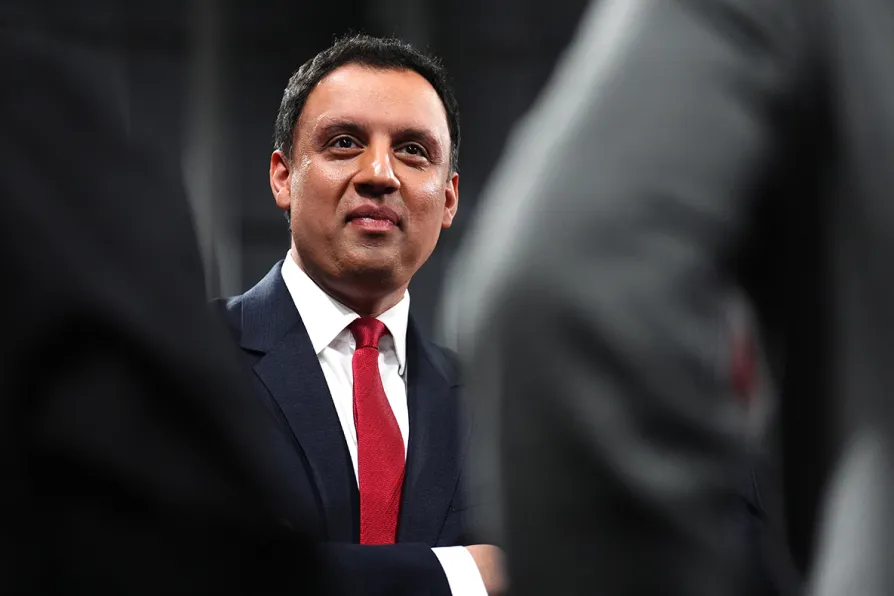
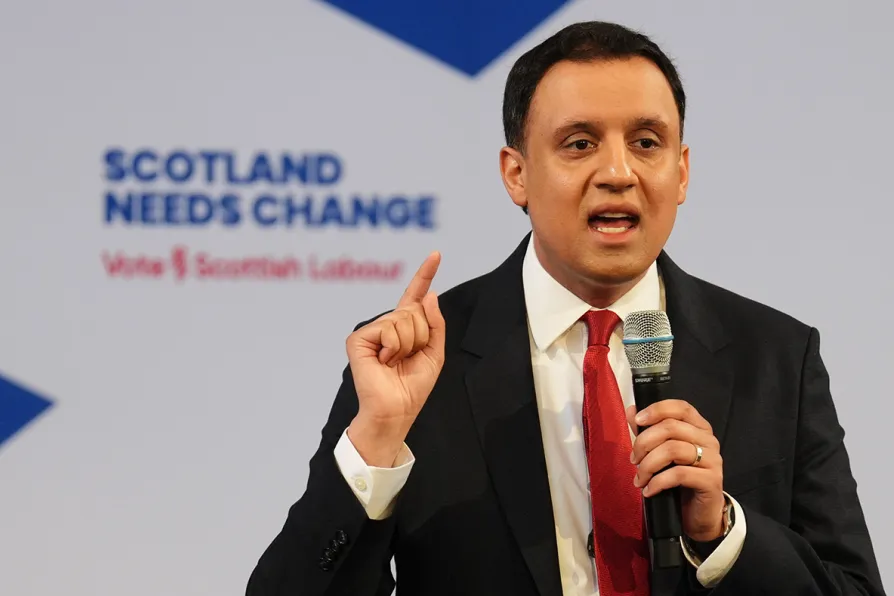
 Scottish Labour leader Anas Sarwar at Glasgow International Arena for the 2026 Holyrood elections, May 8, 2026
Train drivers’ union Aslef general secretary DAVE CALFE speaks to Ben Chacko about his hopes that Burnham’s devolution agenda will include the importance of the railway
DIANE ABBOTT provides an analysis of the reasons for EU and British voters’ dramatic swing to the right
Some of the review’s proposals could make the benefits system less cruel and dehumanising. But its vague plans for services and non-cash support revive the threat that disabled people will lose control over the money we need to survive, writes DYLAN MURPHY
MAT COWARD has heaps of good advice on recycling garden and household waste over the winter
The UK Prime Minister may have the regal touch in northern England, but he’s been wrong-footed on the constitutional challenges posed by the Celtic Alliance of first ministers from Scotland, Wales and Northern Ireland, argues KENNY MacASKILL





ANAS SARWAR’S leadership has been one of shifting blame and stolen valour. When he failed to increase the vote share in 2021, it was blamed on the leadership of Richard Leonard.
When 37 Scottish Labour MPs were returned in 2024, it was claimed to be a great victory of Sarwar’s charismatic leadership. When Labour’s vote slumped to its lowest-ever share in 2026, it was Keir Starmer’s fault.
Never mind the fact that in 2021 Scottish Labour’s decline was slowed, or that 2024 was the result of the Conservative and SNP vote shares collapsing, or that in 2026 every household in Scotland received a barrage of post plastered with Sarwar’s face.
Either Sarwar is responsible as leader for Scottish Labour’s highs and lows, or he isn’t. He can’t have it both ways.
Sarwar inexplicably plans to stay on until 2031. This is despite a planned internal review of Scottish Labour’s campaign, although this is unlikely to uncover anything that those of us on the left of the Scottish executive committee did not raise months ago.
The leadership has had every chance to change, to offer something genuinely different after 20 years of SNP government.
Yet the party has been captured by a clique so focused on internal agendas and the destruction of the Scottish Labour left that policy has taken a back foot.
The SNP, marred by scandal and weaker than ever, gave us a golden opportunity to truly win back Scotland. Somehow, we were on an even weaker footing, turning down the opportunity to put forward a genuinely transformative vision for Scotland. The leadership has a scapegoat for this too, the Scottish Policy Forum.
However, what is left out of their account is that delegates were effectively given an ultimatum, either to accept the leadership’s thin manifesto proposals in their entirety, or go into the election without key union demands.
Factional manoeuvres no longer take place behind the scenes as they did with the stitching up of selections. This leadership is now so arrogant and devoid of principles that it is comfortable manipulating events in the open.
The ease with which Sarwar and Jackie Baillie concede to big business, Labour’s natural enemy, is also galling.
The community campaigns in Hunterston and Larbert against AI data centres are something Scottish Labour should naturally be supportive of yet in the manifesto we bowed to the interests of big tech.
The influence of wealthy donors like Lord Haughey and the Easdale brothers has torn Scottish Labour away from its roots.
Some have suggested that the outcome of the reviews should be an entirely independent Scottish Labour Party — Baillie has not ruled the option out herself.
There is no doubt the central architects of Scottish Labour’s destruction are weighing this up in an effort to save their jobs. Let me be clear that autonomy for Scottish Labour is not necessarily a bad thing.
But the public will quickly see through any aesthetic change to administration, a new name or logo.
A tangible policy shift is what is needed first and foremost.
An independent Scottish Labour without policy change would likely expedite its destruction. Our beloved wealthy donors would desert us, looking for the next party to donate their money to and, with membership numbers in free fall compared to Leonard’s leadership, we are not bringing in the money a mass party of the working class would either.
I doubt that Sarwar’s famous charm would be enough to keep the lights on at HQ.
No other party leader has ever been given this much grace. Leonard certainly did not receive any.
If they care about the Scottish Labour Party at all, it is time for Sarwar and Baillie to face reality and go.
This is not to say that their departure would suddenly create the conditions for Scottish Labour to win the 2031 election.
It is barely the beginning. As a party we have much soul-searching to do.
Our task now is to turn inwards and rediscover where we stand and who we are for. This cannot possibly occur while Sarwar and Baillie are still at the helm. It certainly won’t occur in what is increasingly appearing to be tightly controlled review meetings.
When the history books are written of this Scottish Labour premiership, “lucky” would be an apt way to describe Sarwar and Baillie. Thus far they have fled responsibility and hidden behind the distraction of Andy Burnham’s installation as UK leader.
However, as I have noted at the SEC, if we do not move on from Sarwar and Baillie, we are facing a trouncing at the council elections and worse, oblivion as a party.
While Labour has been far from perfect in government, what does it say about us if we allow a party founded as a voice for the working class and its interests to be so captured by big business that it dies with a whimper in its former heartlands?
Lauren Harper is a member of the Scottish Labour executive committee.

Similar stories