Cuban trade union federation CTC leader OSNAY MIGUEL COLINA speaks to Ben Chacko about life and work under a crippling US siege


 Latest editorial
No ‘calibrated’ solution to Iran war
Behind the language of military strategy is a confrontation that risks drawing the wider Middle East into war, says STEVE BISHOP
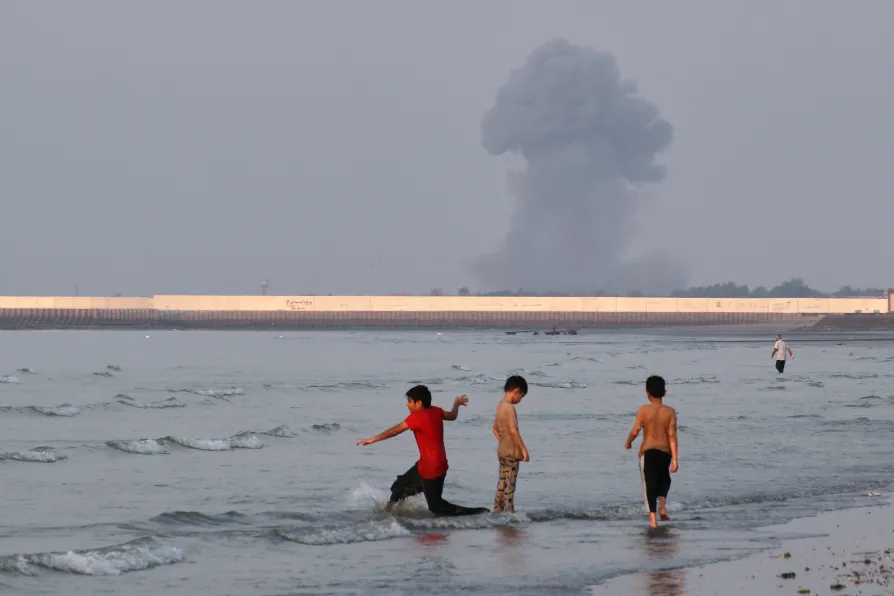 Three boys play in the shallow waters of the Strait of Hormuz, as a plume of smoke rises from an explosion in the background, off Bandar Abbas, Iran
A part of the British empire’s network of slavery, today the Caribbean island of Nevis faces a new form of exploitation in the form of crypto-colonialism, CLAUDIA WEBBE writes
A new book by Victoria Holmes illuminates the many hidden histories of the oppression experienced by Gypsy/Roma/Traveller community, writes ROGER McKENZIE
Even the oligarchs of the artificial intelligence industries are warning that their creations have the capacity for the ultimate destruction of the planet and its population. ANDREW MURRAY suggests that there might just be other solutions
The Labour government must deliver on its commitment to bring back privatised services into the public sector. This not only saves money but also creates accountability and generates wider social benefits, argues ANDY MCDONALD MP
Public ownership of Great British Railways has enormous potential to improve our railway network, but that can’t happen unless jobs, employee rights and union recognition is at the heart of the transition, argues MARYAM ESLAMDOUST
Challenges from the unscrupulous misuse of AI to steal actors’ voice and physical likenesses is being met with a firm union response, writes LYNDA ROOKE





THERE is much media talk of “calibration” in the current escalation of US aggression against Iran, which once again threatens the possibility of a lasting peace settlement. The argument goes that strikes by each side are tactical, that they are in effect part of the negotiation process around the battle for control of the Strait of Hormuz.
There is no doubting that the stranglehold which the Iranian regime has exercised over the Strait of Hormuz has frustrated the US/Israeli axis, in spite of its overwhelmingly superior firepower, due to the impact upon oil prices and the consequences for the global economy.
However, there is equally little doubt that the ideological aims of Donald Trump and Benjamin Netanyahu, to assert US hegemony in the Middle East and to secure the zionist dream of a Greater Israel, are continuing to drive the world towards the danger of a third world war.
Talk of calibration may give media analysis the veneer of sophistication, but the reality is that US action is part of a systematic and calculated process, attempting to decouple Iran’s coastal defence line from the country’s logistical rear guard.
Initially, coasts, ports and littoral installations are pressured; subsequently, the scope of the attacks is extended to communication routes, support centres, and more critical nodes in Khuzestan and the southern region. Analysis suggest that the US pressure is expanding from the coast toward the interior to push back defensive lines, missile rings, logistics hubs and troop and equipment transport routes.
In effect, what the media continue to describe as tit-for-tat exchanges are in fact part of a wider US strategy, which is not a series of random strikes, but a phased process designed to prepare the theatre and pave the way for larger-scale operations.
At the same time Iran’s response is drawing the wider network of Gulf dictatorships further into the conflict, with retaliatory action against US bases stationed in the region. This may be seen as calibration but there is a fine line between a so-called calibrated response and all-out conflict.
Iran claimed this week, for example, that it had struck US refuelling and support installations on the docksides at Duqm in Oman, a strategic outlet on the Indian Ocean. This follows Iranian frustrations that the US was encouraging vessels to use a route along Oman’s coastline to transit the strait.
US President Donald Trump has adopted a more belligerent tone than usual, threatening to disable Iran’s infrastructure entirely, taking out bridges and power facilities, stating in a Fox News interview this week: “Next week it gets really bad for them. We’re going to knock out all their power plants. We’re going to knock out all their bridges unless they get to the table and negotiate.”
Trump’s comments came hours before the US military carried out a seven-hour wave of strikes on Iran and resumed a blockade of its ports.
US Central Command (Centcom) said “dozens” of Iranian military targets were hit near the Strait of Hormuz, with the aim to “further degrade Iran’s ability to threaten commercial shipping and civilian crews.”
Earlier in the week Trump had declared that the US was now the “guardian” of the Strait of Hormuz and vowed to impose a 20 per cent charge on all cargo shipped through the waterway to pay for protecting it. This later changed through a post on his Truth Social site which stated:
“I have decided to replace the 20 per cent United States Reimbursement Fee with Trade and Investment Deals that the various Gulf States will be making into the United States. Those Investments will be MASSIVE but, at the same time, extraordinarily good for them, and their future.”
The US initially imposed a naval blockade of all Iranian ports in April to put pressure on Tehran, stating that within five weeks it had redirected 100 commercial vessels and disabled four under the blockade.
The US lifted the blockade in June as part of the evolving negotiation with Iran summarised in a memorandum of understanding between the two countries that aimed to end the conflict.
However, the dispute over the strait has become a key point of contention.
US and Israeli aggression has already had a devastating impact upon the lives of Iran’s citizens, many of whom have been rendered displaced and homeless by the action and thousands have lost their lives.
At the same time the Iranian dictatorship has doubled down on its measures to suppress any dissent and continues to treat anyone who objects to the regime’s handling of the war as an “enemy within.”
While sections of the left have been actively supporting the Iranian regime in its “anti-imperialist” stand against US/Israeli aggression, such a position of “my enemy’s enemy is my friend” does not hold in this instance. There is no justification for the US/Israeli action, that is clear. However, the systematic arrest, torture and execution of opposition activists for over 40 years by the theocratic dictatorship in Tehran cannot be dismissed.
The Iranian regime may not have the economic heft of the US/Israeli axis but it does aspire to a regional hegemony in ideological and religious terms, while it will clearly be seeking to maximise the new-found leverage in the Strait of Hormuz. To that extent the Iranian regime is no less ideologically driven than its US/Israeli adversaries.
For the people of Iran, under the yoke of a religious dictatorship, and the people of the Middle East, labouring under dictatorships more friendly to the West, there is no easy way out. Far from being the great means to liberation Trump once proclaimed, the US/Israeli aggression has arguably set back the chances of the Iranian people’s struggle for peace, democracy and social justice in the short term, as the regime intensifies its internal security measures.
Opposition to the ongoing imperialist war in the Middle East, perpetuated by the US/Israeli axis but fuelled by weapons and logistical support from Britain and elsewhere in Europe, must be consistently opposed.
Alongside the anti-war messaging must be condemnation of the Iranian regime’s human rights record and a recognition that solidarity with the people of Iran is solidarity against both the US/Israeli aggression and the internal repression by the theocratic dictatorship.
With a new prime minister in Britain less than a week away and promises to impose further sanctions upon Israel in the air, the opportunity to press for a new approach to foreign policy, not beholden to the United States must be made.
The actions of the anti-war and trade union movements in Britain could be decisive in making that shift a reality, bringing hope for the future of the people of the Middle East and to the people of Britain.
Steve Bishop is a senior member of the executive committee of Codir, the Committee for the Defence of the Iranian People’s Rights. For information on Codir’s views and news please visit: www.codir.net.
Jamshid Ahmadi, assistant general secretary of Codir, is a panel speaker on the War and Crisis in the Middle East, 12.45-1.45pm, Saturday July 18, Fringe Tent, Tolpuddle Martyrs Festival.

Similar stories
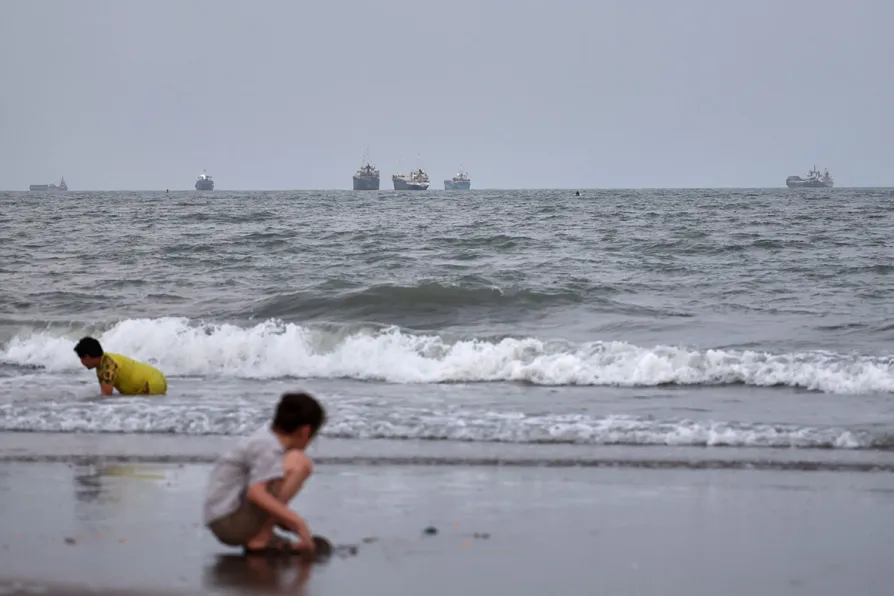
Committee for the Defence of the Iranian People’s Rights general secretary GAWAIN LITTLE discusses the impact of the US-Israeli war on the Iranian people and economy
Statement from the executive committee of the Committee for the Defence of the Iranian People’s Rights