
Washington’s inability to subjugate Iran is an example of how it is trying to preserve a regional order that no longer exists, argues RAMZY BAROUD


The ‘defence dividend’ myth exposed
We need a government that invests in saving lives not destroying them, argues SOPHIE BOLT

 GLOSSING OVER REALITY: Keir Starmer at a roving robot technology workshop sponsored by BAE system in Barrow-in-Furness while visiting to lay the keel for first Dreadnought class nuclear-armed submarine, March 2025

US financial instability is exposing the limits of a dollar-dominated global economy — and giving the Global South a historic chance to build an alternative, says MURAD QURESHI
DOUG NICHOLLS says the parasitic finance markets must be challenged or another British government could be toppled
The late country singer’s Imagination Library has put hundreds of millions of books into children’s hands. We should build on that legacy by defending the libraries at the heart of our communities, says BRENDA AITCHISON
Deprivation is a fundamental factor in criminal behaviour that must be addressed but, KENNY MacASKILL argues, there needs to a major rethink in sentencing to tackle overcrowding
MML director MEIRIAN JUMP outlines the recently refreshed library’s busy autumn schedule that ranges from book sales, archival exploration, community work with online education and the ever popular site tours
TONY BURKE surveys the shifting political landscape and the challenges Labour needs to address if it is to prevail in the 2028 federal elections





THE British Parliament needs a serious reality check. Wages have been flatlining for nearly 30 years, while costs of rent, food and energy have rocketed. Our public services are crumbling and we’re on the brink of yet another cost-of-living crisis.
But what is the government doing? Making nearly £7 billion worth of cuts to vital public services — with another £5bn planned in the autumn.
Outgoing Prime Minister Keir Starmer’s “legacy” to the British population is the Defence Investment Plan, which justifies these obscene cuts to fund another £15bn on war and nuclear weapons.
In fact, the plan sets out nearly £300bn of military spending over the next four years. Alongside £5bn for drone technology, over £8bn for fighter jets and £11bn to increase weapons stockpiles.
On top of this, £64bn will be spent on nuclear weapons — more than double every other area of military procurement. This is to fund the ongoing replacement of Britain’s nuclear-armed submarines and develop a new nuclear warhead.
It is also to buy 12 nuclear-capable F-35A fighter jets from Donald Trump, so that Britain can launch new US nuclear weapons stationed at Nato bases across Europe — and here at RAF Lakenheath in Suffolk.
While the Ministry of Defence and the arms industry are lobbying for even more money, military spending — backed by MPs lining up to support them — in real terms military spending is now actually higher than during the cold war.
The Stockholm International Peace Research Institute shows that Britain’s military spending has already increased by 32 per cent since 2016. And Britain’s spending on nuclear weapons is now the third highest in the world, ahead of Russia.
Soon-to-be new prime minister, Andy Burnham, has pledged to support this call, saying increasing military spending will be used to “regenerate and reindustrialise the country,” arguing that it will be a boon to British jobs and British workers.
Yet this totally flies in the face of economic research and the lived reality for communities dominated by arms companies.
The government’s own data shows that military spending is one of the least jobs-rich areas of the economy, falling far behind transport, health, education and social care.
And new research by the Transition Security Project has now shown that Starmer’s Defence Investment Plan will result in a net loss of at least 10,000 jobs. This is precisely because military spending is being increased by making cuts to these critical public services.
Their research also shows that if cuts are used in the same way to fund the extra £5 billion in the autumn, these job losses would rise to 20,000.
The evidence is also staring us in the face. Places like Barrow-in Furness in Cumbria, which is dominated by the British Aerospace shipyard that has been making nuclear submarines for decades, has some of the highest levels of social deprivation in the country.
Raising awareness about this stark reality of these jobs losses and exposing this “defence dividend” myth is absolutely critical — as it is a key plank of the government’s attempt to force public opinion to back the war drive.
Exposing the other falsehood that Nato states must prepare for war in order to prevent it is also critical.
Record levels of military spending across Europe, particularly from Germany, has not halted the devastating Ukraine war. Instead, it has escalated it, with now hundreds of long-range drone and missile attacks are taking place every day by both Russia and Ukraine.
The UN has stated that June was one of the deadliest months for Ukrainian civilian causalities since the start of conflict. Meanwhile hundreds of thousands of men in Ukraine and Russia are trying to flee conscription or are deserting.
The nuclear threats are also growing. As well as US nuclear weapons stationed at Nato bases, France is now working with other countries to deploy its nuclear-capable jets right across Europe to Russia’s border.
And this week’s Nato summit in Turkey has been a frenzy of military spending hikes and arms deals. This will only result in hundreds of thousands more people being killed — and a very real possibility of a nuclear confrontation between nuclear-armed Nato and Russia.
In reality, war is the enemy of working people. As well as the devastating death tolls, it destroys our lives through poverty and social deprivation.
As the incredible anti-war summit in London showed, the movement against war and austerity is growing, with huge protests and strike action taking place across Europe. Trade unions are a critical driving force of this opposition.
Now more than ever, we need to build public support for a total change in political direction — for a halt to this deadly war drive and nuclear threats and to seriously tackle the real security threats we face from the looming global recession and devastating climate breakdown.
Sophie Bolt is general secretary of CND (Campaign for Nuclear Disarmament).

Similar stories
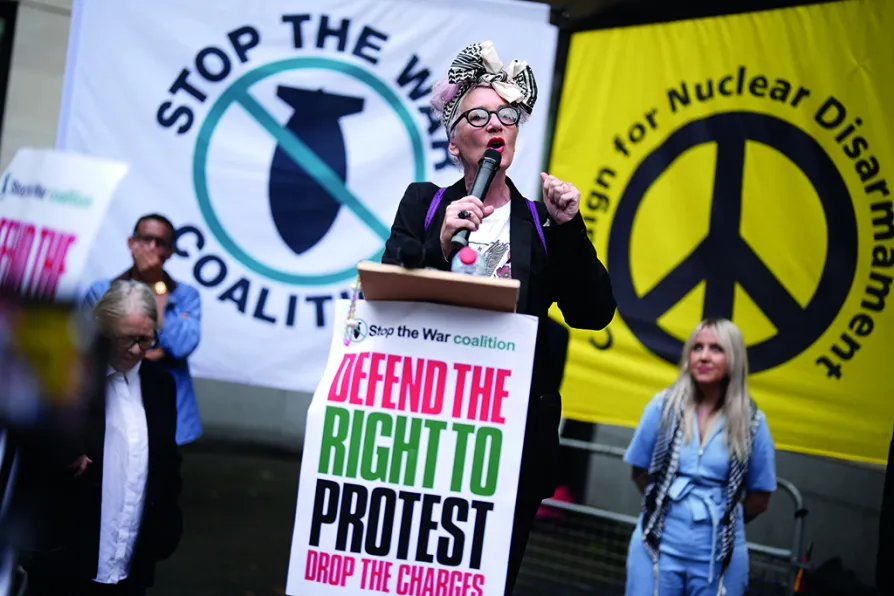
On Hiroshima Day, Campaign for Nuclear Disarmament general secretary SOPHIE BOLT explains why the danger of nuclear conflict is growing daily

SOPHIE BOLT argues that spending more on military will harm rather than benefit Britain by diverting vital resources away from essential public services

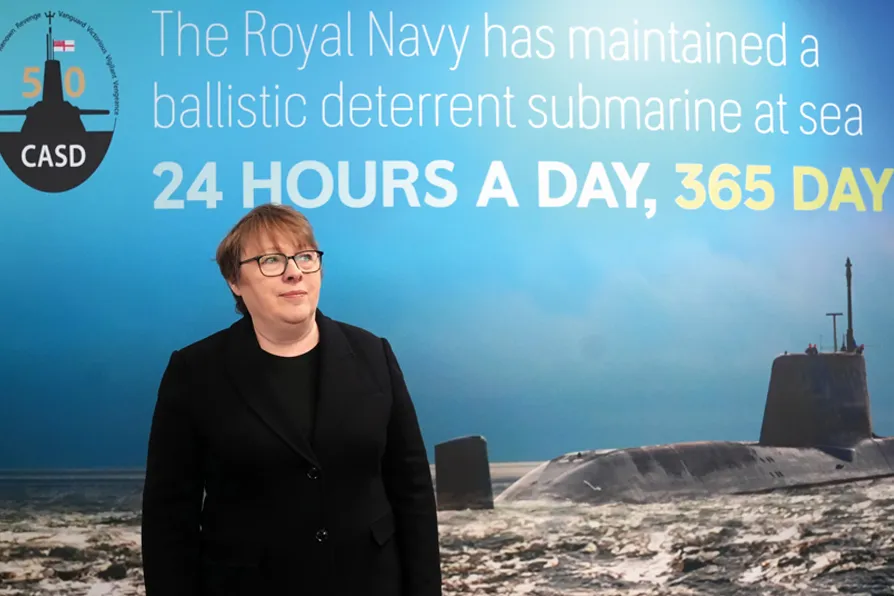
Expanding Britain’s nuclear capability increases the risk of nuclear confrontation. It does not keep us safe – it makes us a target, argues CAROL TURNER