

 Latest editorial

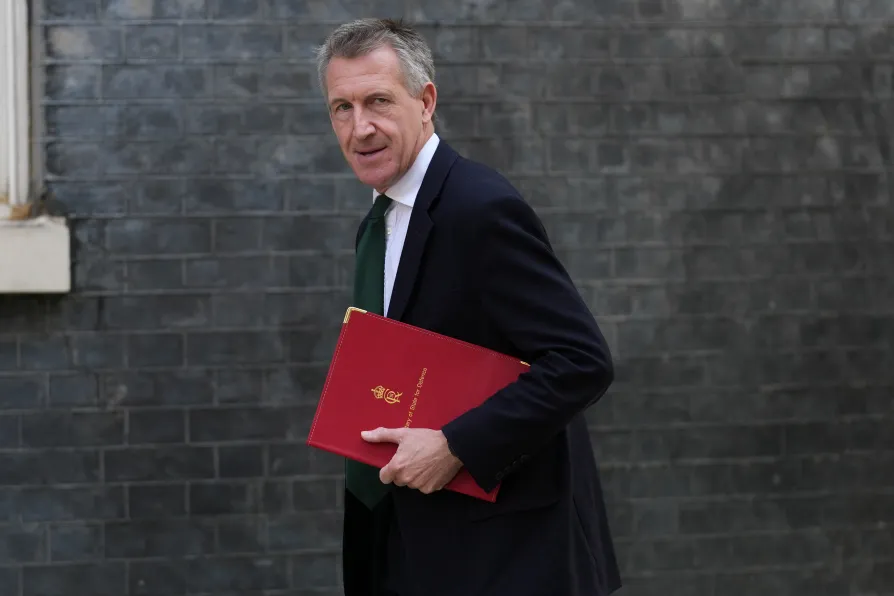 WARMONGERING: Defence Secretary Dan Jarvis






ANTI-WAR campaigners slammed ministers today for “driving us all closer to annihilation,” as the government laid out plans to make military spending its “number one priority.”
Campaign for Nuclear Disarmament general secretary Sophie Bolt warned that new Defence Secretary Dan Jarvis’s promise to put Nato spending commitments over all other departments shows that the incoming Andy Burnham administration will be “even more warmongering than [that of Sir Keir] Starmer.”
Ms Bolt told the Morning Star this pledge making “‘defence’ the number one priority in the next spending review shows a new government under Burnham to be even more warmongering than Starmer.
“Jarvis shows himself to be Trump’s man, determined to do the US’s bidding to turn the British economy to war.”
She warned this will mean likely PM Mr Burnham will “also lurch from crisis to crisis — as such levels of spending will destroy our public services and obviously fail to deliver on any of the promises to boost jobs.”
Mr Jarvis told the Commons today said he would “work closely with colleagues across government to make sure defence remains the number one priority at the next spending review.”
He also said he will attend the Nato summit in Ankara with PM Sir Keir Starmer, promising to “restate our commitment as an alliance to counter the undeniable threat that Russia poses.”
The Defence Secretary said that the government would meet the threat of Russia’s “reckless military action” which risks “miscalculation and escalation,” after the MoD revealed a Russian plane was intercepted flying close to the HMS Prince of Wales carrier strike group in the Norwegian Sea.
He also repeated the claim that 60,000 jobs would be created as a result of his government’s defence spending plans.
Ms Bolt hit back saying increased war spending “only increases the risk of nuclear confrontation and — given Britain’s nuclear dependence on the US — ties us even closer to the Trump administration.”
Instead, we need “a total shift away from this warmongering,” she said.
“The population does not support these military hikes. We need a serious investment and public spending to halt the worsening climate emergency and the cost-of-living climate crisis.
“As the planet burns and global recession looms, Britain is behaving like much of Europe and driving us all closer to annihilation.
“Whipping up threats from Russia, MPs [yesterday] lined up to push for even greater increases in military spending. Yet Britain is already the fourth-largest military spender in Nato. And the third largest on nuclear weapons. Last year alone, European Nato states outspent Russia by £559 billion to £190bn.
“The Dip [Defence Investment Plan] will see an unprecedented £298bn across four years, £64bn of this is on nuclear weapons. In fact, nuclear weapons spending accounts for more than double any other area of military procurement.”
In the Commons, Green MP Dr Ellie Chowns said that her constituents want to know if the “investment in the Dip is spent cost effectively, given that more than half of the capital budget is to be spent on the defence nuclear enterprise.”
Defence minister Luke Pollard responded: “Labour was elected on a manifesto triple lock for a nuclear deterrent” and will “make sure that the nuclear enterprise provides value for money.”
MP Kim Johnson grilled ministers over concerns that arms could be used to “facilitate war crimes” by Israeli forces and asked whether the government “will facilitate a full arms embargo?”
Armed forces minister Louise Sandher-Jones MP said the government had “already suspended licences for Israel,” though the restrictions only apply to certain products.
US ambassador to Nato Matt Whitaker ramped up the pressure on the government ahead of the Nato summit on Sunday, saying that “some allies are doing more than others” on meeting Nato targets.
Stop the War convener Lindsey German said: “You would not think from these endless demands for more money by the generals, the arms industry and the likes of Dan Jarvis and his predecessor that the UK is one of the biggest arms and military spenders in the world.
“We should be arguing for different priorities: an end to wars and conflict, and resources going to dealing with the problems that can lead to wars, not fuelling an arms race which makes them much more likely.”


SOPHIE BOLT argues that spending more on military will harm rather than benefit Britain by diverting vital resources away from essential public services

We need a government that invests in saving lives not destroying them, argues SOPHIE BOLT

Government's plan means ‘extra cash for war and overseas interventions, but less for schools and hospitals,’ Unison general secretary Andrea Egan warns