Latest editorial

In the first of a three-part series, LAYTH YOUSIF visits a community-driven club in blue-collar Paterson, New Jersey, with a rich heritage that is rising once again
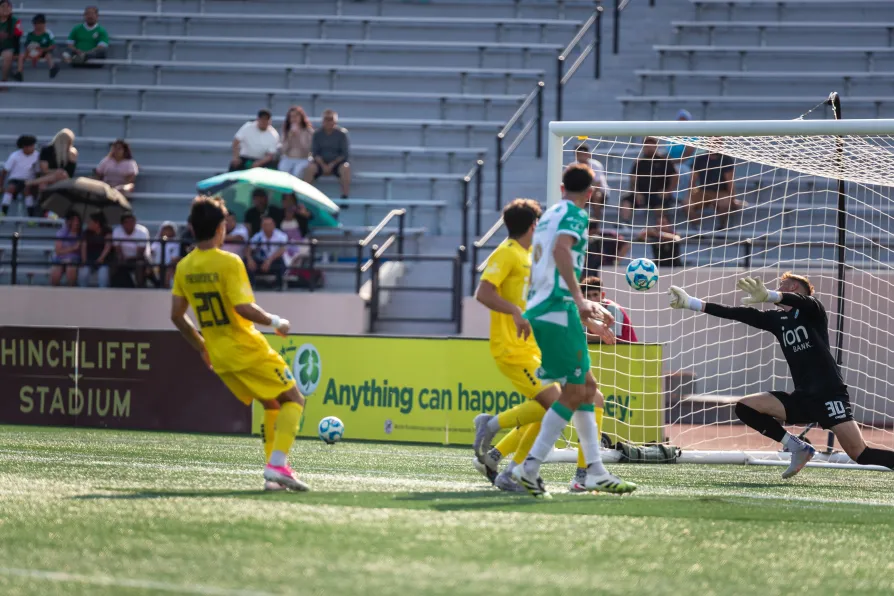 PICTURE CREDIT: John Paul Perdicaro





PATERSON, in northern New Jersey, is a town with a proud tradition of comradeship, teamwork, support, and no little stardust.
While this spirited, blue-collar, once prominent mill town in Passaic County, part of the New York metropolitan area, is a mere 10 miles from the glitz, glamour and clamour emanating from the nearby 80,000 Meadowlands Stadium, the focus here is on the rejuvenated New York Cosmos, and their home, the historic Hinchliffe Stadium.
For the fabled Cosmos are on the rise once again, intent on taking a wrecking ball to the established order on their heartening journey back to the promised land of the top echelons of their sport.
For no region of the United States of America has a richer, and more charismatic, football heritage than this unprepossessing area of northern New Jersey, which includes the heartening story of the world-famous Cosmos, who are busy rebooting their third coming in the gritty, urban heart of Passaic County.
At its height in the late 1970s, with a starting XI comprising of Pele, Franz Beckenbauer and Carlos Alberto, with Johan Neeskens to follow the season after Brazil’s greatest No 10 retired, it was no wonder the Cosmos was once known as the most glamorous football team in the world.
Although Pele and Neeskens missed playing together, the Brazilian who won three World Cups, along with fellow 1970 winner Carlos Alberto, and 1974 winner, West Germany’s Beckenbauer, as well as the prominent Dutch star of the 1974 runners-up, were all important members of the Cosmos squad that won North American Soccer League (NASL) championships across the late 1970s.
Respected US football journalist Michael Battista explains the Cosmos “are the club that put soccer in the mainstream, the public eye, and the era of Pele and Beckenbauer are still talked about today,” adding the Cosmos “are a unique group where you have a history of glory and chaos wrapped up in one.”
At the consequential Hinchliffe Stadium, I speak with Jose Tobar, a proud member of Cosmos’ loyal umbrella supporter group the Five Points.
The name pays tribute to a legendary neighbourhood of the same name in 19th-century Manhattan. While the area was renowned for its tough reputation, it was also acclaimed as one of the city’s original melting pots. Where immigrants from all around the world blended cultures, music and traditions, coming together with a strong sense of community.
“My personal story is that I’m old enough to remember the original team,” says engaging Jose, adding: “I am an immigrant. I came to this country in 1980. I saw the tail end of the original Cosmos. I never saw them in person, but I saw them on TV.
“Back then it was some of the only soccer on TV. I am from El Salvador, I grew up watching sport, and playing sport as a child.
“And then the Cosmos disappeared.”
The Rise, Fall and Rise again of the New York Cosmos
The New York Cosmos were born in 1975 after an investor group acquired an NASL franchise, before unveiling the team’s new identity. Home games in their first campaign were shared among Yankee Stadium, Hofstra University and Roosevelt Stadium. Such was their impact, the Cosmos won their first league title in only their second season in existence.
On June 10 1975, the then 35-year-old Pele, signed a three-year deal with the Cosmos, leaving Santos for the first time in his storied career.
Five days later, the triple World Cup winner scored on his debut against Dallas Tornado before a record crowd of 21,278 at Downing Stadium, Randalls Island. While the stadium itself was demolished in 2002, 10 million viewers tuned in, a record for US soccer at the time.
In May 1977, two-time Ballon d’Or winner Franz Beckenbauer after 14 seasons and three European Cups at Bayern Munich, joined the Cosmos. Der Kaiser went on to win three NASL titles and a league MVP award.
A month later, in June 1977, a record 62,394 fans watched Pele’s hat trick against the Rowdies at Giants Stadium. For 70 consecutive matches in 1977-81, the Cosmos drew crowds of 30,000-plus.
On September 18 1982, the Cosmos won their fifth NASL title, defeating the Seattle Sounders, 1-0, in San Diego. Giorgio Chinaglia — the Italian striker signing after seven seasons with Lazio to become a club legend, winning four NASL titles and multiple individual honours — grabbing the winner.
Sadly, the good times couldn’t last.
NASL overstretched, racing from nine teams in 1973 to 24 by 1978. Clubs including the Cosmos haemorrhaged money.
Overexpansion, unsustainable player salaries, ever-increasingly financial losses, allied with falling attendances, culminated in the loss of vital financial backing and TV deals, not to mention the rise of a rival, indoor soccer competition, all put paid to the existence, and noble ideals of spreading the world game that came with the first organised professional soccer league in the US. Including the Cosmos.
And, so, on June 22 1985, the Cosmos suspended operations.
Catch part two of Layth’s three-part series on the history of New York Cosmos.

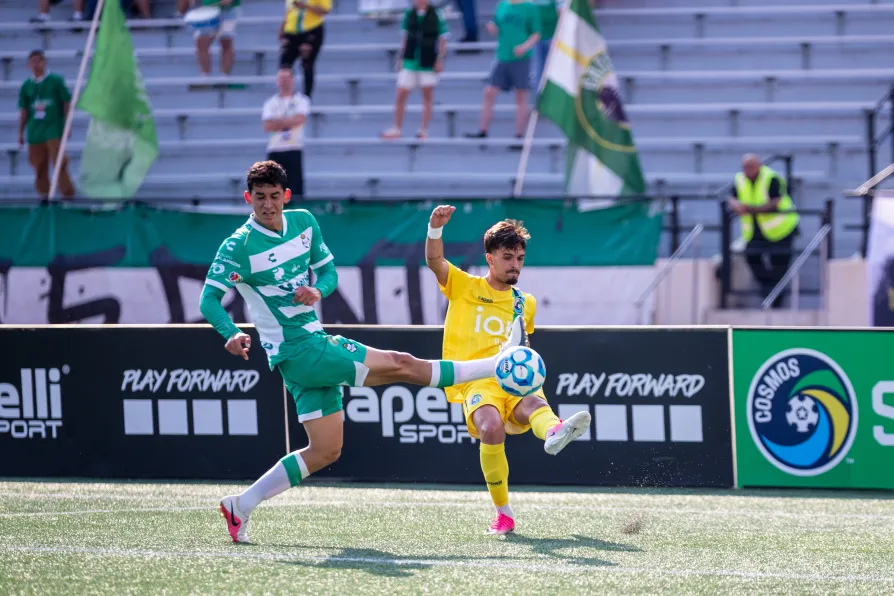
In the final part of LAYTH YOUSIF'S series on the history of the NY Cosmos, he traces their experiences which have made them the team that always has success in their sights
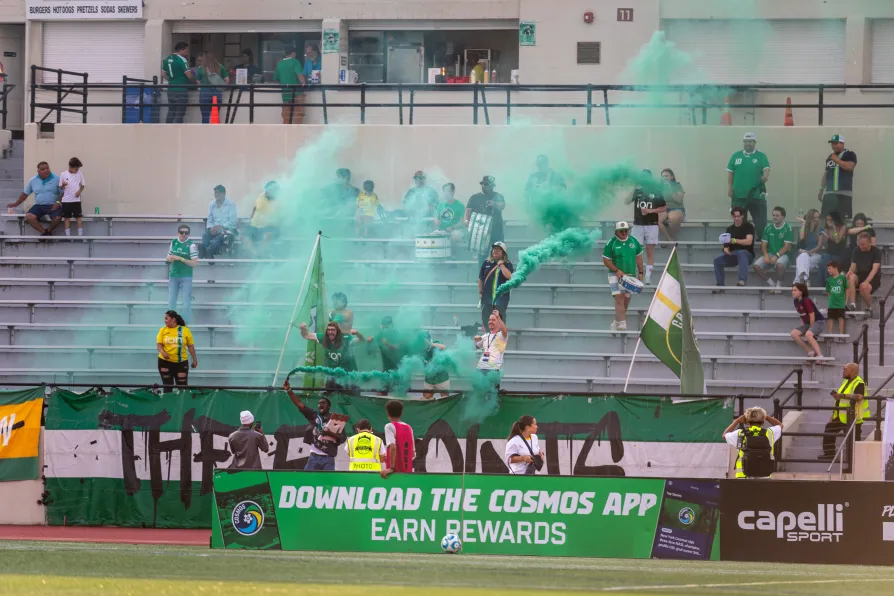
In the second part of LAYTH YOUSIF’S history of the New York Cosmos, he reflects on their stunning reboot