
PETER MASON applauds the revival, 39 years later with the same team and cast, of Manfred Karge’s version of Brecht’s 100-year-old play, Mann Ist Mann

The riddle of Roger Casement
KENNY MacASKILL relishes a fictionalised account of the life and death of the principled Irish anti-colonialist, executed for betraying his English imperial masters
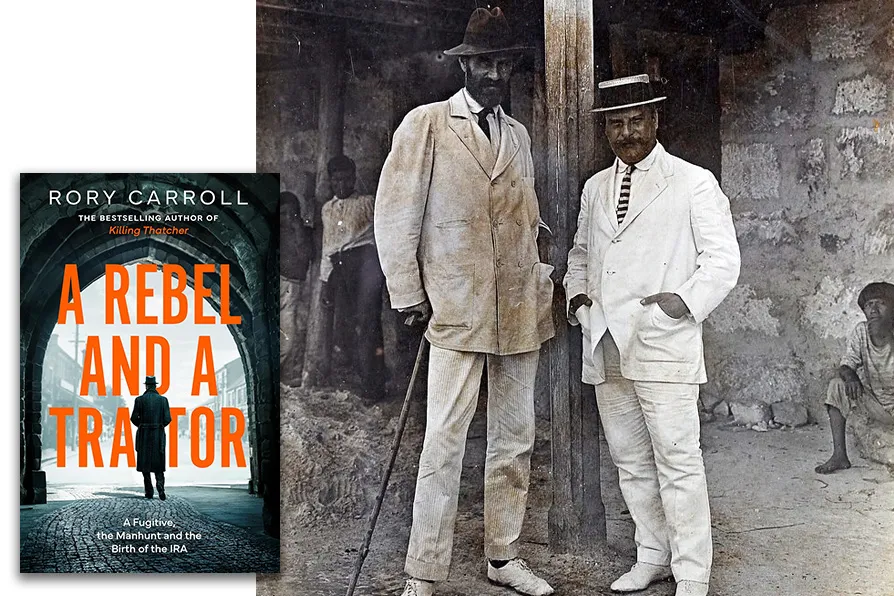
 Roger Casement (L) and Juan A. Tizon at La Chorrera, Peru, in 1910, from where Casement reported on the genocide of of the Indigenous population in the Putumayo region, at the hands of Peruvian Rubber barons [Pic: Public Domain/CC]
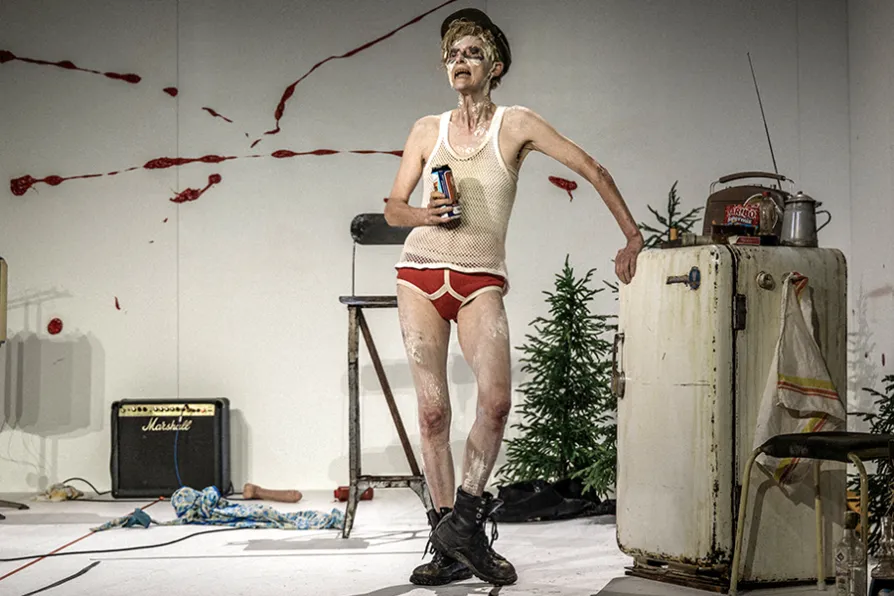
New releases from Biita Houdei, The Mary Wallopers, and The Tubs
New releases from Biita Houdei, The Mary Wallopers, and The Tubs
MAYER WAKEFIELD applauds a fearless attempt to bring to the stage the 1984 toxic gas disaster in Bhopal, India
ALEX HALL applauds the account of a dogged, traumatic and punishing campaign for justice that has lasted from 1998 to the present day
NICK WRIGHT laments the political bias of an epic attempt to tell the history of the liberation of France from the Nazis, that excludes both the decisive contribution of the Soviet Red Army, and of the French communist party itself





A Rebel and a Traitor
Rory Carroll, Mudlark, £17.50
THIS is another foray into literature by Rory Carroll, away from his day job as the Guardian’s Ireland correspondent. An earlier venture was the highly acclaimed Killing Thatcher (Mudlark, 2024) based around the Brighton bomb which nearly took out the entire British Cabinet, not just the Prime Minister. This book covers an earlier period of the complex relationship of Britain and Ireland, and the latter’s struggle for freedom from being England’s first colony.
As you’d expect from a quality journalist, his prose is easy on the eye with a crisp and flowing style. It’s neither a biography nor an academic text. Instead, it is historical fiction based on events, but with the author using literary licence to give character and even conversation to his protagonists. But it’s all sourced and based on fact, with the only areas where there’s any dubiety being acknowledged by Carroll and, to be fair, he has taken both a legitimate and credible position in his interpretation.
Spicing up the book, the author juxtaposes the principal character with his nemesis Sir Reginald Hall, the head of British Naval Intelligence. That allows for multiple story lines to be threaded through the book, adding to the principal interest, and all set against the looming backdrop of the 1916 Easter Rising.
A Rebel And A Traitor portrays Sir Roger Casement and culminates in the aftermath of the Rising when he was executed. The title put me in mind of the Jacobites. Leaving aside the horrors perpetrated by “Butcher” Cumberland on the battlefield at Culloden and in the Highlands thereafter, English Jacobite prisoners were invariably treated more harshly than Scots, whether lowland or highland. The latter were rebels rejecting British rule, but the former were traitors betraying both country and class.
And so it was with Casement. Plunkett, Pearse and Connolly, along with other Irish comrades, were shot on the orders of General Sir John Maxwell in the bloodlust of the rebellion’s aftermath. But Casement — who had been arrested before, did not partake and had even sought to avoid it — was detained in the Tower of London, and tried at the Courts of Justice with the Attorney General prosecuting and the Lord Chief Justice presiding. It was a show trial and concluded several months after the fires in Dublin’s GPO had been extinguished. Casement, in the view of the British authorities, was a traitor to be hung by the neck until he died, not a rebel to be shot out of hand.
For Casement’s real crime was to have been viewed as being part of the British imperial Establishment, and then to have betrayed it.
Yet he was born in Dublin and raised as a protestant in County Antrim. Orphaned at a young age, he succeeded, it seems through remarkable talent and courage, in scaling the heights of the Foreign Office and being knighted. His work as a humble consul in Congo and then Peru exposed what we now know to have been genocide, but perpetrated then by different empires and businesses.
However, he retained an affinity, affection and identity with Ireland which ultimately saw him embark on ventures to obtain arms and support from Germany. Doing so, as the Great War waged in Flanders and across the globe, was viewed as a stab in the back by those who had embraced him as one of their class and elevated position.
In many ways, however, he remained an outsider and also a rather sad and lonely character. His support was welcomed, but he was never part of the core Irish Republican Brotherhood and those at the centre of the rising. His class, occupation and background saw him kept at a distance and never taken to heart. His sexuality, perhaps, accounts for part of that and the prolific homosexual affairs, which he foolishly diarised, were used shamefully by the British to humiliate and crucify him publicly in the press, as they crushed him in the dock.
As a result he was buried in an unmarked grave at Pentonville Prison and not repatriated and reinterred in Glasnevin Cemetery along with other Irish heroes until 1965.
This is a good read. Exciting for those just wishing to dabble, but with sufficient depth for others who prefer more formal biographies or academic works.
