
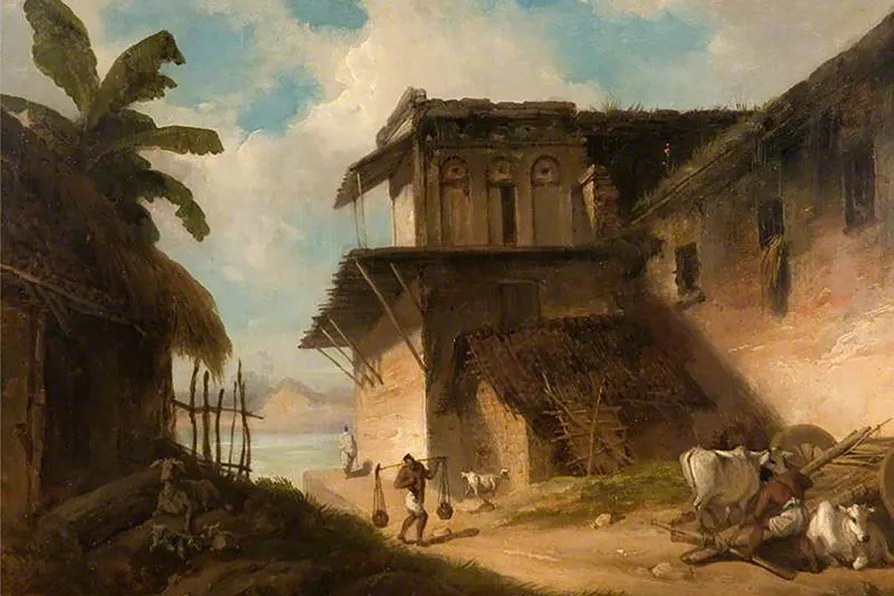
APURBA CHATTERJEE explains how British artists in India used the “picturesque” to reshape colonial landscapes and celebrate imperial power


Russia’s vast forests
TOMASZ PIERSCIONEK is intrigued by a the changing significance of its vast areas of forest to Russia’s history
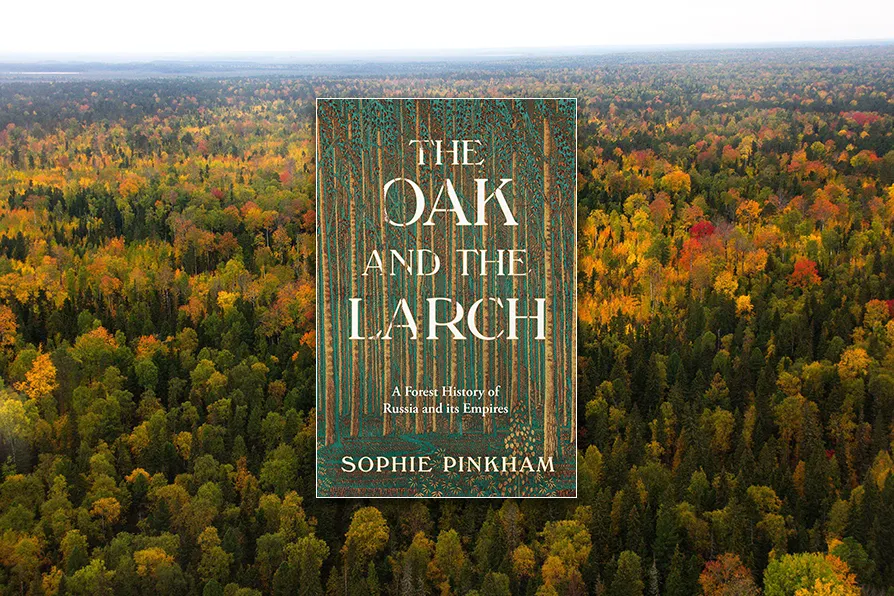
 ENDLESS FOREST: The Yugansky nature reserve in the West Siberian taiga ecoregion [Pic: Tatiana Bulyonkova/CC]
PAUL DONOVAN welcomes a revival of Reginald Rose’s classic play that reminds us of the fundamental need for trials with juries
SIMON PARSONS applauds an exceptional performance of Wesker’s little-known play, by the same actor for whom it was written 45 years ago
ANDY HEDGECOCK and MARIA DUARTE review Late Fame, The Death of Robin Hood, Leviticus, and Gail Daughtry and the Celebrity Sex Pass
ANGUS REID recommends a uniquely accomplished documentary collage that contemplates our relation to the natural world
GORDON PARSONS enjoys Kant’s ‘mind-boggling’ theory of human reality: that we create the reality we experience





The Oak and the Larch: A Forest History of Russia and Its Empires
Sophie Pinkham, William Collins, £25
FORESTS are at the heart of Russia and the heart of Russia is its forests – thus asserts Sophie Pinkam. The book is named after two types of trees found in geographically opposite parts of Russia, emphasising its vastness.
She explains how Russia’s journey through history, its culture, self-perception, and global outlook was (and arguably still is) shaped by its vast and diverse forested regions and the relationship between the nation’s forests and its people.
Such a relationship, a strange mix of veneration and exploitation, was at different times both a protection from invaders and a hinderance to expansion. While Russia’s dense forests (and the wood they provided) could be used for defensive purposes and proved an effective shield against Mongol invasions of the fledgling Russian state, it also ironically made it harder in later centuries for the Russian Empire to expand Eastwards and conquer the native peoples living in the vast Siberian taiga.
Russia’s Western forests again proved an effective place from which to conduct partisan operations during the second world war.
Pinkham explains how exponential exploitation of Russia’s forests in the past few centuries, to build ships, dwellings, as well as provide fuel for the country’s industrial revolution, caused alarm among peasants and poets alike who observed the forests receding at an unprecedented rate. This in turn gave way to a proto-environmental movement in the 19th century, supported by some of Russia’s renowned writers and radicals, that drew associations between the exploitation of forests and people (serfdom).
This movement argued for the need to emancipate both the woods and the workers from late feudal (and later capitalist) oppression, and had an awareness of the disastrous effect that cutting down forests would have on Russia’s ecosystem and ultimately its people’s ability to survive off the land.
Curiously, as Pinkham explains, in modern-day Russia environmentalism has been adopted by some far-right movements who draw similarities between preserving the nation’s forests with the idea of preserving the nation for (white) Russians against foreign influence, migrants, and what they deem as non-native and invasive ideas and peoples that threaten Russian identity.
Russia’s relationship with forests during the Soviet era was a peculiar one. Official Soviet policy in the early days of the USSR had a rigid way of thinking and saw the forest akin to an idle “worker” whose role it was to contribute to the state’s technological development. This led to tensions with other communists averse to the intense exploitation of the woodlands and forward thinking enough to see the detrimental effects such stolid thinking would have upon the nation’s ecosystem and people.
Despite centuries of logging, forest fires, and attempts at forest management that caused more harm than good, the Siberian taiga (boreal forest) — itself only one of Russia’s forested regions — remains the world’s largest continuous forested region.
Pinkham shatters the Western myth that Siberia is a bleak and desolate region and explains how this vast area comprises an exceptional diversity of flora and fauna. Furthermore, while Siberia signified imprisonment in the gulag for some, others (political dissidents, criminals, intellectuals or religious nonconformists) have used its vastness to find freedom, liberty or escape from the authorities.
Pinkham’s journey through Russia’s forests shows that they are inextricably linked with the nation’s soul. Regardless of historical period, socioeconomic background, or political views, the forest holds an important place in a Russian’s identity.

Similar stories

JOE GILL marvels at the history of a highly complex nomadic and hunter/gatherer society without a hierarchical class system
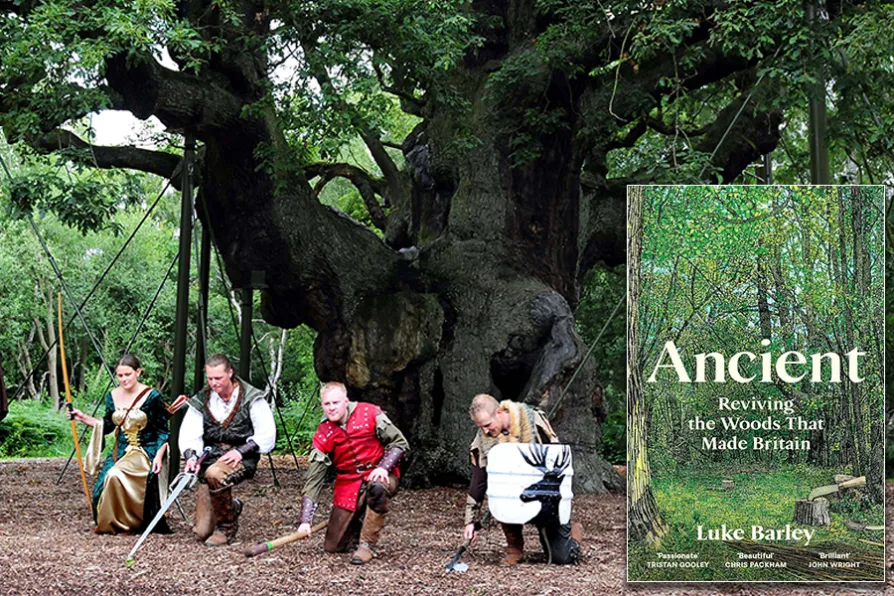
JAN WOOLF relishes an extensive history of our long relationship to trees in Britain that underlines the current emergency

BEN CHACKO welcomes a masterful analysis that puts class struggle back at the heart of our understanding of China’s revolution
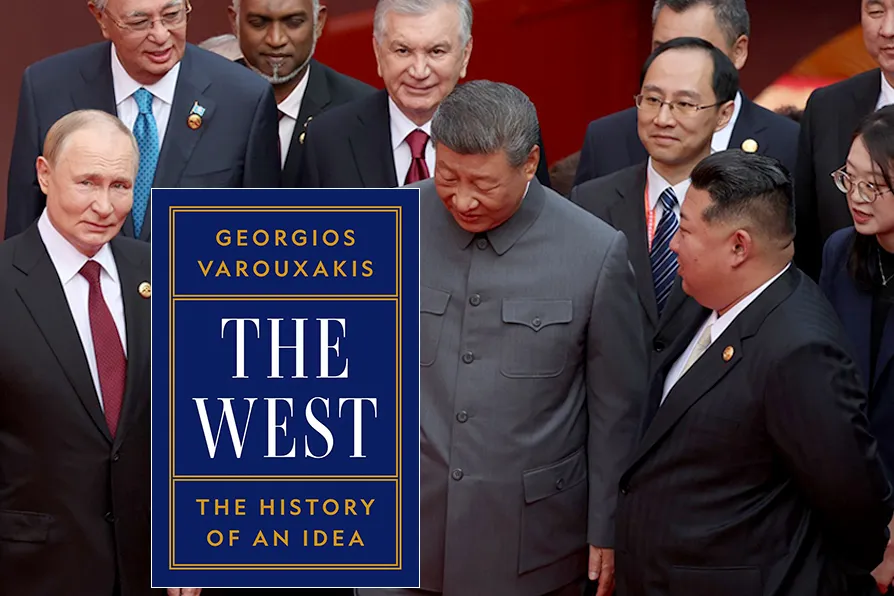
BRENT CUTLER is intrigued by the imperialist, supremacist and contradictory history of a word that is used all too easily