
Working people across Britain are fighting back against austerity, war, repression and exploitation. The challenge now is to unite those struggles, says Communist Party of Britain assistant general secretary JOHNNIE HUNTER

In memory of Chris Hani
ROGER MCKENZIE recalls the one-in-a-generation communist leader murdered at the dawn of a new South Africa 33 years ago last April 10
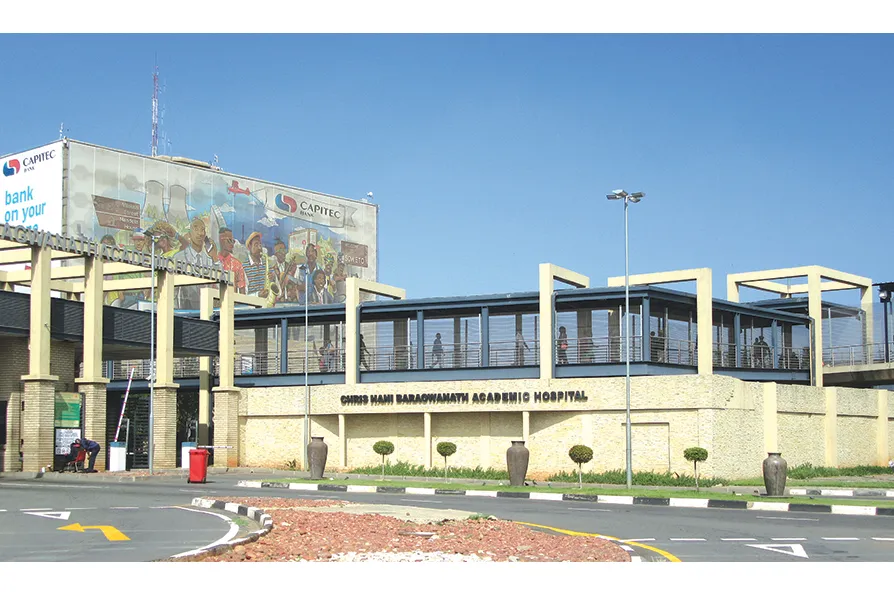
 Chris Hani Baragwanath Hospital the only hospital in Soweto and the largest in sub Saharan Africa in 2017 / Pic: amanderson2/CC
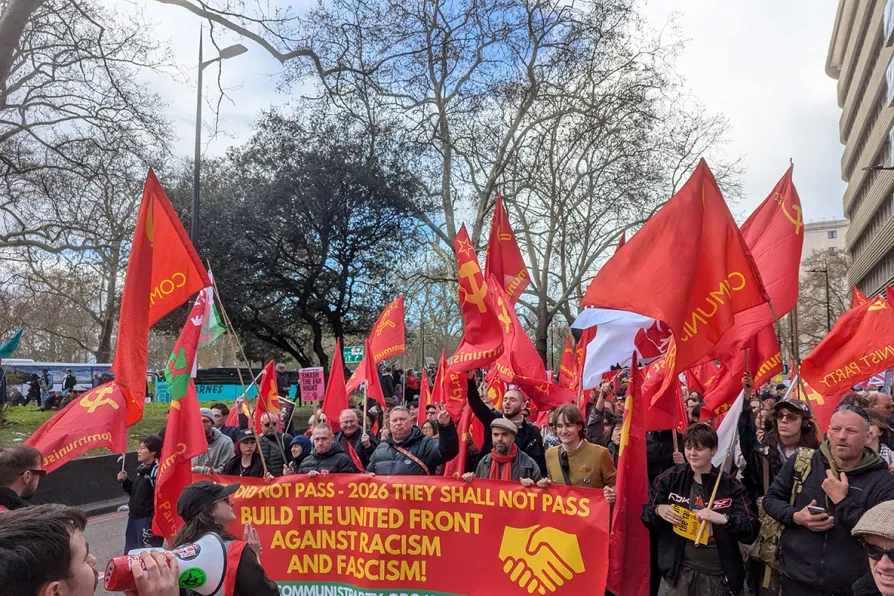
Train drivers’ union Aslef general secretary DAVE CALFE speaks to Ben Chacko about his hopes that Burnham’s devolution agenda will include the importance of the railway
DIANE ABBOTT provides an analysis of the reasons for EU and British voters’ dramatic swing to the right
Some of the review’s proposals could make the benefits system less cruel and dehumanising. But its vague plans for services and non-cash support revive the threat that disabled people will lose control over the money we need to survive, writes DYLAN MURPHY
Believe it or not, there was a time when the US government built beautiful homes for working‑class Americans to deal with a housing shortage, writes ERAN BEN-JOSEPH
MAT COWARD has heaps of good advice on recycling garden and household waste over the winter





THERE is only a very small select group of people that I regret never having had the opportunity to sit down and talk politics with. One of those is Chris Hani, the South African Communist Party leader and freedom fighter.
During my recent visit to South Africa I lost count of the number of times Hani’s name was mentioned to me with the deepest respect and regret.
The regret comes from the wish that Hani should still be around to help guide South Africa through the choppy waters that have been created post-apartheid through what many believe to be the capitulation of the African National Congress to neoliberalism soon after the settler colonial regime was removed from power.
But Hani’s murder on April 10, 1993 on the driveway of his Johannesburg home by white supremacist Janusz Walus also robbed the international revolutionary movement of a significant leader.
I remember the shock and anger that people still felt about the murder of Hani during my first visit to South Africa in 1994.
My visit, part of a small union delegation, came during the run up to Freedom Day on April 27, 1994, the first national elections where everyone of voting age over 18 from any racial group was allowed to vote.
The loss of Hani was still on everyone’s tongues. In fact at the time of my visit the anger at the continued violence by the far right Afrikaners could easily have spilled over into civil war with the elections abandoned.
It’s important to remember how close this disastrous scenario was to coming to pass.
It is often said that Hani, at the time of his murder the general secretary of the huge SACP, and a former leader of the ANC’s military wing uMkhonto weSizwe (MK), was the most popular leader in the liberation struggle after Nelson Mandela.
Mandela described Hani as “one of the greatest freedom fighters this country has ever known.”
Hani is often described as incorruptible and was certainly a true hero of the townships.
Born in a poor rural Eastern Cape village in 1942, Hani went to the University of Fort Hare, where he became a Marxist and joined the SACP.
This soon landed him in jail under the infamous Suppression of Communism Act of 1950. But Hani managed to jump bail and went into exile.
During this time he received military training and joined MK where he quickly rose in the ranks and became a fearless and respected military leader.
Under his direction, MK carried out periodic cross-border operations in South Africa, including bombings and sabotage campaigns.
Hani was the last of the exiled ANC leaders to gain provisional amnesty when negotiations began in 1990. He returned home that March. For decades, he was subject to extensive surveillance operations and numerous assassination attempts.
Hani’s eventual murder led to mass protests that shook the country in the ensuing days. The ANC declared Wednesday April 14 1993 as a day of protests and called on people to stay home from work.
Some four million workers stayed away and 2.5 million flooded the streets. Hani’s funeral was the largest in South Africa’s history at that time.
Government officials, ANC leaders, and journalists feared a war might break out.
In 1990 MK had laid down its arms to support the negotiation process. But the apartheid regime continued to oversee a proxy war in the townships. In June 1992 government proxies massacred dozens of residents in Boipatong leading to the decision by the ANC leaders to halt negotiations.
These eventually resumed 10 days before Hani was murdered. But his murder sparked another escalation in violence. There were real fears that the liberation struggle might again be forced to take up arms.
The regime had wrongly portrayed Hani as an obstacle to negotiations. Nothing could be further from the truth. Hani was a disciplined comrade who, whatever his own personal views may have been, would have followed the agreed line as if he thought of it.
At any rate there is no evidence that Hani was anything less than fully committed to the negotiations process.
Hani had previously expressed willingness to argue that the ANC should withdraw from the talks and resume the armed struggle if the government did not show a genuine commitment to ending apartheid. That’s a position most negotiators have found themselves in.
The fact is that the apartheid regime stood to benefit from the murder of Hani.
Within hours of the arrest of Walus, the regime quickly announced that he had acted alone.
But Walus was politically active and a member of the far-right Afrikaner Weerstandsbeweging (AWB) group.
He was also close with Conservative Party politician Clive Derby-Lewis, who was later implicated in the right-wing plot to kill Hani.
Hani was always clear about the importance of recognising the importance of the class struggle in the South African liberation struggle. He once said: “We must never forget that the struggle is about lifting our people out of poverty.
“You have worked in the mines to uplift white people, but you are still waiting for essential services.”
Hani also foresaw the exploitative role monopoly capital would attempt to play in post-apartheid South Africa.
When ANC leaders met with British Aerospace (BAE) to start negotiating a weapons deal for the post-apartheid state, Hani was apprehensive. Other ANC leaders advocated for a deal in order to establish partnerships with the West.
BAE South Africa became incorporated in 1997. So many other transnational corporations were to beat the same path to post apartheid South Africa.
But why is Hani important to me?
While I knew a fair few communists personally during my formative political years of the ’80s the only ones who shared my skin colour that I had any knowledge of were from the US, in Angela Davis and Paul Robeson. I hadn’t heard about Claudia Jones until later.
The only black communists I had met in Britain were Dorothy Kuya and Trevor Carter, former members of the Communist Party of Great Britain.
It wasn’t as easy to get the sort of instant access to information back in the day, especially not in the depths of the Black Country where people were often quick to dismiss notions that race had any importance, with class being the singular thing that mattered.
But I remember starting to hear about Hani, this heroic communist freedom fighter in South Africa at a time when I was on the receiving end of racism including the constant stop and searches from the police.
It was because the fight to defeat the racist settler colonial regime was so resonant with me that I perhaps paid more attention to Hani.
As well as being a question of the impact of settler colonialism, eventually accessing enough literature taught me that race and class were also critical intertwined dimensions to the struggle for socialist transformation.
Central to these lessons was the work of Hani who continues to remind me today that my heritage does not have to be hidden or subsumed in the struggle for revolutionary change. Rather, it is an important contribution to the class struggle.

Similar stories
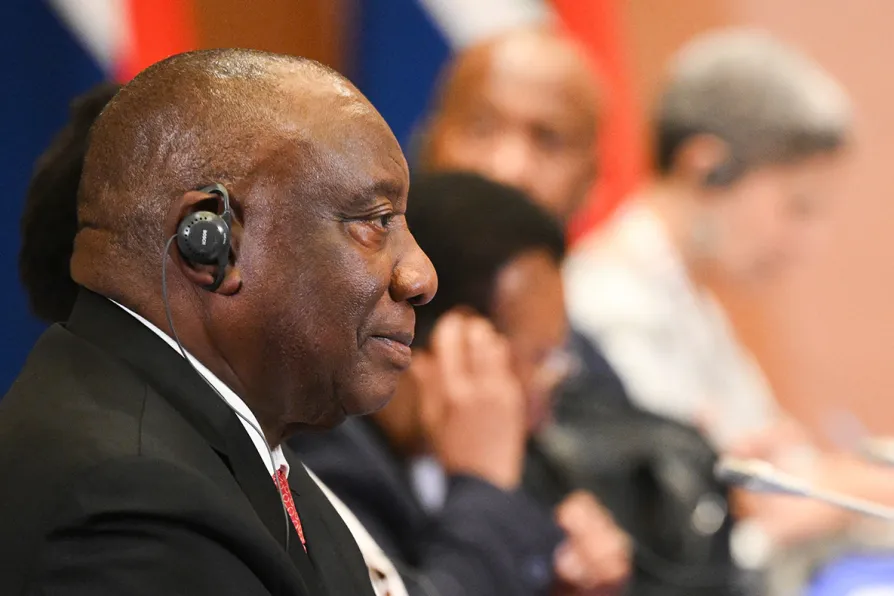
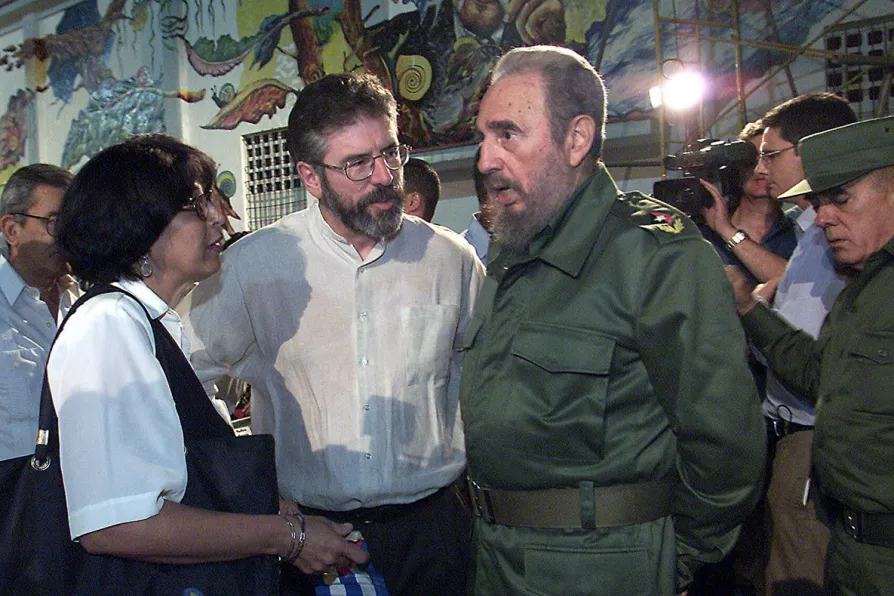
JOE DWYER of Sinn Fein reflects on the links between the Irish and Cuban struggles for independence and on Castro’s personal engagement with the cause of Irish freedom
Cuba continues to embody a vision of internationalism that imperialism has never forgiven, argues ZOLTAN ZIGEDY
ROGER McKENZIE looks at how ancient traditions practiced today can be the cornerstone of anti-imperialism in Africa