With Jamie J


 Latest editorial
From World Cup dream to football nightmare
Calls for justice drowned out by choreographed symbolism and power politics at Fifa Congress, writes JAMES NALTON
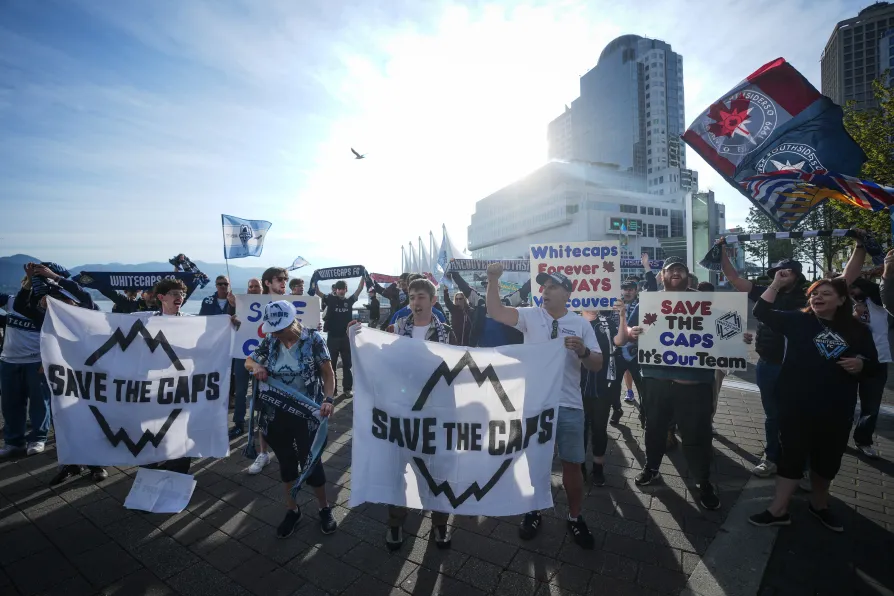 Fans of the Vancouver Whitecaps MLS soccer team rally to keep the team in Vancouver, April 30, 2026, outside the 76th FIFA Congress in Vancouver, British Columbia. Photo: Darryl Dyck/The Canadian Press via AP





AS THE world of football admin descended on Vancouver for the 76th Fifa Congress, what should have been a positive, preparatory pre-World Cup meeting was clouded by the inaccessibility of this tournament itself, the issues Fifa is failing to deal with, and a threat to the very existence of the host city’s historic team.
Like all the 2026 World Cup host cities across North America, Vancouver should be getting ready to celebrate, but the combination of Fifa’s actions and, in some cases, inaction, the inability of Iranian representatives to attend, and the franchise nature of domestic football in North America combined to highlight several ills at once.
It was, inadvertently, a summary of what the game, as it operates at this level, has become.
It all took place against a backdrop, locally, of the increasingly real possibility that Vancouver’s historic team, the Whitecaps, may cease to exist, revealing the often precarious nature of professional soccer in the region, and the cold business sentiment that underpins franchise-based sport and is increasingly present at clubs around the world.
Major League Soccer, generally, has done a good job of creating one of the more stable professional leagues in the history of American professional soccer, but it is not without its faults, and the general structure of the game in the country, led by MLS, can always lead to situations such as this.
As MLS boasts about its franchise valuations, which are artificially inflated compared to the rest of the world due to the comfortable ownership clique of a single-entity league, and the lack of organic club movement through promotion and relegation, one of its teams, one of the best in the region, no less, is under threat of relocation. MLS’s collection of owners may even stand to benefit from the Whitecaps’ demise, as any relocation will lead to an equivalent of an expansion fee from the new ownership group. Not a healthy state of affairs.
The Vancouver Whitecaps name dates back to the North American Soccer League of 1974. The franchise nature of professional soccer in the US and Canada means such history is hard to come by, so you’d think the few teams that have it would be cherished, but it often feels like they are discarded in favour of the new expansion teams (and their accompanying expansion fees).
While MLS did everything it could to help Lionel Messi’s transfer to Inter Miami, a team formed in 2018, it feels like it would happily abandon one of its remaining shreds of soccer history by letting the Whitecaps franchise move elsewhere.
The Whitecaps’ situation is not just on MLS. The team have struggled to generate matchday revenue due to not owning their own stadium. They rent their current home, BC Place, from the province of British Columbia through a company called BC Pavilion Corporation, acting on behalf of the province.
It’s another example of the often awkward relationship between private companies, private money, local government, and public facilities. An obvious solution would be some kind of public ownership of the club, made up of supporters and local investors with an interest in growing the sport, but the sporting and economic landscape doesn’t facilitate such a clear answer to the problem.
During their most recent game, against Colorado Rapids, Whitecaps fans initiated a SaveTheCaps campaign, not dissimilar to the global supporter movement that helped save Columbus Crew from a similar fate in 2018. Caps fans hope it will drive enough media coverage and pressure to save their historic club, too, but things accelerated during the week, and the situation became increasingly dire. It looked possible that the franchise would be moved to Las Vegas, and you also get the impression the current owners would be happy to take the money and run, regardless of what happens to the team.
SaveTheCaps protests were held outside the Fifa Congress in an attempt to raise awareness, joining numerous other groups who were highlighting issues caused by the World Cup, including hotel workers pushing for better pay, and pushback against Fifa and the latest stunt from its president, Gianni Infantino.
The latter stemmed from a surreal moment during the congress when Infantino tried to get the representatives from the FAs of Palestine and Israel on stage for a handshake.
It was an extremely short-sighted, narcissistic attempt at a photo opportunity by Infantino, whose own media output comes mostly via such staged posts on Instagram and Fifa press releases, rather than publicly accountable press conferences.
Infantino had clearly planned this privately before the event, as he ensnared the president of the Palestine FA, Jibril Rajoub, and the vice-president of Israel’s FA, Basim Sheikh Suliman, shortly after they had made their separate speeches to the Congress.
Suliman stood there awkwardly, slightly bemused, while Rajoub refused to take part in the charade, remonstrating with a desperate Infantino who tried to placate the mood by referencing Fifa’s new U15 tournament. “Let’s work together to give hope to the children,” Infantino said, presumably forgetting how many children Israel has killed in Palestine.
It was, at the very least, tone-deaf from Infantino, who mustn’t have been listening to what Rajoub said, or, as Fifa has done for decades, just ignored the issues raised by the Palestine FA.
The main issue they have been raising for years, along with the issue of unpunished racism from Israeli fans against Palestinians, has been the presence of Israeli clubs in illegal Israeli settlements in Palestine. These settlements, and by extension the clubs based there playing in the Israeli league, are deemed by the International Court of Justice and the United Nations to be violating international law.
The Palestine FA recently appealed their case to the Court of Arbitration for Sport after Fifa refused to act, and pointed this out to Fifa at the Congress, but still Infantino believed all that was needed to solve the issue was a photo op. Maybe he is trying to put himself in line to win the peace prize he created for Donald Trump last year.
Rather than being a celebration of football in the region, a boost to it, and a festival of sport that those involved in soccer get to enjoy on the back of their hard work and passion over the years, it was another Fifa farce.
