Supporters from both sides prepare to stand together against season ticket threats and exploitation, writes JAMES NALTON


 Latest editorial
The rise, fall and revival of John Conteh
JOHN WIGHT explores the life and legacy of a working-class boxing legend
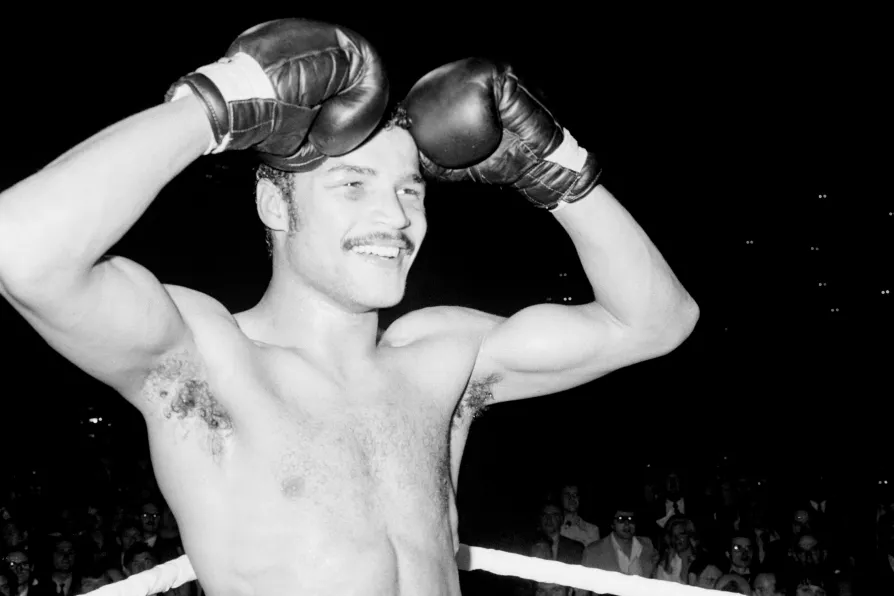 John Conteh celebrates winning the World Light Heavyweight title after his split decision victory, October 1, 1974

French federation withdraws support as pressure mounts on Fifa president





IN THE history of boxing, 1974 will forever be synonymous with Ali’s epic fight against George Foreman in Zaire. This is unfortunate, because 1974 was also the year in which Britain’s very own Ali, in the shape of John Conteh, made his mark when he won the light heavyweight world title aged just 23.
This he did against Jorge Ahumada, a tough Argentinian whom most writers and commentators felt would be too much for him. But the man from Kirkby, Merseyside, confounded the doubters by defeating Ahumada over 15 hard rounds to take the belt on points in front of a packed crowd at Wembley Arena.
John Conteh is a name inextricably linked with British boxing in the 1970s, along with the likes of Alan Minter and John H Tracey. A ubiquitous presence on the chat show circuit and on television in his time, the handsome Scouser rose to prominence at a time when a working-class hero was something to be.
On television, on stage, in movies, music, politics and sports, the seventies was the last decade of the primacy of the working class in all of the above. With his strong working class roots, movie star looks, and prodigious boxing skills, Conteh was one of the decade’s pin-ups. At the height of his fame he even appeared on Paul McCartney’s Band on the Run album cover.
It is why the stage play of his life and times — the eponymously titled Conteh at Liverpool’s Royal Court Theatre — has been a long time coming. The play’s writer and lead actor, Aron Julius, has by all accounts managed to capture the essence of John Conteh’s life with commendable artistry and authenticity. A review of the play in Good News Liverpool reveals: “Julius’s play follows him [John Conteh] through the highs and lows of his mid to late boxing career, revelling in the successes, but not shying away from the darker times that followed.”
John Conteh also features in the recently published book — Graveyard of Champions — by Stephen Barr. Barr’s ambitious work covers the history of the now defunct Liverpool Stadium, which in its time laid claim to the status of the Mecca of boxing in north-west England. There, between 1911 and 1985, when it closed its doors for the last time, it hosted a staggering 6,000 competitive bouts. Conteh writes the book’s foreword with impressive lucidity, stating: “For me, the Stadium was more than just a venue — it was a classroom, a proving ground, a second home. If you could succeed at Liverpool Stadium, you could succeed anywhere in the world.”
John Conteh started boxing, aged 10, at a local amateur club in Kirkby. At 19, boxing for England, he took the light heavyweight gold medal at the 1970 Commonwealth Games in Edinburgh. Turning pro soon thereafter, he fought 26 times before fighting for the world title, in the process losing just once.
In terms of style, he was incredibly easy on the eye, combining an excellent jab with sharp combinations, superb reflexes, and nimble footwork to make him one of the best British fighters to ever do it. What he lacked in power, he more than made up for in pure boxing skills that had many touting him for a possible future fight against Ali at heavyweight.
Prior to winning the world title, Conteh was involved in one of the all-time classic British domestic fights, when as European champion he took on and defeated the then British and Commonwealth champion Chris Finnegan in 1973.
When considering John Conteh’s career nowadays, the impression left is of a naturally talented fighter who tainted his legacy upon taking the title by falling for the lure of nightclubs and parties, leading to the inevitable diminution of his talent and discipline. Yet while still on the way up, Conteh’s spartan training regimen and methods were legendary, involving mammoth sparring sessions, hill runs, and regular swims in freezing cold water to develop the mental and physical toughness for which he was known.
Like most hungry young fighters, he lived in the gym, applying himself to the task in the knowledge that boxing offered him a route out of poverty.
After winning the world title in 1974, Conteh’s fame went through the roof, his handsome looks and charisma responsible for seeing him transcend the sport to become a cultural icon. He successfully defended his title three times, before he was stripped of it for pulling out of mandatory defence against Miguel Cuello two days before they were due to fight.
In 1977 Conteh attempted to regain his belt but lost to Mate Parlov, the then Yugoslav light heavyweight champion, in a controversial 15-round split decision in Belgrade. He fought a further six times before retiring in 1980, after his licence was revoked on medical grounds, ending with an impressive record of 34 wins, 1 draw and 4 defeats.
After boxing, John Conteh embarked on a career in show business. However an addiction to alcohol saw him follow the sad but common path of ex-fighters, who after achieving fame and wealth in the ring go on to self-destruct in retirement.
Refusing to be vanquished, however, he successfully battled his alcoholism and went on to enjoy a second career on the after dinner speaking circuit, while also finding the time for charity work. Now, age 74, he remains in rude health, testament to his refusal to become just another pawn in a game with a reputation for destroying in the end that which it builds.
Younger boxing fans unfamiliar with John Conteh would be doing themselves a favour searching out footage of the Liverpudlian in action when he was in his pomp.
Conteh is playing at the Royal Court Theatre, Liverpool, until May 9. Graveyard of Champions by Stephen Barr is published by Pitch and is available from wherever you get your books.
