

 Latest editorial

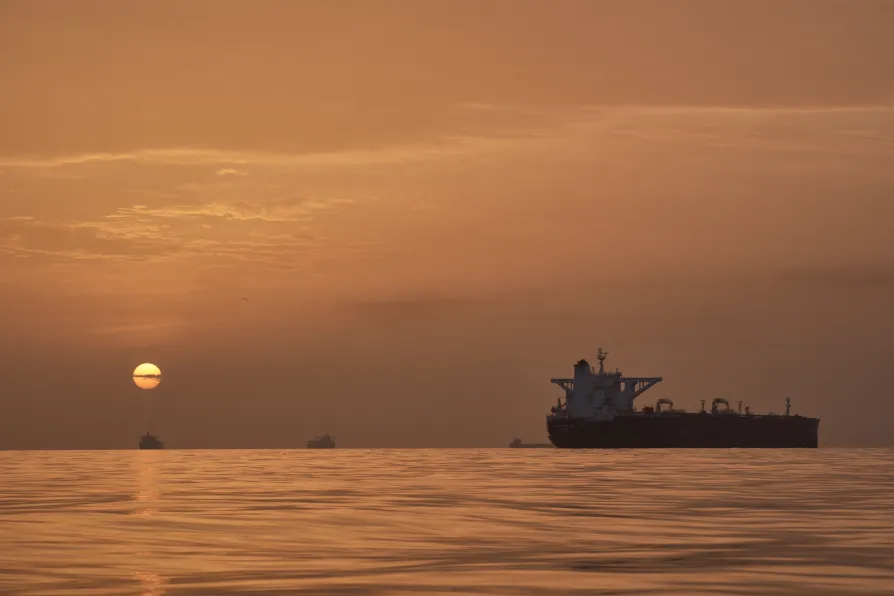 The sun rises behind tankers anchored in the Strait of Hormuz off the coast of Qeshm Island, Iran, April 18, 2026





IRAN offered to end its chokehold on the Strait of Hormuz today if the US lifts its blockade on the country and ends the war, a proposal that would postpone discussions on the Islamic Republic’s nuclear programme.
With a fragile ceasefire in place, the US and Iran are locked in a standoff over the strait, through which a fifth of the world’s traded fossil fuels pass.
The strait’s closure has put pressure on US President Donald Trump, as oil and petrol prices have skyrocketed ahead of crucial midterm elections, and it has pressured his Gulf allies, which use the waterway to export their oil and gas.
The closure has also had far-reaching effects throughout the world economy, raising the price of fertiliser, food and other basic goods.
The Iranian proposal would push negotiations on the country’s nuclear programme to a later date, but Mr Trump has claimed one of the major reasons he went to war was to deny Iran the ability to develop nuclear weapons, which Washington and Tehran were already negotiating before the US and Israel launched its unprovoked war.
Iranian Foreign Minister Abbas Araghchi met with Russian President Vladimir Putin in St Petersburg today.
Mr Putin praised the Iranian people as “bravely and heroically fighting for their sovereignty,” and said Russia would do everything possible to bring peace to the Middle East, Tass reported.
Mr Araghchi said before the meeting in a video interview posted by Iran’s state-run IRNA news agency that it was “a good opportunity for us to consult with our Russian friends about the developments that have occurred in relation to the war during this period and what is happening now.”
Meanwhile, the US military presence in the Middle East continues to grow. As of today, the US navy had three aircraft carrier groups in the region.
Those carriers include some 15,000 sailors and marines, as well as over 200 aircraft and additional ships. An amphibious assault group led by the USS Tripoli is also in the Middle East, with its own sailors, marines and aircraft.
That comes on top of the warplanes, refuellers and other troop deployments to the region.
