

 Latest editorial
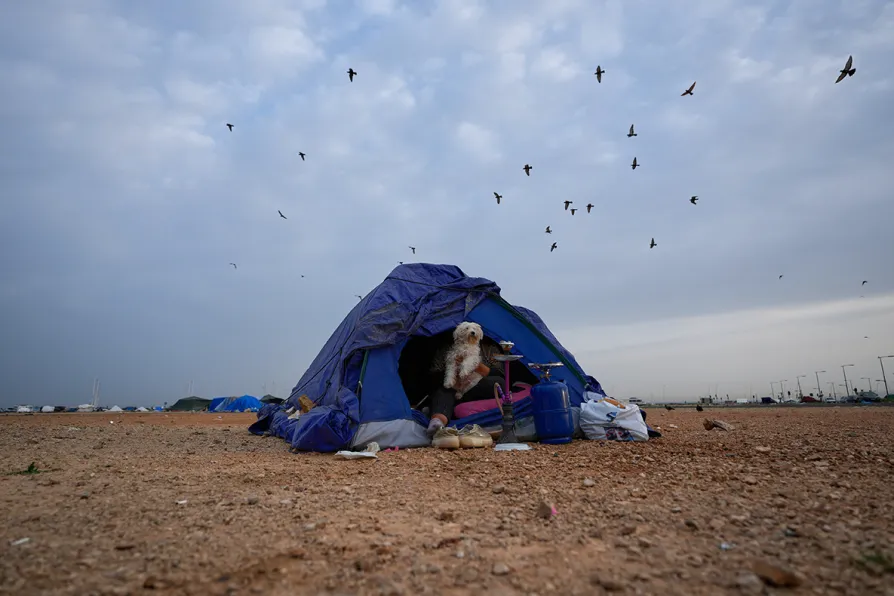 A displaced woman holding her dog sits in her tent in Beirut, Lebanon, awaiting an official order to return to her home in south Lebanon following a ceasefire between Hezbollah and Israel, April 17, 2026





A FRAGILE calm settled over parts of Lebanon on Friday as a 10-day ceasefire brokered by the United States took hold between Israel and Hezbollah.
The truce prompted thousands of displaced families to begin the journey home — even as uncertainty, destruction and Israeli warnings against going back to parts of southern Lebanon clouded their return.
By early morning, cars were backed up for miles on the route leading south to the damaged Qasmiyeh bridge over the Litani River, a key crossing linking the southern coastal city of Tyre to the north.
Vehicles piled high with mattresses, suitcases and salvaged belongings crept forward through a single reopened lane, hastily repaired after an Israeli airstrike just a day earlier.
More than a million people have been forcibly displaced by the Israelis during fighting with Hezbollah.
Despite warnings from Lebanese officials that they should not immediately attempt to return to their homes, many began moving toward southern Lebanon in the hours after the ceasefire was declared.
But many did not believe that their ordeal was really over.
“Israel doesn’t want peace,” said Ali Wahdan, a medic walking on crutches over the rubble of the emergency services’ headquarters in Jibsheet.
He was badly wounded in an Israeli air strike that hit the building without warning.
“I wish it were different,” he said. “But this war will continue.”
In the neighbourhood of Haret Hreik in Beirut’s southern suburb, entire buildings had been reduced to rubble by intense Israeli strikes.
Ahmad Lahham waved the yellow Hezbollah flag standing on a mountain of rubble that used to be his apartment building.
He said: “Only the Iranians stood with us, no one else,” calling Lebanon’s leaders “the leadership of shame.”
Iran’s President Masoud Pezeshkian said on Thursday that Israel had been “forced to declare a ceasefire” through what he described as “strong diplomacy.”
Lebanon’s President Joseph Aoun said the army will play a “fundamental role” after any Israeli withdrawal, including ensuring there are “no armed forces other than the army and the legitimate security forces.”
Hezbollah said their fighters “will keep their hands on the trigger, remaining vigilant against the enemy’s treachery and betrayal,” in a reference to numerous past Israeli breaches of ceasefires.
Israel’s far-right Defence Minister Israel Katz said disarming Hezbollah remained a key goal for his country “by military or diplomatic means.”
Confirming that Israel has no intention of leaving southern Lebanon, Mr Katz said the Israeli military “holds and will continue to hold” all positions it has “cleared and captured.”
