

 Latest editorial
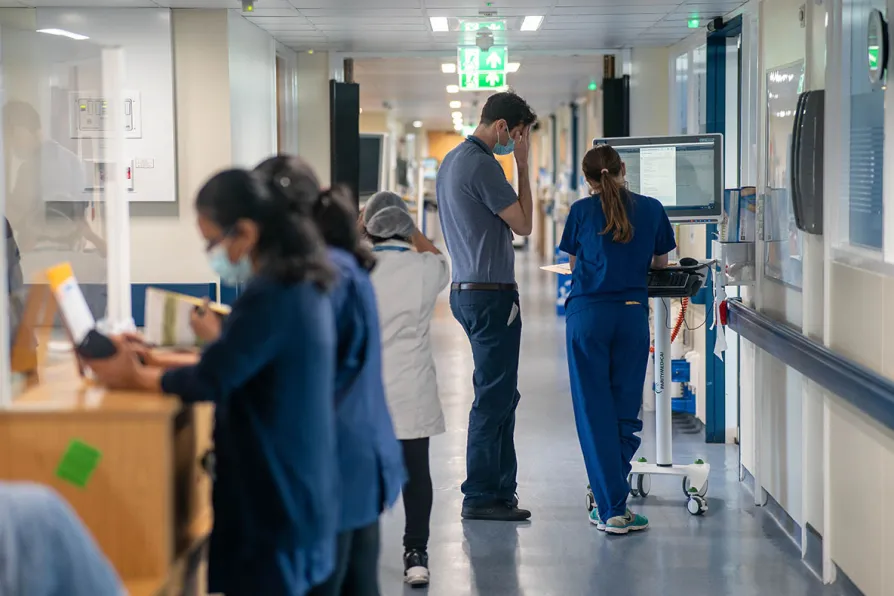 A general view of staff on a NHS hospital ward






EXPANDING urgent care services will do nothing to meet the government’s plans to eradicate corridor care by 2029, the Royal College of Emergency Medicine (RCEM) has warned.
NHS England announced a £215.5 million programme on Saturday to deploy specialist teams to the worst-affected trusts alongside 40 new and expanded same-day emergency care (SDEC) and urgent care centres (UTCs).
Health Secretary Wes Streeting claimed the “new and expanded UTCs will mean patients are treated more quickly and in the right place while easing pressure on busy A&Es to care for the most serious cases.”
But RCEM president Dr Ian Higginson said: “New attendance avoidance services such as urgent treatment centres are not the answer to reducing corridor care and will not make a dent in the number of people who are enduring long waits on trolleys in inappropriate places such as corridors.
“These services focus on the least unwell patients, and it’s the most unwell or those with mental health problems who are filling our corridors.
“Such centres are also a sticking plaster over the failure to properly commission primary care services for patients with non-emergency medical, mental health and dental problems.”
Too many same-day emergency care centres open at times when it’s “easier and cheaper to staff them rather than when they are actually needed,” added Dr Higginson.
“Fundamentally, the main cause of long stays and corridor care is the result of a lack of alternatives to admission when needed or of available beds for patients who require admission to hospital,” he said.
“Once again, we urge the government to turn its attention to the ‘back door’ of our departments and give it the same focus they are giving to the ‘front door’.”
