

 Latest editorial

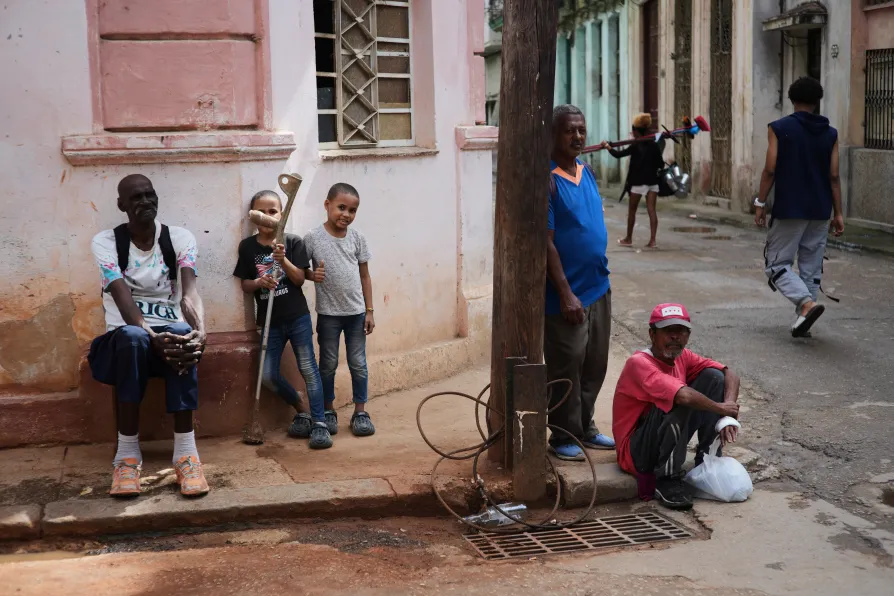 People hang out on the sidewalk during a blackout in Havana, March 17, 2026





TEACHERS described the “genocidal” impact of the US blockade on Cuba at the National Education Union’s (NEU) annual conference today.
Pupils are working with two-decade old computers they repair themselves and schools can no longer import textbooks or teaching materials, a fringe meeting was told.
Those with special needs are hit particularly hard as parts for hearing or mobility aids are also barred by the de facto oil blockade the Trump administration has imposed since January.
Warwickshire delegate Justine Valentine, part of a NEU delegation that visited Cuban schools last October, described seeing multiple teachers for smaller classroom sizes and how education is respected despite very scarce resources.
“I felt sorry for children in England because they were not having this beautiful, rich, encompassing education.”
Newham delegate Daniel Selwyn added: “When we see now power cuts threatening the lives of 3,000 Cubans on dialysis machines or 16,000 cancer patients without access to radiotherapy or children on ventilators, we know it’s not because Cuba lacks doctors or a commitment to live or learning but… we should be under no illusion that the policy towards Cuban society is a genocidal policy.
“Despite the brutal material impacts of the blockade that we saw, my overriding impression coming home from Cuba was not the scarcity that has been imposed on it but an inspiring abundance… this very intangible but significant pedagogy of love was just so real and visceral.”
NEU president Ed Harlow said Cuban teachers could barely remember the last time a pupil was excluded for challenging behaviour, adding: “We have allowed competition to be entirely embedded at the heart of everything: we put schools in league tables, it’s an absolutely ludicrous system.”
