TUC president and POA leader STEVE GILLAN speaks to Ben Chacko on the eve of Congress 2026


 Latest editorial
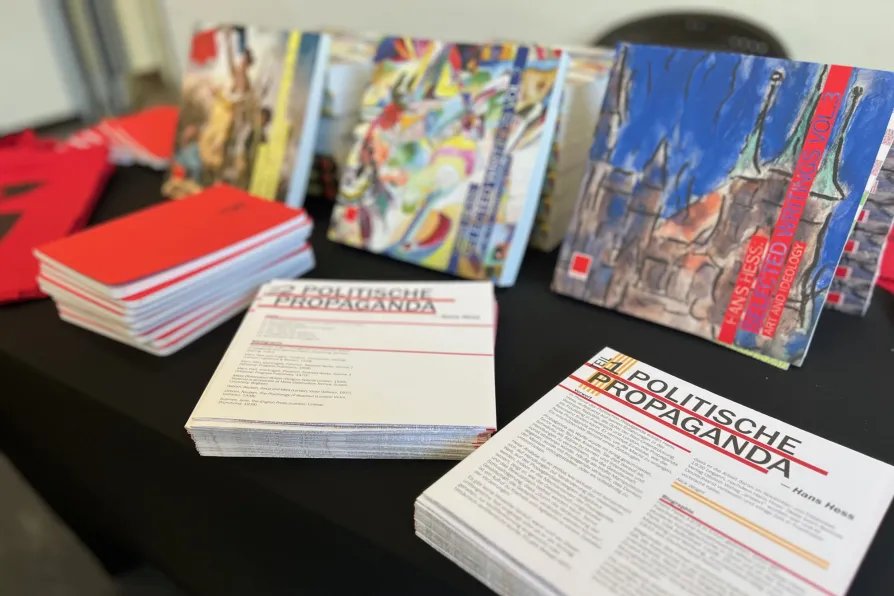
Art, politics and social justice: the Hess Family Guestbooks
CHRISTOPHE IMMER of the Morning Star’s German sister paper Junge Welt reports on a Berlin conference on the politics of art and the legacy of Marxist critic Hans Hess

As Cuba faces the most dangerous moment in its recent history, Britain must do more than condemn the US blockade at the United Nations, writes KEVIN COURTNEY, chair of the Cuba Solidarity Campaign
The Together Alliance is hosting two summits, North and South, to build power and plan action against the scourge of racism peddled by the right. DANIEL KEBEDE urges mass participation
Morning Star assistant business manager BERNADETTE KEAVENEY and international editor ROGER McKENZIE remember attending the 2001 TUC, suspended midweek after news of the World Trade Centre attacks
Whether it’s dented bike frames or broken ferries, MATT KERR wishes politicians had the same steely staying power of elite engineering instead of chasing disposable self-importance
The events of 9/11 reverberated across the United States and then the world. JOHN WIGHT remembers the eerie atmosphere that exposed racial divisions at the heart of Hollywood





WATCHING Anita Halpin speak is striking. The slight, older woman speaks with precision; laconic, yet witty.
The trade unionist and former chair of the Communist Party of Britain opened this month’s Berlin conference The Hess Family Guestbooks: Art, Politics and Social Justice, then and Now with personal words about her family, about art, and about her father.
Hans Hess (1907–1975) was an art historian, co-founder of the Free German League of Culture, collector, curator and Marxist cultural theorist.
It was the first event held in Germany by the Hans Hess Foundation, just established in 2025; and yet, as Halpin emphasised, a long overdue act of return, of homecoming.
The guestbooks, started in 1907 by her grandparents Alfred and Thekla Hess, in their prosperous Erfurt household, were continued by her father in British exile well into the 1960s. After the end of the first world war, the Hess home became a meeting point and exhibition space for the artistic avantgarde of the 1920s.
Max Pechstein was a regular guest, as were Kandinsky, Nolde, Rohlfs and Molzahn, all of them leaving their mark in the guestbooks with small drawings, inscriptions and watercolours.
The former Berlin culture senator (an official of the city government responsible for cultural institutions and activities) Thomas Flierl chaired the conference.
Though Halpin and he had never met in person, their paths had already crossed. In 2006, Flierl announced the restitution of Ernst Ludwig Kirchner’s painting Berliner Strassenszene, which had hung in the Bruecke Museum in Berlin since 1980.
It was Halpin who had demanded its return. The restitution, which became known in Germany as the “causa Kirchner,“ provoked a debate at the time, rich in anti-semitic undertones.
Criminal complaints for breach of fiduciary duty were filed against Flierl and others from conservative circles.
Annemarie Jaeggi, director of the Bauhaus-Archiv Berlin until 2025, which holds the originals, introduced the objects themselves. The changed collecting patterns of the Hess family from 1919 onwards are reflected in new guests and acquaintances, and in their entries. Today these constitute a unique testament, rich in miniatures that frequently allude to the artists’ larger works.
Art historian Henry Keazor of the University of Heidelberg broadened the frame, introducing guestbooks as a diverse genre of visual culture.
Drawing on the multi-volume guestbooks of the collectors and brothers Nicola (1886–1967) and Franz Moufang (1893–1984), spanning several decades of the 20th century and bearing entries from senior figures in politics, art and culture, he presented guestbooks as representations of social networks, and raised, in view of Nicola Moufang’s Nazi entanglements, the question of Geschichtspolitik (sometimes termed “the politics of memory” in English, how societies shape collective narratives about their histories) and the dealing with guilt.
The journalist Conrad Landin closed the morning session with reflections on political art: Kathe Kollwitz’s woodcut on the death of Karl Liebknecht (1921), and Max Beckmann’s lithograph Das Martyrium, made shortly after Rosa Luxemburg’s murder.
Both works circle the same historical events and could hardly be more different. Kollwitz, Landin argued, transforms commemoration into praxis; Beckmann, by contrast, who claimed he had never concerned himself with barricades, delivers an anatomy of violence, rich in iconographic allusion and the props of modernity.
And in doing so, as Landin showed, he furnishes an example of precisely what Hans Hess had held against Expressionism: the constant choice of the wrong struggles.
Generational conflict, the battle of the sexes, the consciousness of loneliness instead of class struggle.
Landin drew the line to the present with a glance at Scotland: as in the Weimar Republic, public and private arts funding today are deeply interconnected, yet without the political energy that once, despite everything, sustained the avant-garde.
Institutions such as the Glasgow Centre for Contemporary Arts, recently closed, had become entangled in culture wars and personnel disputes rather than deploying art as a political instrument.
The question Landin left open remains: do we today possess an aesthetic culture ready for the harsher coming confrontation with the authoritarian right?
The afternoon session was opened by Dr Lucy Burke of Manchester Metropolitan University and a board member of the Hans Hess Foundation, with a lecture on Hess’s life and work in Great Britain after his emigration. Burke traced Hess’s path from political refugee to central figure in anti-fascist cultural life in Britain. After the outbreak of war, Hess was interned as an “enemy alien.” Burke described the often catastrophic conditions in the camps, a social climate of fear of German migrants that was actively fostered by the security services. The Free German Cultural Association, which Hess had co-founded, operated within these conditions and against them.
Nick Wright, a former student of Hess spoke not only about Hess’s work but also recalled a man who saw images as arguments and thought as practice, thus resisting the double pull of dogmatism and revisionism. Hess’s Marxist view, that social being determines not only consciousness but also its formalizations in art, poetry, religion, and law, freed him from reducing works to their ideological function.
Hess insisted on the uniqueness of each work, its rootedness in the time and place of its creation. This was also clearly evident in Hess’s two major monographs. His assessment of George Grosz, who capitulated to the power of money during his time in New York, who saw “goods become gods” and abandoned the demystification of the world, stands in stark contrast to his assessment of Lyonel Feininger, whose late works Wright described as “statements of finality:” reality gathered in the meeting of lines, harmony of disparate elements, tranquility through tension.
What is not recorded, what is not told, Burke argues, is itself historically significant. It is precisely here that Hess’s guestbooks acquire a dimension that extends beyond art history. Hess’s postwar career as a curator in Leicester and York was also still marked by the experience of expulsion.

Similar stories
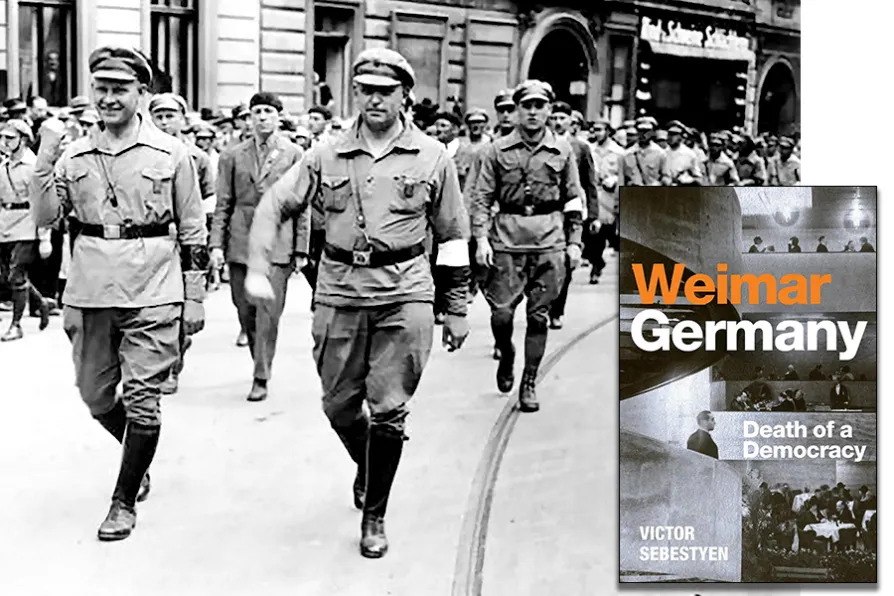
GORDON PARSONS recommends an entertaining account of the years between Germany’s defeat in WWI and Hitler’s seizure of power
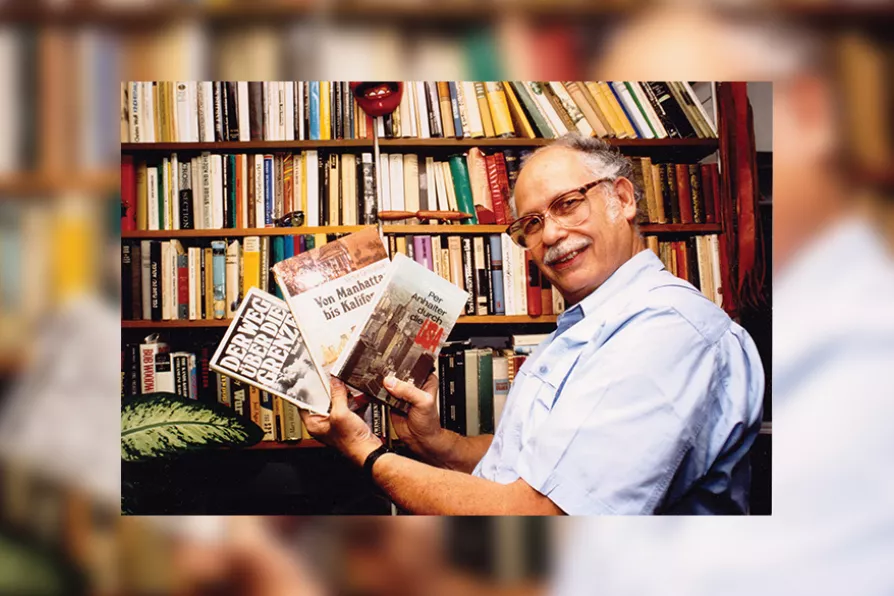
Hundreds in Berlin gathered on January 15 to honour the US-born socialist who made East Germany his home. Florentine Morales Sandoval reports

Across the country readers are rallying to the People’s Paper’s cause. Star campaigns manager CALVIN TUCKER has some handy ideas on how to get involved
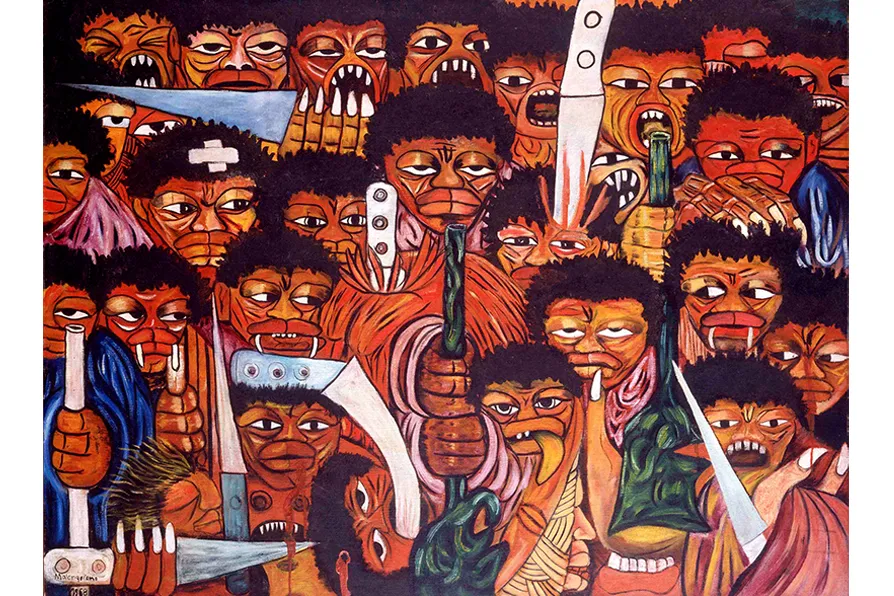
JOHN GREEN welcomes a remarkable study of Mozambique’s most renowned contemporary artist