ANDY HEDGECOCK and MARIA DUARTE review Late Fame, The Death of Robin Hood, Leviticus, and Gail Daughtry and the Celebrity Sex Pass


 Latest editorial

Fangs for nothing
PETER MASON is disappointed that the eponymous Count fails to put in an appearance
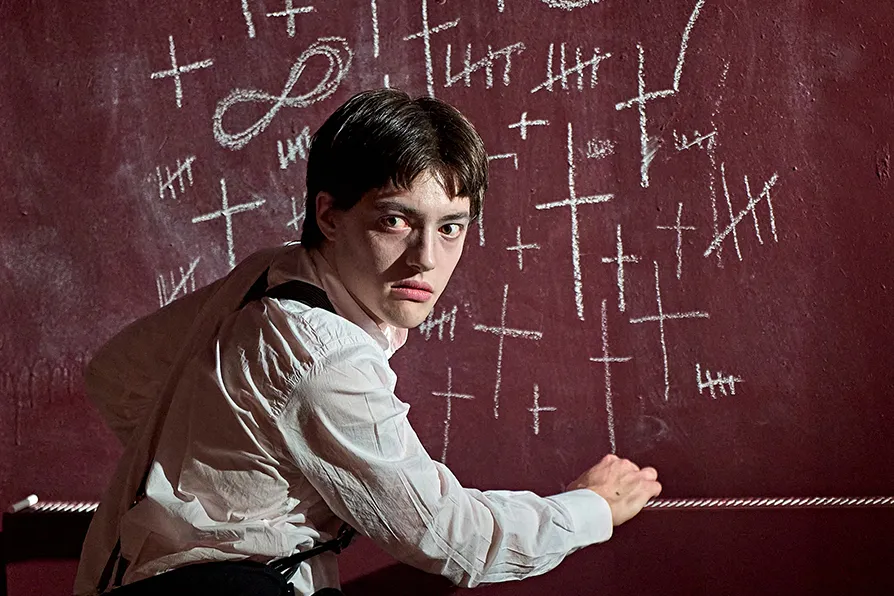 SPOOKED: Luka Wellman in NYT's Dracula [Pic: Manuel Harlan]
GORDON PARSONS enjoys Kant’s ‘mind-boggling’ theory of human reality: that we create the reality we experience
DAVID RABY welcomes a biography that emphasises how Fidel’s unique characteristics became hallmarks of the ongoing Cuban revolutionary process
IAN SINCLAIR recommends a readable, if partisan, account of the astonishing campaign of New York's new mayor
MATTHEW HAWKINS witnesses a contemporary ballet that represents human life as subjected to artificial intelligence
by Marwa Paikan





Dracula
National Youth Theatre, London
★★★☆☆
YOU’LL search in vain for sightings of Dracula in this two-act play, despite its name. The fanged one is there only in spirit, with the majority of the action focusing instead on his victims.
In the second half things get even more tangential as writer Tatty Hennessy, departing completely from Bram Stoker’s original, throws us forward from dark Victorian horror into the bright lights of the modern era, where a new generation of vampires roam at will, causing havoc among the populace.
It’s a bewildering and none-too-rewarding switch of time and place, especially given that we’re left without a decent conclusion to either part of the story. While the acting and staging are exemplary, the basis on which the production is constructed is just too shaky to make it work to any degree of satisfaction. What’s more, the point of the two-part strategy is difficult to discern.
The first half is the better, as director Atri Banerjee creates a suitably gothic and gory atmosphere on a minimalist set by Naomi Dawson of sinister bare boxes and a central coffin.
With much of the focus on Dracula’s key casualty, Lucy — played impressively translucently by Sasha Jagsi — the absence of the Count himself isn’t necessarily an issue. But as we leave the first act with Lucy being staked through the heart, the expectation is that we’ll encounter the dastardly Transylvanian in the second, where we’ll learn his fate.
Instead, when the audience gets back after the interval there’s a complete break with what has gone before, as the feverishly foreboding atmosphere is replaced by a whole new world of young, urban nightclubbing men being chomped at the neck by a series of vampish females out for more than just a night on the tiles.
That new scenario, in contrast to the entirely serious first section, is studded with humour, and is about as different in feel from what went before as one can imagine.
After a while it’s possible to adjust to the shift, but it’s less easy to dispel a feeling of resentment that the emotional energy invested in the first half has been thrown away so lightly for something in the second act that feels more like the US TV fantasy drama Charmed than anything Stoker might have been associated with.
The disconnect between the two halves is so hard to overlook, and so unrewarding in its outcomes, that the overall result, given the bloodthirsty subject at hand, is disappointingly anaemic.
Runs until March 13. Tickets: nyt.org.uk.
