
A California union’s decision to host a meeting about US policy towards Cuba has prompted a congressional probe and renewed attacks on international solidarity, writes CAMERON HARRISON


Glasgow’s broken buses are failing the city – it’s time to take them into public control
The city has some of the most expensive, fragmented and unreliable buses in Britain – the case for bringing buses back into public ownership has never been stronger, says GRACE STEVENS
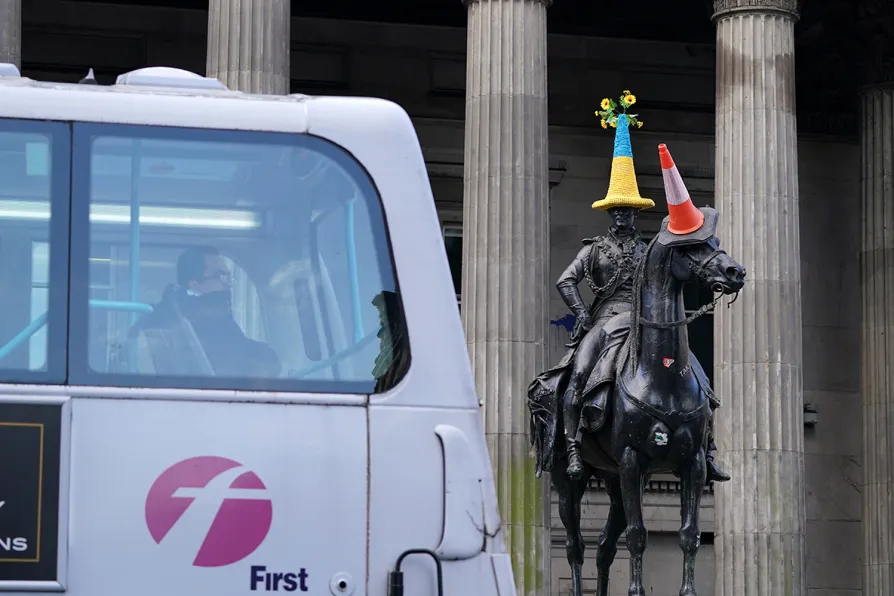
 A bus passes the Duke of Wellington statue which has a traffic cone in the colours of the flag of Ukraine placed on top of it in Glasgow, March 7, 2022
The Baltic state is set to reverse its constitutional prohibition on nuclear weapons and foreign bases as part of accelerated Nato war preparations, warns TOM UNTERRAINER
Long-term underfunding and state neglect, while simultaneously probation services have been undermined, have intensified the prison crises, argues SOLOMON HUGHES
Holyrood incompetence has cost jobs and put the future of Clydeside’s Ferguson Marine shipyard into jeopardy. Its future should have been assured, argues KENNY MACASKILL
With the agitated debate now raging in the media about the early release schemes, Prison Officers Association general secretary STEVE GILLAN gives the view of those who work in the sector
The hounding of the late Jason Arday is an all too familiar experience for many black people. ROGER McKENZIE calls for collective action to combat what can feel like personal isolation





IT IS clear to anyone who has spent any time in Glasgow that the city’s public transport system is broken. It’s disjointed, expensive, and more often than not, late.
For our member Tom, a care worker, he relies on buses to get to and from the care home where he works. It’s unaffordable for him on his low wages and unreliable after a night shift. As a result he has to choose between waiting at the stop in the freezing cold, walking half an hour home alone in the dark, or paying even more for a taxi. Our member Amy has a similar story. The lack of reliable buses and expense affect her income and safety, and she faces tension with employers when she is late due to buses not showing up.
These issues are highlighted by comparing Glasgow to other big cities in Britain such as Edinburgh, Manchester and London. A single ticket on Glasgow’s First Bus costs £3.10, in Edinburgh the same ticket is a third cheaper and in London, typically a more expensive city, the publicly subsidised transport system means buses are nearly half the price at £1.75.
On top of expense, Glasgow’s bus system is disjointed. With multiple different companies, there are no integrated tickets creating confusion for residents and tourists. Both First Bus and McGills both have a 4 and 38 service which go to completely different places. And despite Cop26 delegates being offered a joined up transport card, different bus services refuse to accept tickets bought on other providers’ buses.
This reason for this disjointedness is due to the system being completely run by private companies. Despite receiving public subsidies, bus companies are still able to make decisions in the name of their profits rather than the needs of the city. There is no nightbus due to financial instability and recently, FirstBus cut the routes 65 and 310 despite communities being reliant on the buses for transport.
It is no wonder that the public are angry with the current state of the transport system. Despite three quarters of public transport journeys being made by bus, a consultation by Strathclyde Partnership for Transport highlights that close to two thirds are very or fairly dissatisfied with the buses in the region. And over two thirds disagree that the bus network meets the needs of the public.
Bus users are also more likely to come from lower-income households, and Glasgow has the highest proportion of people without a car. Improving our bus system is a very clear, crucial means by which the council could radically improve residents’ quality of life.
We at Living Rent tenants and community union are campaigning for Glasgow council to do just that. We are calling on the city to use funds raised in the visitor levy to fund bringing Glasgow’s buses under public ownership through Strathclyde Partnership for Transport (SPT).
But despite strong public support and clear public need, the council has been stonewalling our demands. The council has argued that the tourist tax can only be used to promote tourism and that this is not a priority for them in their development of Glasgow.
But ignoring that buses affect tourism is shortsighted and ignorant. In Edinburgh, the council has committed to using £5 million of their visitor levy to borrow £70m in order to build social and affordable housing. This commitment recognises that ensuring the wellbeing and affordability of the city is vital in ensuring that Edinburgh’s tourism industry continues to thrive. It is no different for Glasgow.
Every other world-class city has a better integrated public transport system. Tourists are attracted to cities with easy to understand, easy to use, affordable public transport, all of which Glasgow lacks. Not only will improving public transport and the bus system in Glasgow radically improve the lives of Glasgow’s residents and ensure those that keep the tourism and hospitality industry alive are able to afford to get to work, but it will benefit and encourage tourists to come to Glasgow.
Strathclyde Partnership for Transport has committed to bus franchising across the west of Scotland but it is not happening nearly fast enough, with no clear date for implementation. The region has close to two thirds of the most deprived income areas in Scotland. Taking buses back into public control would be a huge step forward in improving the material conditions of the residents.
Last year, FirstBus made operating profits of £204m and yet still increased prices anyway. In Edinburgh, Lothian buses paid back £36m over the last decade to the council, enabling the council to put money back into the buses and freeing up much-needed money to go into other services. By taking buses back into public ownership, the council would not only ease the financial burden on its residents but it would also generate much-needed income.
By bringing buses back into public ownership, this could allow the reinstatement of previously cut services, thereby reconnecting communities. It would ensure any profits were reinvested into expanding and improving our public transport and it would ensure that residents did not have to transverse different routes with different companies in order to get from one side of the city to the other.
But rather than push forward in creating a fair, affordable and effective public transport system, the council is delaying, claiming it is not their responsibility and saying that there are far bigger concerns that residents have. If the city is serious about improving the lives of residents and cutting carbon emissions it would commit to properly implementing a fair affordable transport system that worked for residents, not for the companies that run it.
Grace Stevens is secretary of Living Rent Glasgow.
