VIJAY PRASHAD details how US support for Syrian President Ahmad al-Sharaa allowed him to break the resistance of the autonomous Syrian Democratic Forces (SDF)


 Latest editorial

News International dispute: The long confrontation that remade Fleet Street
A step-by-step account of how Rupert Murdoch’s clandestine move to Wapping triggered one of the longest and most brutal industrial disputes in modern Britain, marked by secret deals, mass sackings, unprecedented policing and lasting consequences for trade unionism and the press
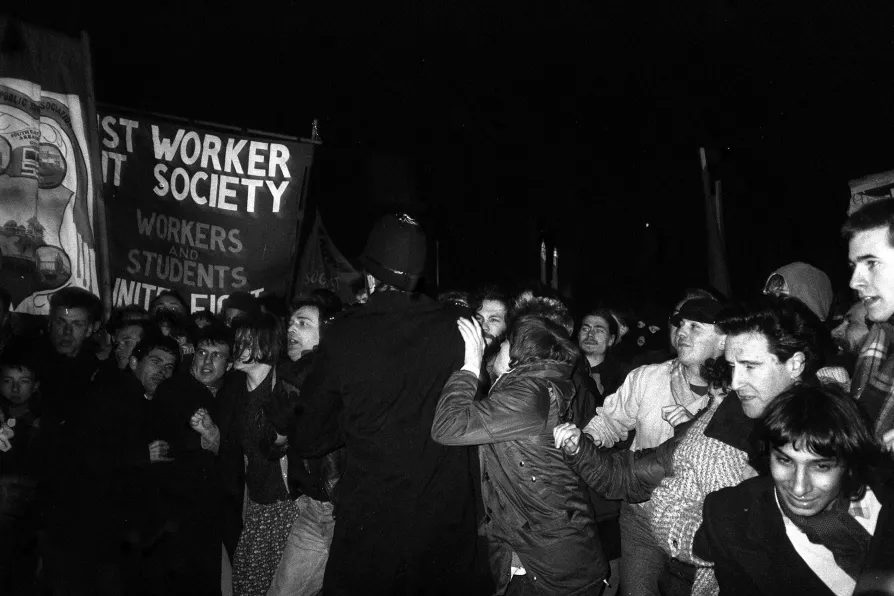 Demonstrators clash with police in Wapping, east London, February 16, 1986

Trump’s ‘Peace Council’ is not a peace project, but a war and colonial council that renews Western colonialism, writes SEVIM DAGDELEN
The US attack on Venezuela raises grave threats to Cuba and the region, writes NATASHA HICKMAN of Cuba Solidarity Campaign
Trump’s vision of ‘might is right’ signals the collapse of the postwar order — and a warning of who may be next, warns BOB ORAM
ROGER McKENZIE pays tribute to a communist, internationalist and organiser, who endures, 50 years after his death, not just as a towering artist but as a master teacher of struggle
Communist Party of India (Marxist) general secretary MA BABY reflects on 2025, tracing how war, imperialism, shrinking democratic spaces and neoliberal restructuring shaped global and Indian politics – pointing towards the urgent task of building a more democratic and just future





1969
Murdoch buys News of the World and later The Sun.
1978
Murdoch acquires Wapping site.
1978/79
Thomson-owned Times Newspapers 11-month lock-out; no newspapers produced.
1980
Building work starts at Wapping.
1981
Murdoch buys Times Newspapers.
1983
First negotiations with unions for the planned move to Wapping for printing and warehouse/distribution of The Sun and News of the World.
1984
Video of new plant at Wapping shown to the FOCs; some chapels reach agreement on move to Wapping, but management suspend talks; Murdoch obtains US citizenship.
1985
February: Electricians’ union (EETPU) officials meet Murdoch in “first of a long series of highly secret meetings”; Murdoch plans secretly for Wapping transfer and orders equipment valued at £10m;
March: Computer typesetting equipment installed secretly in Woolwich location for testing;
Murdoch sets up shadow companies to ensure any industrial action would be illegal.
June: NI signs deed of indemnity authorising TNT to buy £7m-worth of vehicles and recruit personnel; rumours in Southampton jobs in a big London print company paying good money and queues at the local EETPU office for application forms for the job; 4,000 yards of razor wire installed at Wapping.
July: recruitment of replacement labour starts via EETPU in Southampton and Glasgow.
August: Company assured Sogat no-one working at Wapping was being trained to do Sogat jobs.
September: Dummy run of fictional London Post at Wapping. Chapel reps seek explanation from management about the newspaper; management deny knowledge of developments at Wapping; deny request for a visit; eventually agree to a meeting; candidates interviewed for jobs at the The London Post; print unions and EETPU meet the company; Murdoch states intention to continue to test presses and publishing equipment at Wapping, says talks must conclude by mid-December.
October: Murdoch and NI managers meet unions to recommence formal negotiations, but company refuses to discuss move of the Sun and News of the World and will only discuss new terms and conditions to work on the London Post.
November: Draft agreement for The London Post presented by management setting out 12 impossible demands for new terms and conditions; print unions put counter-proposals; unions agree to negotiate.
December: Company refuses to move from demands and sets Christmas Eve deadline for agreement; company denies agreement with TNT; the four unions (Sogat, NGA, AUEW and NUJ) present 30-page complaint to TUC about EETPU activities and recruitment for Wapping.
1986
January: NI gives six months’ notice of termination of all agreements with News Group Newspapers and Times Newspapers workers except managers and journalists; mass meetings of union members; mandate for industrial action recommended and agreed.
19th: section for Sunday Times printed at Wapping.
20th: Union proposals including binding arbitration, commitment on profitability, efficiency, productivity and job flexibility and fewer bargaining units rejected by Murdoch; BBC Panorama programme shows EETPU collusion with Wapping preparations; Metropolitan Police issue commissioner’s directions for the closure of roads in the Wapping area.
23rd: Ballot results show 82 per cent for strike; Murdoch tells unions jobs to be cut from 5,500 to 1,500 by June with no unions or union members; police set up metal barriers outside Times buildings.
24th: Unions declare strike; company immediately dismisses all print union members and starts production at Wapping; journalists told to work at Wapping; the Sun NUJ chapel votes 100-8 to move to Wapping despite NUJ instructions; in solidarity with the sacked workers some “refuseniks” decide not to go.
25th: Sunday Times produced at Wapping; News of the World printed at Kinning Park, Glasgow; Sogat members in Manchester refuse to print News of the World northern edition; first picket at Wapping.
26th: The Times and Sunday Times journalists vote to move, some join refuseniks; the Times and the Sun printed at Wapping; Sogat wholesale members in London ban distribution of the titles.
27th: Company obtains injunction against Sogat over Manchester action; Sogat fined £10,000 and ordered to stop “illegal” picketing following ban on handling NI titles by wholesale workers.
28th: TUC general council holds six-hour investigation into the print unions’ complaint after voting to start disciplinary proceedings against the EETPU.
29th: Company obtains injunction ordering TGWU to lift instruction to TNT drivers not to cross picket lines.
February: Scottish courts ban Sogat from threatening distribution of titles.
4th: Morning Star publishes leaked letter from Farrer & Co, NI’s solicitors, confirming advice to dismiss workforce while participating in a strike.
5th: TUC general council finds EETPU guilty of five out of seven charges, tells EETPU to desist recruitment and not to conclude deal with Murdoch, or face suspension.
8th: 3,000 on women’s march at Wapping, 62 arrests; rallies and meetings elsewhere.
10th: All Sogat funds and assets (£17m) seized (sequestrated); court imposes £25,000 fine for “flagrant contempt” for instruction to ban handling of Murdoch titles.
14th: NGA fined £25,000 for contempt over ban on out-of-house supplements for The Times, reballots members and reimposes ban; TGWU persuades Murdoch to discuss TNT dispute with Acas.
15th: 3,000 on Wapping march; riot equipment and horses used for the first time; 61 arrests; ITN camera crew attacked by police.
17th: TNT driver reveals bribes to drivers to break picket lines.
March: High Court seizes Sogat cars and facilities and warns offices will be closed down unless union purges its contempt; print union leaders talk with management following mediation by TUC;
Tower Hamlets and Southwark Councils boycott Murdoch papers; at a Wembley rally Kinnock pledges to repeal anti-union laws and says “Stalag Wapping is about power and authority, not about new technology”; 7,000 at largest demo to date delays papers by five hours; 26 arrests; NGA general secretary among 52 arrested.
April: Strikers’ delegation to Australia to meet print unions; Murdoch offers unions part of Sunday Times site for own publication; offer rejected; Printworkers’ March for Jobs starts from Glasgow; national TUC-supported rally and demonstration in London; NCCL (Liberty) publishes report critical of police behaviour and road blocks; NI offers sacked staff “ex-gratia payment to cover hardship” with 21-day deadline to accept; mass meetings of strikers discuss the offer.
May: 10,000 on Wapping May Day march; 30 arrests; two days later Printworkers’ March for Jobs leads 15,000 on march to Wapping; attacks by mounted and riot police; 100 demonstrators injured, 81 arrests; MPs call for public inquiry; Sogat purges contempt; Murdoch offer deadline extended; Commons debate on May 3 events; Home Office minister meets unions to discuss policing strategy; Murdoch offers £15m and Sunday Times premises again; offers rejected by Sogat, NGA and AUEW members as does not include reinstatement and union rights; Wapping Post launched; mass meeting of Sogat members votes to continue picketing at depots, step up demonstrations and continue boycott campaign.
June: NGA members agree levy; the Sun journalists vote to stop working at Wapping but rescind decision following pay rise and promise of sports facilities; Murdoch announces conditional hardship fund for sacked print workers; home secretary calls on unions to stop picketing; another Commons debate on policing; Sogat national conference reaffirms support for the dispute; writs against unions and members to end mass picketing at Wapping, TNT and wholesale depots; EETPU officials meet Murdoch in Los Angeles; NUJ national executive votes on motions to instruct journalists to walk out and join the dispute, narrowly defeated by one vote, but disciplinary proceedings taken under rule against 500 members for working on at Wapping.
July: Government acts to stop local authorities boycotting titles under Public Libraries and Museums Act; “Alternative Royal Wedding” event organised by strikers, print unions and supporters opposite the Wapping newspaper plant.
September: TUC Congress instructs EETPU not to do print workers’ jobs; criticises general council for not taking stronger action; new offer increases compensation from £50m to £60m; unions ballot members, who again reject it.
October: NI journalists barred from Labour Party Conference; The End of the Street, written by Linda Melvern reveals details of conspiracy to establish Wapping without the print unions.
November: Sogat calls for national levy on members to help with costs of strike but defeated in a ballot; new compensation offer from the company but no reinstatement of any sacked worker and no union rights; British Rail sues NI for breach of contract for switching distribution to TNT; The Guardian prints leaked company memo revealing agreement with EETPU officials in summer 1985; TUC general council votes not to implement Congress decision about EETPU.
December: Sogat picket leader Mike Hicks sentenced to 12 months with eight months suspended; 4,000 march to Wapping; “Women Against Murdoch” group organises Christmas Day demo and party at Wapping.
1987
January: Local young resident Michael Delaney killed by TNT lorry; first anniversary demo; 20,000 take part; violent charges and attacks by 1,100 mounted and riot police; 68 demonstrators arrested, 65 convicted; print unions call for public inquiry into police actions; company seeks resequestration claiming Sogat still in contempt.
February: Sogat ends dispute, followed by NGA and AUEW; members recommended to apply for the compensation scheme.
July: Murdoch acquires Today from Eddy Shah, closing it in 1995.
September: Haldane Society of Socialist Lawyers issues report on policing of demonstration of January 24 1987: “The response of the police was … To treat the whole crowd as a hostile force … the hallmark of a military, as a opposed to a policing operation.”
1988
September: EETPU expelled by TUC for no-strike deals.
1989
Charges of perjury, assault and conspiracy to pervert the course of justice against 24 Metropolitan Police following investigation by Northamptonshire Police into 440 complaints against 100 officers;
only two eventually tried but jury failed to deliver a verdict; Sky TV launched with the benefit of profits from the Wapping move.
1990
Police Complaints Board report exonerated majority of police but found senior officers had failed to control junior officers who behaved in a “violent, undisciplined and uncontrolled manner.”
This timeline, with slight edits, originally appeared in News International Wapping – 25 years on: The Workers’ Story.
