


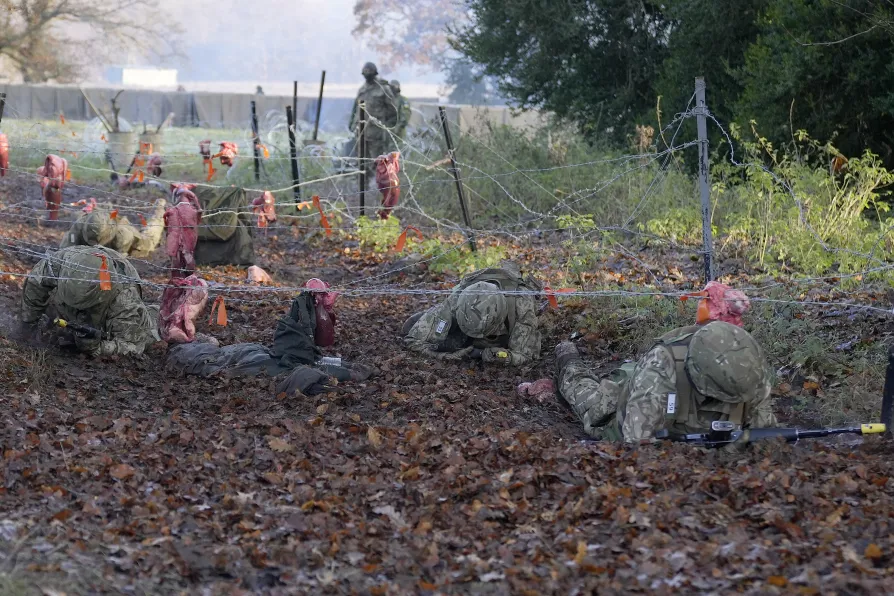






“GAP year” military training announced by the government over Christmas are no gimmick. They are, as Defence Secretary John Healey says, part of the “whole-of-society approach” to British rearmament — preparation for total war.
Healey cynically upends the traditional season of “peace and goodwill” to push his martial agenda: “As families come together at this time of year” he wants their young people to consider joining the army.
There are echoes of military supremo Air Chief Marshall Sir Richard Knighton’s call for Britain’s “sons and daughters” to be ready to fight; or of his French counterpart General Fabien Mandon’s demand that the French be ready to “sacrifice their children” to the coming war. As “families come together,” consider a career that could see you parted forever.
Today’s pound-shop Lord Kitcheners have a problem, however.
Britain’s politicians may be a craven bunch, happy to fling money at armaments in obeisance to Donald Trump’s demand that we spend 5 per cent of GDP on the military (equivalent to an extra £30-35 billion annually by 2035, as schools face a long-term spending squeeze and hospital trusts cut nursing numbers).
Pressing youth into service is a different matter. Ministers admit the gap year scheme aims to address difficulties in recruiting enough soldiers. They are not alone in this: Germany’s recent halfway step towards conscription, under which all 18-year-old men must register with the forces, reflects a similar distaste for war as a career.
Right-wing pundits trot out the old propaganda about feckless youth: young people lack discipline, they are lazy and self-indulgent, they don’t understand the spirit of sacrifice as their grandparents did.
Add a few modern finishing touches: they are “snowflakes” who melt under pressure, a back-handed acknowledgement of a serious mental health crisis whose drivers are poorly studied, but likely include chronic job and housing insecurity, the relentless testing of children in an exam-factory schooling system and the all-pervasive reach of the internet and social media into young people’s lives.
Politicians who watched indifferently as eight brave young people put their lives on the line in a hunger strike for peace and justice, who have activists jailed for direct action to protect the environment and round up pensioners for risking 14 years’ prison for sitting down holding signs supportive of Palestine Action, have no right to lecture the people of this country on sacrifice.
There are good reasons people are suspicious of the motives of those calling us to arms for king and country. Top brass do very well out of war: indeed, one of the media’s go-to warmongers, former armed forces chief General Sir Richard Dannatt, has been suspended from the House of Lords for lobbying on behalf of the arms industry. Shares in BAE Systems have tripled in value since the Ukraine war started: small wonder powerful forces are determined not to let it end.
More significantly still, British people don’t believe our rulers’ claim that the British military exists to protect us. And they are right not to.
An enduring legacy of the huge campaign against the invasion of Iraq — and its vindication as the tangle of lies that took us to war unravelled — is an accurate perception that politicians are quite ready to lie about matters of life and death to further their aggressive plans.
Now the massive campaign in solidarity with Palestine has brought to popular consciousness the complicity of the British state in genocide. More people than ever understand that our military is deployed not to defend us but to terrorise and oppress other peoples in tandem with allied criminal regimes, the United States above all.
So young people don’t want to go to war. Good for them. Reject the army “gap years” and demand proper training placements for socially useful jobs.
