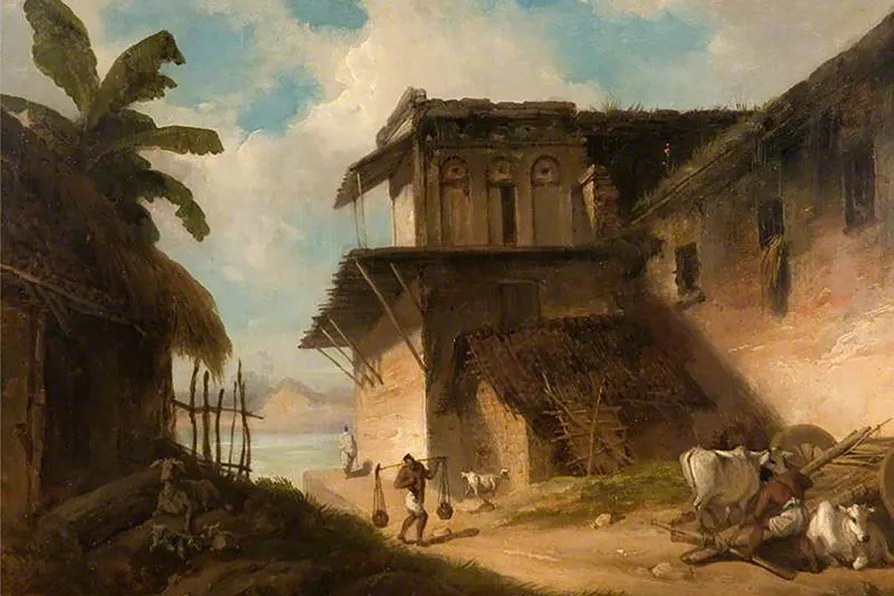
APURBA CHATTERJEE explains how British artists in India used the “picturesque” to reshape colonial landscapes and celebrate imperial power


 Latest editorial

Best of 2025: Electronica and Contemporary Classical
SIMON DUFF picks his favourites, from radical African-inspired electronic rhythms to improvisations on the organ
PAUL DONOVAN welcomes a revival of Reginald Rose’s classic play that reminds us of the fundamental need for trials with juries
SIMON PARSONS applauds an exceptional performance of Wesker’s little-known play, by the same actor for whom it was written 45 years ago
ANDY HEDGECOCK and MARIA DUARTE review Late Fame, The Death of Robin Hood, Leviticus, and Gail Daughtry and the Celebrity Sex Pass
ANGUS REID recommends a uniquely accomplished documentary collage that contemplates our relation to the natural world
GORDON PARSONS enjoys Kant’s ‘mind-boggling’ theory of human reality: that we create the reality we experience





THIS was another strong year for Hyperdub, who remain one of the most vital forces in radical electronic music. Now in its 21st year, the south London label released a plethora of strong work.
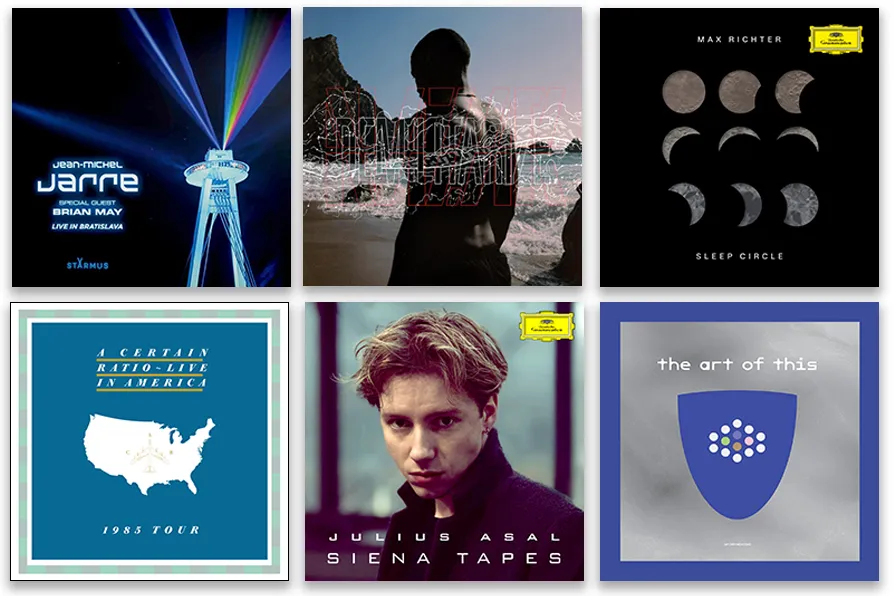
Top of my list was Nazar’s album Demilitarize, his second album for the label. The Belgium-born Angolan producer and composer’s first album explored the Angolan civil war; the new work is influenced by sci-fi, politically charged values and cyberpunk. Opening up with Core, a surreal fragmented collage, and followed by Anticipate, it contains Nazar’s dreamlike off-centre submerged semi-sung vocals, seemingly lost in distant fog; the music fragile, full of radical African-inspired electronic rhythms, sharp as knives. Chords flutter and leave, melody seemingly hidden, then bursting through clouds of dust.
Did 2025 welcome the return of The Art of Noise? Well, not quite, but they now go under the name of The Art of This. The Paul Morley-led trio released a seven-inch single via Electronic Sound magazine and Bandcamp. Two tracks: The amorphous off-centre Manifesto (Introduction To A Group) delivered by Morley and In A Moment (Introduction To A Song) layered with plundered alien-like orchestral samples. Expect the unexpected, with further releases in 2026.
Jean-Michel Jarre, arguably one of the founding fathers of electronica, released Live in Bratislava (Sony Music). Performed in May 2024 at one of Bratislava’s main bridges, the scale of the concert production was vast, and the ambition of the music likewise. Opening up with a huge synth brass fanfare chord work, it then swerved into a selection of epic tunes from Oxygene, his 1976 classic album. The 1979 follow-up Equinox also featured. Brian May contributes throughout, providing epic guitar textures including on an ambitious interpretation of Antonin Dvorak’s New World Symphony.
Another act with longevity in the field of cutting edge dance is A Certain Ratio who released Live in the USA (Mute). Recordings taken from their 1985 tour supporting New Order. Signed to Tony Wilson’s Factory Records label in 1979 they emerged as a leading light in combining a new electronic funk aesthetic. The band’s sheer joy in their performance is evidenced across the album, with highlights including Shack Up, The Fox and Knife Slits Water. Pioneering textures, dark vocals, and Miles Davis influences to the fore.
In the Contemporary Classical department both the DG and ECM labels continued to deliver fine work. Max Richter returned with his Sleep Circle for Deutsche Grammophon, ranking high in what might be termed New Modern Impressionism. The album finds him reexamining and reworking some of the ideas from his Sleep album. The band line-up includes gifted violin work from Louisa Fuller and Natalie Bonner, violist Nick Barr, cello from Max Ruisi and Zara Huson-Kozdoj with Grace Davidson providing haunting soprano vocal duties, and Richter on piano and synth.
German pianist and composer Julius Asal’s The Sienna Tapes is his second album for DG. A celebration of the French composer Maurice Ravel’s 150th Birthday. Four works from Ravel feature along with four from Asal and one from producer and composer Christian Badzura. All for solo piano, recorded at Rick Rubin’s chapel on his Sienna estate. Asal’s Cascade, a bold calm piece, is followed by Ravel’s Prelude in A Minor. Asal gives off a radiant energy, full of light and shade.
And two concerts of the year will live long in the memory: The Ligeti Quartet plays Terry Riley at King’s Place in February. The quartet chose works by two pioneering US composers Terry Riley and Pauline Oliveros. Both involved in minimalism and new electronic, tape manipulation methods of composition.
And a last highlight was Wayne Marshall’s organ recital and improvisation at the South Bank in June. It included his spellbinding Symphonic improvisation in four movements on themes from Leonard Bernstein’s 1957 musical West Side Story. Jet Song, Maria, and I Feel Pretty were all given bold new harmonic and rhythmic interpretations, with the final movement a wild dystopian reimagining of the United States.
