
RITA DI SANTO contemplates two films about journalism that opened this year’s festival


Jasmine and white phosphorus
JENNY FARRELL relishes an outstanding Palestinian novel that immerses readers in the sensory reality of Gaza, then and now
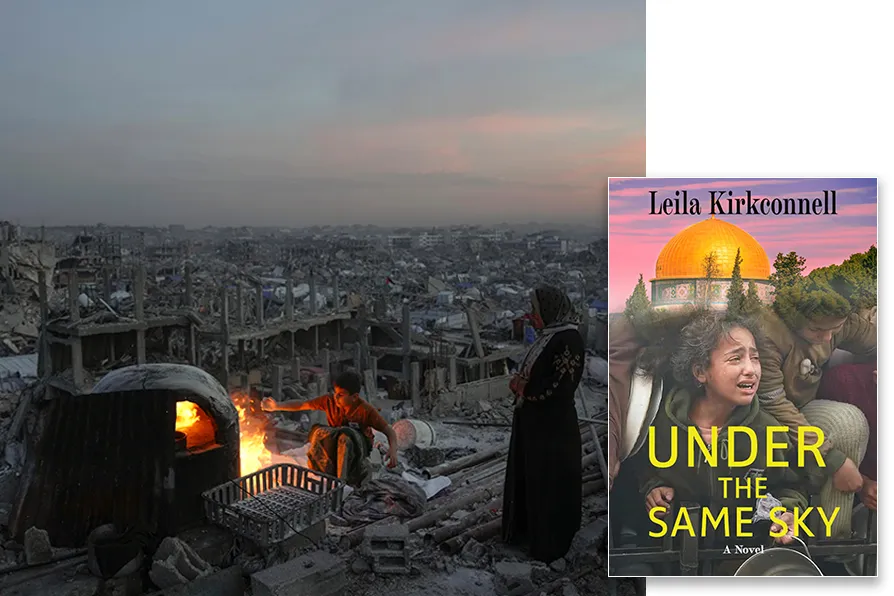
 RESILIENT HUMANITY: Palestinians Ali Marouf and his mother, Aisha, cook on the roof of their house, which was destroyed by an Israeli offensive, in Jabaliya, Gaza Strip, December 1, 2025
GEOFF BOTTOMS applauds a world-class production King Lear that pits late feudalism against a rising bourgeoisie
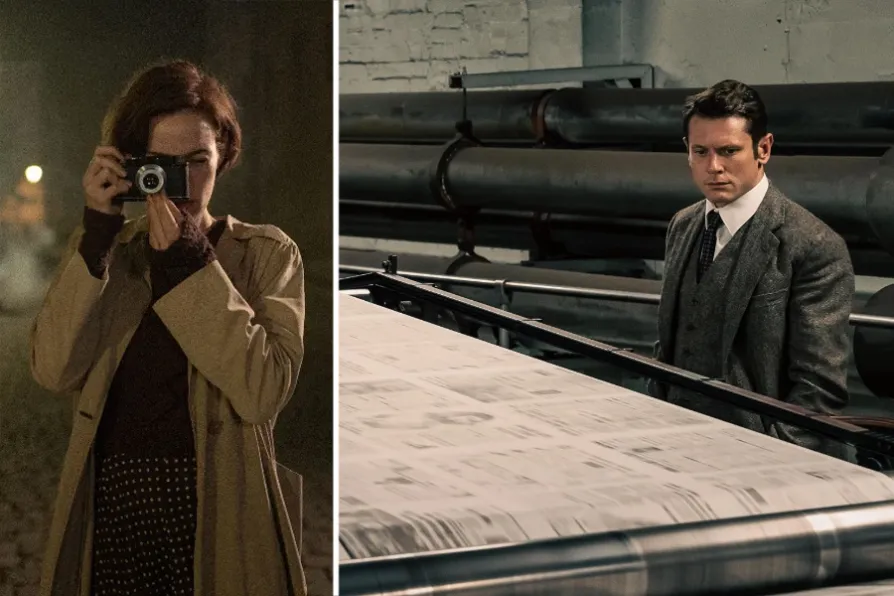
MARY CONWAY keeps up with the sheer pace of a drama about the terrible gap between sanitised reporting and real-life turmoil of race and gender
New releases from Brian Fallon, Antony Szmierek and Hollow Hand
APURBA CHATTERJEE explains how British artists in India used the “picturesque” to reshape colonial landscapes and celebrate imperial power
PAUL DONOVAN welcomes a revival of Reginald Rose’s classic play that reminds us of the fundamental need for trials with juries





Under the Same Sky
Leila Kirkconnell, Self-published, £13.61
LEILA MAJAJ KIRKCONNELL’s novel Under the Same Sky is a profound act of witnessing. It transforms an immense geopolitical catastrophe into an intimate, sensory, fully human experience. Its epigraph, “Gaza Interlude,” evokes sumud – steadfast, everyday resistance expressed through the act of living.
One of the novel’s greatest strengths is its refusal to portray Gaza solely as a landscape of destruction. Instead, it shows beauty and devastation in constant, painful dialogue.
This tension is captured most powerfully in the recurring contrast between jasmine and white phosphorus. As Emad travels north to the ruins of his home, he finds the jasmine plant his mother once nurtured – now dusty and withered, yet still holding one “stubborn blossom.” Such tenderness is repeatedly violated by sensory reminders of violence, including the “sickly sweet” smell of burned flesh after bombings. Jasmine becomes memory and life; phosphorus becomes death and erasure. Their juxtaposition is the novel’s central sensory argument about what is being lost.
The Mediterranean provides another dual symbol. In the “Then” sections, it is a source of sustenance and beauty, with shimmering waves and the scent of salt. In the “Now,” it becomes a symbol of captivity. Emad watches the horizon where naval ships lurk, and the waves themselves return ruined fishing boats to shore to be burned for fuel.
The novel also traces how ongoing violence reshapes the inner worlds of its characters. The “insect-like hum” of incoming drones, felt in the teeth before heard, shows how fear becomes embodied. People sleep in intervals between explosions, their lives regulated by the timing of danger. This internalisation of threat turns the genocide into a psychological as well as physical reality.
The novel’s narrative alternates between “Then” and “Now.” The “Then” sections – fishing trips, university debates, young love, graduation dreams – document a thriving society. Their vividness becomes evidence of what has been systematically destroyed. Emad is not only a survivor in the “Now,” but was “Then” “Emad the Engineer,” the builder of bridges.
Karma, who once “devoured equations,” now loses a hand and becomes a medic, her brilliance redirected into emergency survival. Baba Younes, who once faced harassment at sea, now stands among rotting boats. The novel’s characters embody survival as resistance. Engineers who can no longer build, doctors who operate without anaesthesia, mothers trading jewellery for formula, children collecting shrapnel – these are the heroes of sumud. For Khalid, the smuggler’s work delivering insulin and antibiotics becomes a strategic act.
Cultural memory, too, resists annihilation, as shown in the community dancing dabke (a stamping of feet) amid the rubble. Each character reflects a facet of Palestinian endurance: Karma’s shift from engineering to emergency medicine, Issa’s return after losing his family, Mazen the poet whose voice survives only in martyr lists, and the haunted children like Ahmad and Omar, who bear scars beyond their years.
The novel is far from hopeless. Its optimism lies in resilience: the unwavering will to live, remember, and care. The final image – children flying kites over ruins – captures this paradoxical continuity. It echoes the spirit of fishermen venturing out during ceasefires, Karma learning to work with her left hand, and families sharing what little they have.
Under the Same Sky immerses readers in the sensory reality of Gaza, insisting that genocide is felt in the body, that resistance is communal care, and that hope is a deliberate daily act. It stands as a testament to Palestinian steadfastness and urges not only reading, but response.
All proceeds from the book support HEAL Palestine.
