

 Latest editorial

 A couple walks past electoral posters showing far-right leaders Marine Le Pen and Jordan Bardella during second round of the legislative elections, July 7, 2024 in Mittelschaeffolsheim, eastern France





THE parallels are striking. In Britain, the far-right Reform UK dramatically increased its electoral support to become, in terms of voters, the third party.
In France, with a much longer implantation in French politics, the far-right National Rally (RN) dramatically increased its electoral support to become, in terms of voters, the largest party.
In the second round, with 10 million votes, RN actually increased its percentage from 33.21 per cent to 37.06 per cent while the left alliance on seven million votes saw its percentage drop from 28.21 per cent to 25.81. Macron’s outfit also increased its percentage from 21.28 per cent to 25.53 per cent and more or less maintained its vote.
The price the New Popular Front (NFP) paid for defeating the far-right with its de facto lash-up with the liberal (and neoliberal) centre in French politics was to lose two million votes. That is about the same number of votes that Kier Starmer lost from Jeremy Corbyn’s least successful election.
In both cases it is a defeat for the main parties of the neoliberal elite, Macron’s Ensemble and Rishi Sunak’s Tories, while the advance of both far-right formations, Reform UK and RN, hold special dangers for the working class.
Nevertheless, like the formation of a majority Labour government in Britain, the second-round victory of the NFP is something of an advance. It provides a better context to fight for socialist policies and offers the chance to differentiate the RN voting bloc.
Put simply, unless the working-class element that finds itself supporting these two formations can be detached from their new loyalty then the prospects for working-class advance in both countries are gravely weakened.
As the biggest formation, the NFP has the right to call on President Macron to appoint one of their number as premier. But they will be in cohabitation with a president who has powers to impose laws (he raised the retirement age without parliamentary support) and absolute powers over foreign and defence policy.
Such a premier will be without an absolute majority, compelled to compromise with forces entirely opposed to the NFP programme. And the snake in the NFP grass — a significant element in the Socialist Party constellation — is the divisive figure Raphael Glucksmann, co-founder of Place Publique, who is a standard bearer for compromise with Macron and an unwavering supporter of Israel and the Atlantic Alliance, with an unsavoury record active in various CIA-sponsored “colour revolutions” in former socialist countries.
In swathes of working-class Britain, Reform UK came closer to Labour than did any other party. When Farage says he is coming for Labour he means it, and like in France, a section, possibly even a decisive section, of the financial and business elite will see in this an opportunity to further contain working-class advance.
The game plan of the more politically astute of our rulers is to ensure that progressive parties with a popular base are accorded a temporary place in the sun when the routine functioning of capitalist management is interrupted by division within the ruling class (Theresa May), malfeasance (Boris Johnson), going off the reservation (Liz Truss) or political incompetence (Sunak).
Starmer, a creature of the bourgeois state, is their man.
To impose upon Labour in government working-class solutions to the capitalist crisis — to make the rich pay for the crisis of their system — is the precondition for that government’s survival.
History shows us that, in France and in Britain, that the key battles take place, not in Parliament but in our communities, our workplaces and on the streets. That is where the working class must be reconstituted around progressive policies.

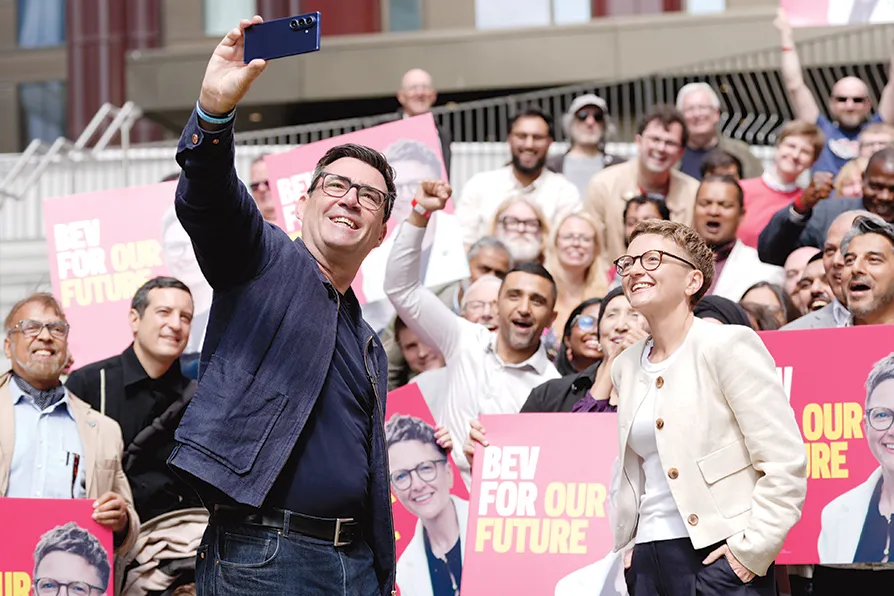
Preferable to Starmer he may be, but there is scant sign of a sharp political break in Burnham’s policies so far — while left challenges aren’t making much of a running either, finds ANDREW MURRAY. How can socialism be put back on the map?
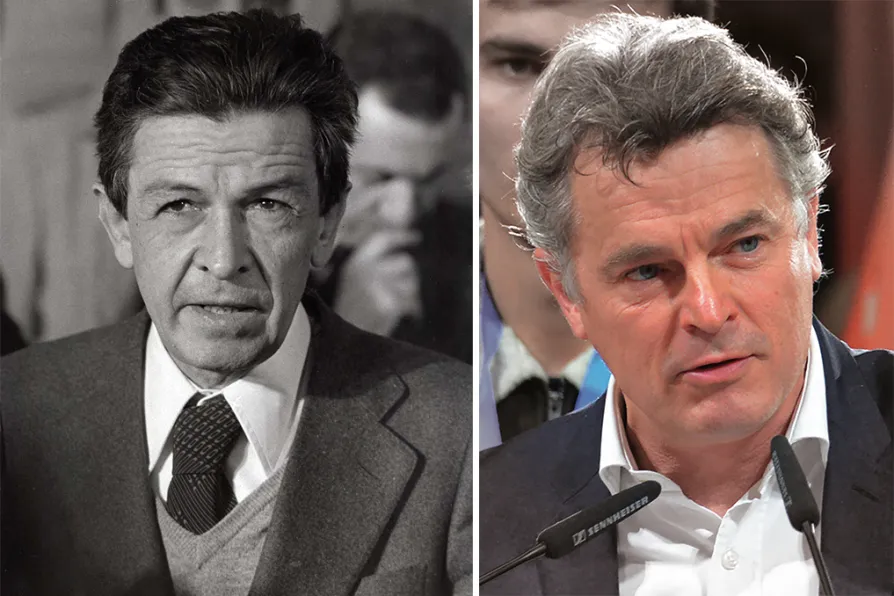
While Italy’s communist tradition remains fragmented and politically marginal, France’s party is attempting to re-establish itself as an independent force rooted in working-class organisation, says NICK WRIGHT
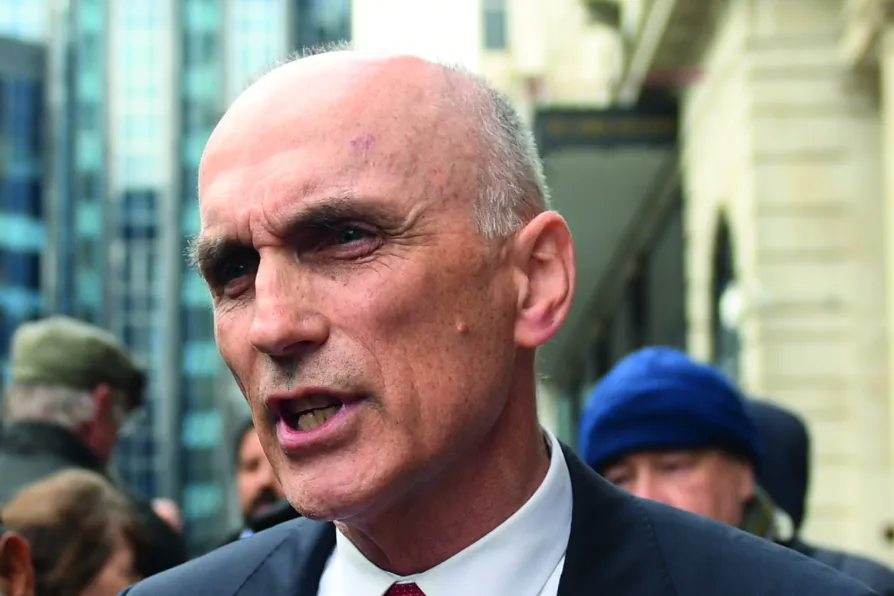
This by-election could plausibly see both Reform and Labour defeated — but splitting the left insurgent vote would put that at risk, argues CHRIS WILLIAMSON
The desperate French president keeps running up the same political cul-de-sac. DENNIS BROE offers an explanation