
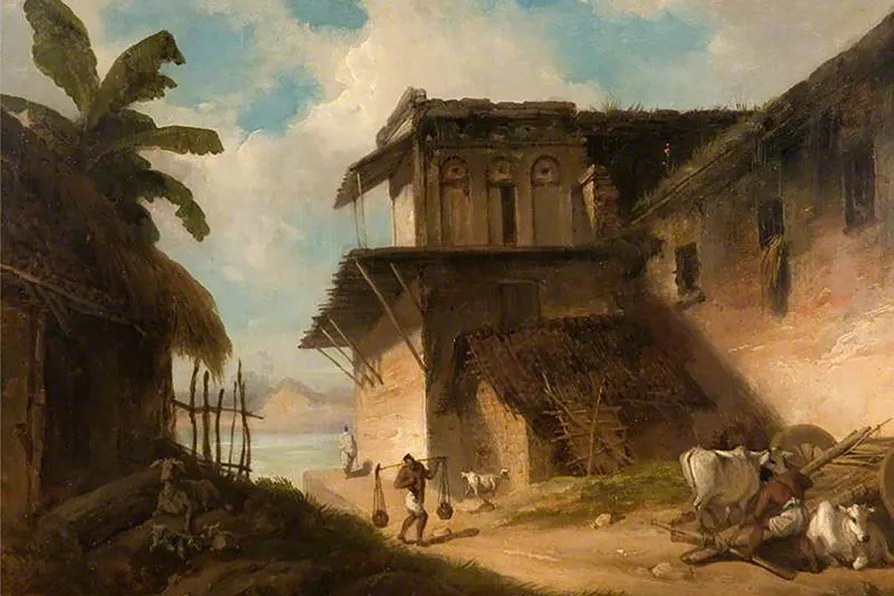
APURBA CHATTERJEE explains how British artists in India used the “picturesque” to reshape colonial landscapes and celebrate imperial power


Ideas that resonate
The Wretched of the Earth has been translated into South Africa’s Zulu language. Its translator MAKHOSAZANA XABA explains why Frantz Fanon’s revolutionary book still matters and why is it important that books like this be available in isiZulu
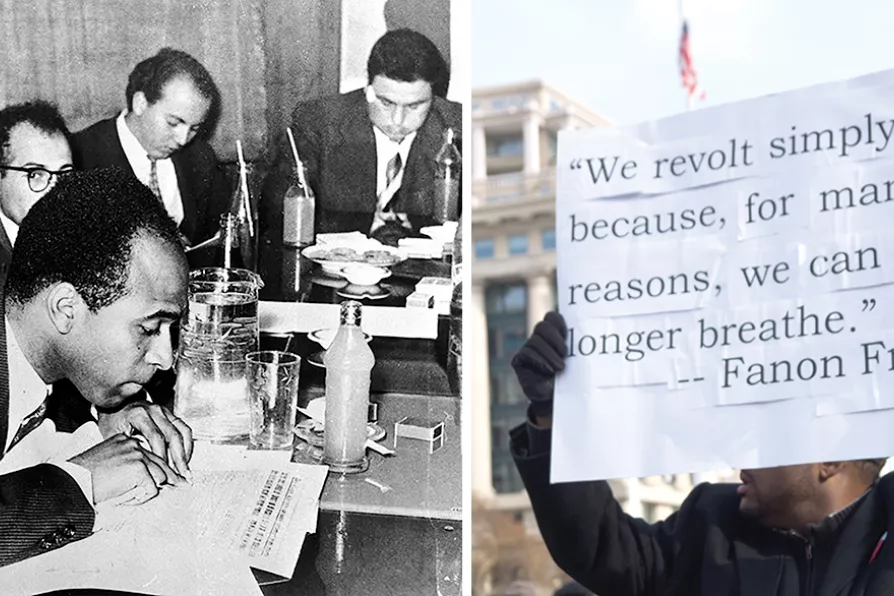
 CONTINUING RELEVANCE: (Left) Frantz Fanon at a press conference during a writers' conference in Tunis, 1959; (right) Justice for All March Washington DC in 2014
[(L to R) Public domain/CC - fuseboxradio/CC]
CONTINUING RELEVANCE: (Left) Frantz Fanon at a press conference during a writers' conference in Tunis, 1959; (right) Justice for All March Washington DC in 2014
[(L to R) Public domain/CC - fuseboxradio/CC]
PAUL DONOVAN welcomes a revival of Reginald Rose’s classic play that reminds us of the fundamental need for trials with juries
SIMON PARSONS applauds an exceptional performance of Wesker’s little-known play, by the same actor for whom it was written 45 years ago
ANDY HEDGECOCK and MARIA DUARTE review Late Fame, The Death of Robin Hood, Leviticus, and Gail Daughtry and the Celebrity Sex Pass
ANGUS REID recommends a uniquely accomplished documentary collage that contemplates our relation to the natural world
GORDON PARSONS enjoys Kant’s ‘mind-boggling’ theory of human reality: that we create the reality we experience





ALTHOUGH newspapers in isiZulu, a Southern Bantu language, have existed since the mid-1800s, only Ilanga lase Natal, founded in 1903, has survived. But the readership for isiZulu literature is massive.
IsiZulu is the majority language in South Africa; 23 per cent of the population speaks it as their first language.

Similar stories
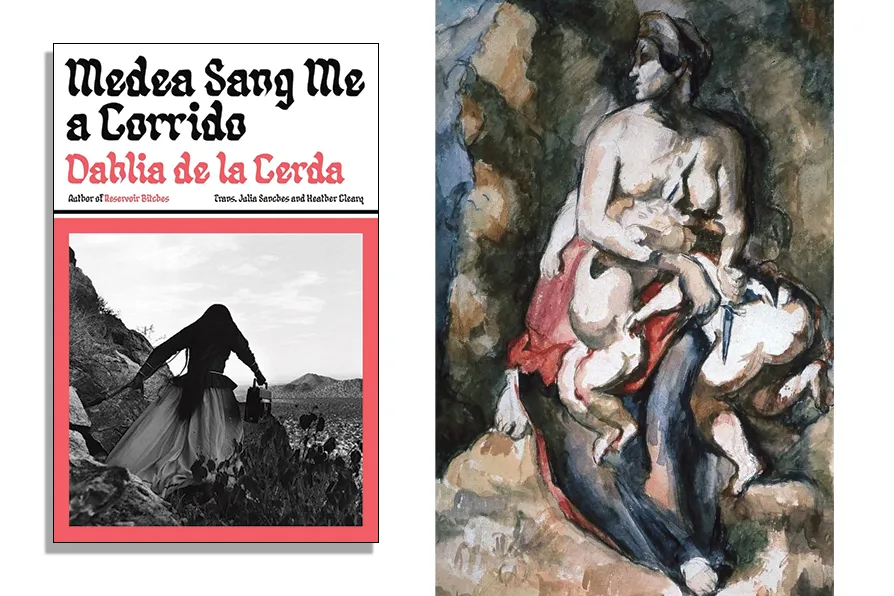
In a season of Greek mythology NIAMH THORNTON looks at an intriguing relocation of Medea to contemporary Mexico

Climate extremes are becoming our new normal, says CHLOE BRIMICOMBE

DOUGLAS FIELD relishes the hard-boiled language, satire and humour of the third and last of the Harlem trilogy
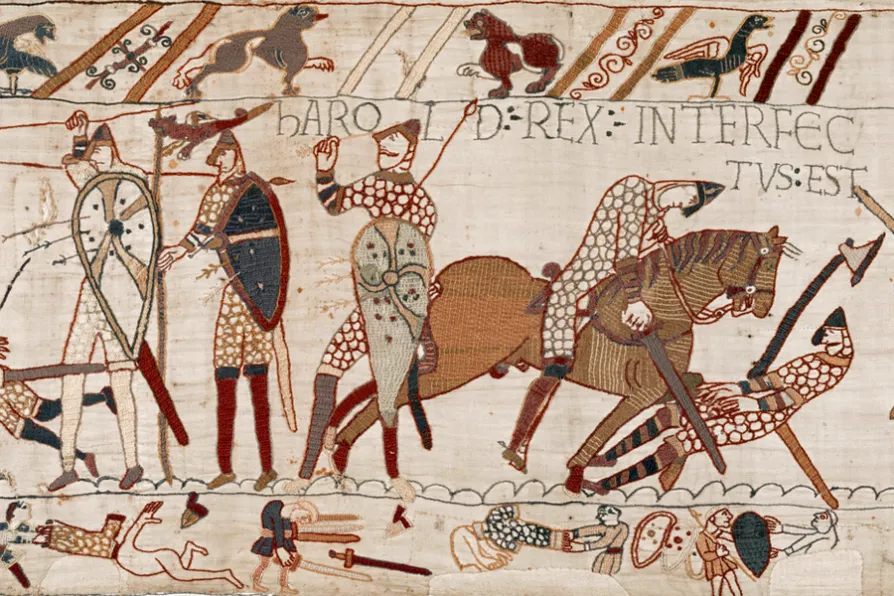
STEPHANIE BROWN draws attention to the hidden labour of the female embroiderers, and how a 19th century replica made no such error