GEOFF BOTTOMS applauds a world-class production King Lear that pits late feudalism against a rising bourgeoisie


 Latest editorial

The manipulative mogul and the revolutionary photojournalist
RITA DI SANTO contemplates two films about journalism that opened this year’s festival
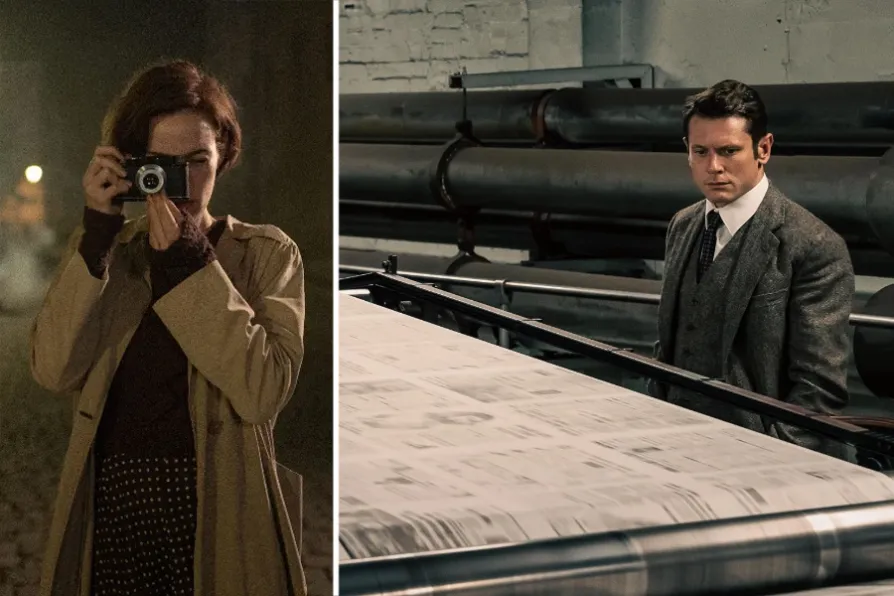 1930s vs 1960s: (L) Emilia Schüle as Gerda Taro in The Girl With The Leica; (R) Jack O'Connell as Larry Lamb in Ink [Pics: Manuel Alberto Claro, courtesy of Vivo Film/IMDb]
MARY CONWAY keeps up with the sheer pace of a drama about the terrible gap between sanitised reporting and real-life turmoil of race and gender
New releases from Brian Fallon, Antony Szmierek and Hollow Hand
APURBA CHATTERJEE explains how British artists in India used the “picturesque” to reshape colonial landscapes and celebrate imperial power
PAUL DONOVAN welcomes a revival of Reginald Rose’s classic play that reminds us of the fundamental need for trials with juries





THE Venice Film Festival has pulled off a genuine coup by bagging Danny Boyle’s Ink (★★★★☆) as its opening-night feature, an expertly delivered black comedy reflecting on power, the press and the birth of tabloid culture through the rise of the British tabloid The Sun.
Jack O’Connell stars as Larry Lamb, the editor poached from the Daily Mirror with a lucrative salary by Rupert Murdoch (Guy Pearce), the rising Australian mogul looking to revamp The Sun. Lamb doubled the paper’s circulation within a year of taking the helm in 1969. By introducing its infamous red-top headers, he transformed The Sun into Britain’s highest-selling daily by the 1970s.
Adapted for the screen by James Graham from his own hit stage play, the film moves at a frantic pace, driven by jarring flashbacks and dynamic archive footage. Boyle retains his signature hyper-pop, idiosyncratic style to deliver a splendid biopic where dark humour leads the audience into decidedly dark places.
The story centres on rebels who changed the rules: Lamb’s tactics flouted conventional journalistic standards by appealing to the working class, discarding the elite pretensions of what did and did not count as news. Both Murdoch and Lamb harboured a fundamental distaste for the British Establishment created by a rigid class society.
However, the balance between entertainment and truth is thoroughly subverted. Unapologetically cynical, Ink portrays Murdoch and his multimedia empire as ruthless and toxic. The narrative demonstrates how a single dinner party shook the foundations of media power. In a chaotic, punk-infused closing montage, the film traces a line from Thatcher directly to Elon Musk and Donald Trump.
When I asked Danny Boyle whether he sees direct parallels between Lamb and Murdoch in ’69 and the media landscape of today, he replied: “I’ve lived that lifetime. There are particular points on it — Brexit is one of them — that you can map as destabilising a central core belief system, the tent poles of what holds up the society that we all live in.
“One of those tent poles is journalists. The landscape is littered with those moments, the most recent one of which, for us in Britain for instance, was the phone-hacking scandal, which did involve one of Rupert Murdoch’s other papers, the News of the World. Brave journalists stood up courageously, because legal powers were channelled against them to stop them speaking truth to power.”
“So, I think that in 1969 we landed on the moon, and in 1969 they [Murdoch and Lamb] had this meeting. And it has had more impact on our lives, that meeting, than the moon landing now.”
From the power of the media to the power of the image.
Opening the Orizzonti section, Alina Marazzi’s The Girl with the Leica (★★★★☆) offers a passionate, compelling biopic of Gerda Taro, the first female war photographer to lose her life in action during the Spanish civil war.
Set against the vibrant backdrop of Paris in 1937, the film follows Taro after she flees Germany, enjoying a night of revelry with friends before heading to the Spanish front to fight against fascism. Beneath the youthful exuberance, an unsettling tension looms.
Flashbacks transport us to Leipzig, Taro’s hometown, where memories of her first love intertwine with her current reality. We witness her early involvement in the revolutionary movement, plastering political posters on city walls and narrowly escaping Gestapo patrols.
In Paris, she crosses paths with Robert Capa, the Hungarian war photographer who becomes an integral part of her life.
Alongside Capa, she discovers her vocation, wielding her Leica camera as a weapon of liberation. The images she captures resonate with profound political urgency, illuminating individual human dignity against the encroaching darkness of totalitarianism.
At 26, tragically, Taro’s life ended, during the battle of Brunete near Madrid. Over 100,000 members of the Communist Party mourners marched at her funeral in Paris.
Marazzi adeptly weaves archival footage and period clips to portray the alarming ascent of the extreme right as society grew desensitized to the looming spectre of war, while also crafting a robust ecosystem of resistance around Taro, dissecting the mechanisms of revolution with the meticulous care of an observer fascinated by human solidarity.
In an era where photojournalism faces unprecedented commercial challenges, and anti-fascist memory risks erosion, Marazzi’s film serves as a vital reminder of what a militant, internationalist press once embodied.
Taro documented the struggle from the streets of Paris to the trenches of Spain. Her story, and the 100,000 workers who marched in her honour, resonates powerfully with today’s ongoing fight for a press that serves the working class rather than succumbing to fascism, profit or war.
Politics permeates this year’s festival edition. The programme features work examining the wars and occupations reshaping the Middle East, narratives tracing the authoritarian drift across the former Soviet sphere, and critiques of capitalism buckling under its own internal contradictions.
In the coming days, anticipation builds for Alex Gibney’s documentary on Elon Musk, alongside Naza, a politically charged documentary by the film-makers behind No Other Land, Yuval Abraham and Rachel Szor.

Similar stories
RITA DI SANTO talks to Scottish-Irish filmmaker MARK COUSINS about his new panorama of world cinema The Story of Documentary Film
RITA DI SANTO takes us through the prize winners, and takes the temperature of a festival that prioritised narratives of exile, state violence and class division
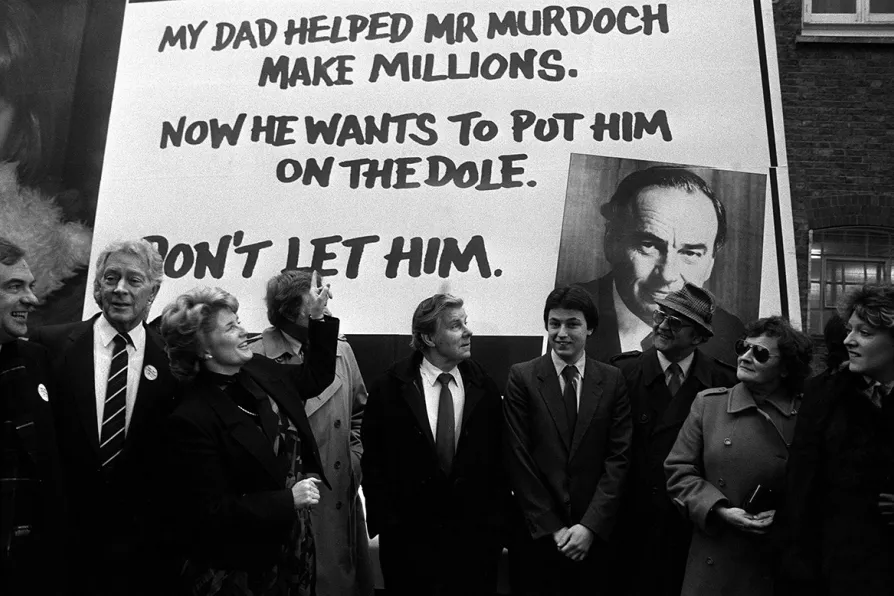
Enduring myths blame print unions for their own destruction – but TONY BURKE argues that the Wapping dispute was a calculated assault by Murdoch on organised labour, which reshaped Britain’s media landscape and casts a long shadow over trade union rights today
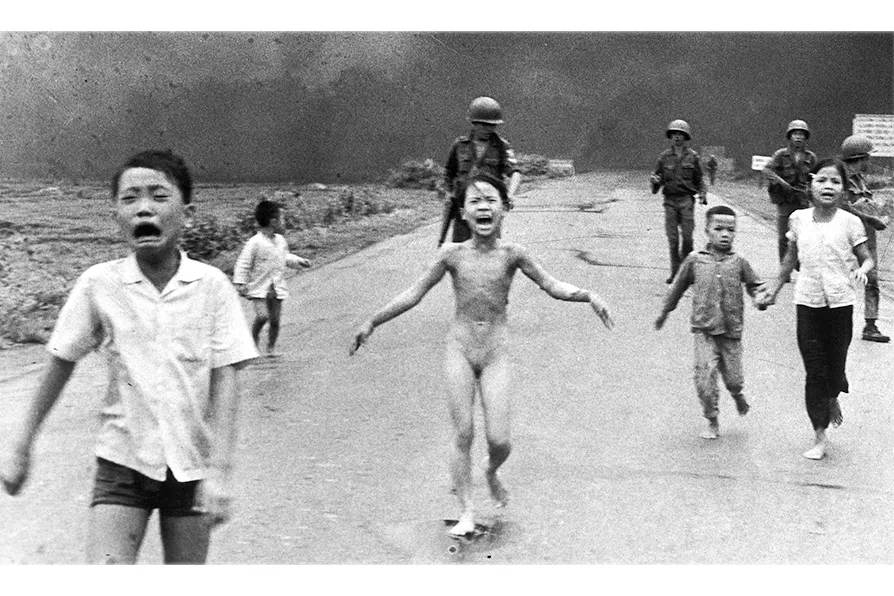
If true, the photo’s history is a damning indictment of the systematic exploitation of non-Western journalists by Western media organisations – a pattern that persists today, posit KATE CANTRELL and ALISON BEDFORD